
hazel 'Aurea'
Also known as: Information to be completed
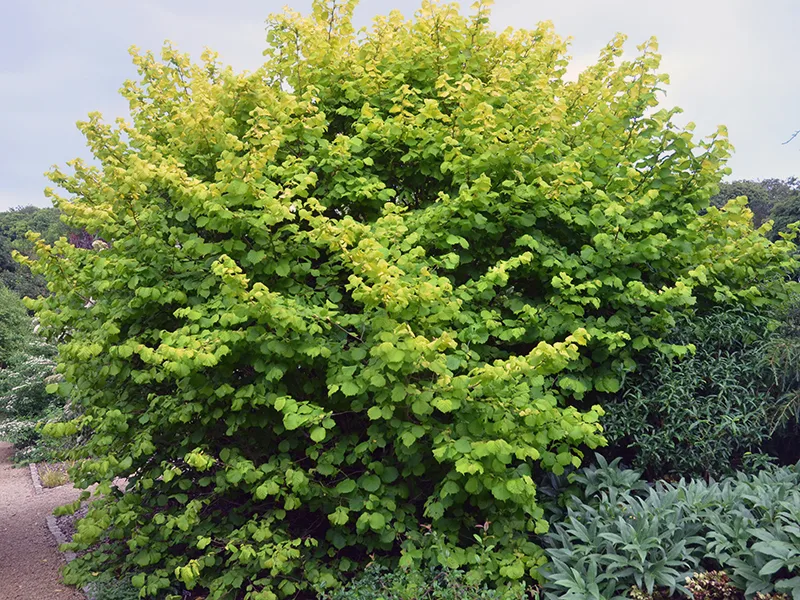
Slow-growing, deciduous shrub to about 6m tall, with yellow leaves in spring fading to yellow-green during summer, and turning pale yellow in autumn before falling. Yellow catkins form in spring, and develop into edible nuts loved by squirrels
Scientific classification
- Species
- hazel 'Aurea' (Corylus avellana 'Aurea')
- Genus
- Corylus
- Family
- Betulaceae
- Order
- Fagales
- Class
- Magnoliopsida
- Phylum
- Tracheophyta
- Information to be completed
- Toxicity
- Shrubs
- Plant type
- 4-8 metres
- Height
- 2.5-4 metres
- Spread
- Deciduous
- Foliage
- Information to be completed
- Habit
- Autumn · Spring · Summer
- Season of interest
- Partial shade · Full sun
- Sunlight
- Information to be completed
- Ideal temperature









hazel 'Aurea' pictures
Distribution of hazel 'Aurea'
Distribution map
- Native
- Introduced
- Cultivated
Source:WCVP v16 · Royal Botanic Gardens, Kew · CC BY 3.0 · Boundaries:WGSRPD / TDWG
hazel 'Aurea' care guide
- Moderate regular watering, deep soak during extended dry heat
- Watering
- Partial shade · Full sun
- Sunlight

Watering
Moderate regular watering, deep soak during extended dry heat
Fertilizing
 Fertilizing
Balanced slow-release feed applied once each early spring yearly
Pruning
 Pruning
Little pruning is needed. Remove diseased, damaged, crowded or crossing shoots and unwanted growth. Timing depends on the plant: generally late winter or early spring; plants prone to bleeding and deciduous magnolias need different timing, and deciduous azaleas and lilacs are pruned after flowering.
Propagation
 Propagation
Propagate by seed, layering or stooling or removing rooted suckers
Growing
 Growing
Grow in any moist but well-drained soil in sun or partial shade, ideal for chalky soils and best leaf colour in full sun. For more information see cobnuts and filberts
Common pests and diseases
Diseases
May be susceptible to honey fungus, silver leaf and Powdery mildews
Pests
May be be susceptible to caterpillars, gall mites, aphids and sawflies. Squirrels like to feed on the nuts
Explore the plant health library →




