
halberd willow 'Wehrhahnii'
Also known as: Information to be completed
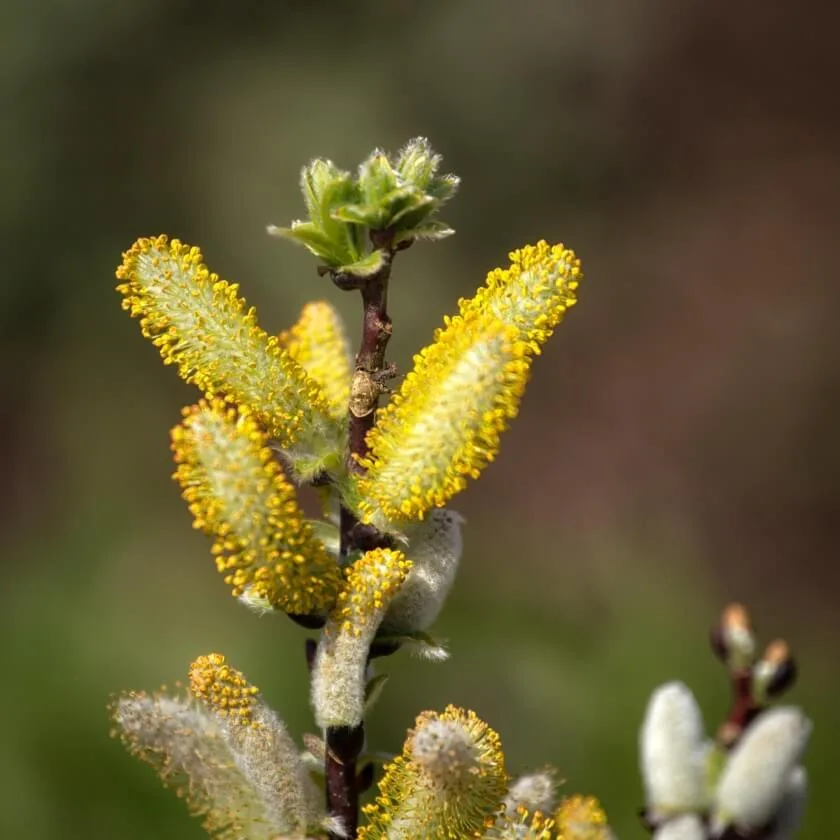
A slow-growing, small, spreading deciduous shrub with erect, purple-brown shoots bearing silvery-white male catkins, later yellow, followed by bright green leaves later dark, glaucous beneath
Scientific classification
- Species
- halberd willow 'Wehrhahnii' (Salix hastata 'Wehrhahnii')
- Genus
- Salix
- Family
- Salicaceae
- Order
- Malpighiales
- Class
- Magnoliopsida
- Phylum
- Tracheophyta
- Information to be completed
- Toxicity
- Shrubs
- Plant type
- 1-1.5 metres
- Height
- 0.5-1 metres
- Spread
- Deciduous
- Foliage
- Bushy
- Habit
- Spring · Summer · Autumn · Winter
- Season of interest
- Full sun · Partial shade
- Sunlight
- Information to be completed
- Ideal temperature









halberd willow 'Wehrhahnii' pictures
Distribution of halberd willow 'Wehrhahnii'
Distribution map
- Native
- Introduced
- Cultivated
Locally extinct or doubtful records are excluded from native and introduced layers.
Source:WCVP v16 · Royal Botanic Gardens, Kew · CC BY 3.0 · Boundaries:WGSRPD / TDWG
halberd willow 'Wehrhahnii' care guide
- Moderate regular watering, allowing brief slight drying between soakings
- Watering
- Full sun · Partial shade
- Sunlight

Watering
Moderate regular watering, allowing brief slight drying between soakings
Fertilizing
 Fertilizing
Balanced perennial feed every four weeks from spring through summer
Pruning
 Pruning
Little pruning is needed. Remove diseased, damaged, crowded or crossing shoots and unwanted growth. Timing depends on the plant: generally late winter or early spring; plants prone to bleeding and deciduous magnolias need different timing, and deciduous azaleas and lilacs are pruned after flowering.
Propagation
 Propagation
Propagate by softwood cuttings in early summer or hardwood cuttings in winter
Growing
 Growing
A small, slow growing shrub for sun or partial shade
Common pests and diseases
Diseases
May be susceptible to willow anthracnose, scab, canker, honey fungus and rust
Pests
May be susceptible to aphids, caterpillars, leaf beetles, sawflies, willow scale
Explore the plant health library →




