
mountain pitcher plant
Also known as: Information to be completed
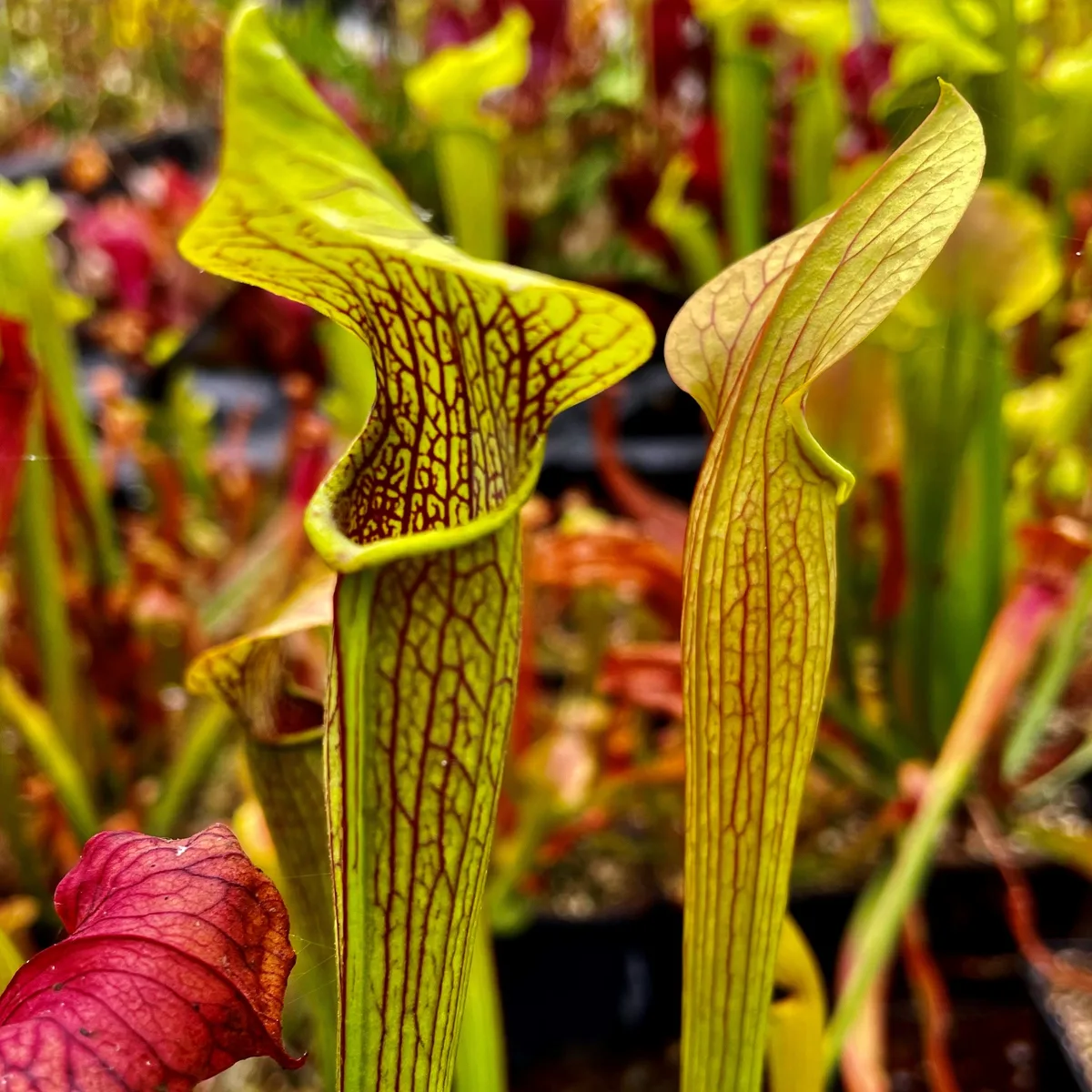
A clump-forming, carnivorous perennial to 50cm tall, with slender, erect, red-veined, green to solid maroon pitchers. In spring it bears solitary, fragrant red flowers on stems above the foliage
Scientific classification
- Species
- mountain pitcher plant (Sarracenia rubra subsp. jonesii)
- Genus
- Sarracenia
- Family
- Sarraceniaceae
- Order
- Ericales
- Class
- Magnoliopsida
- Phylum
- Tracheophyta
- Information to be completed
- Toxicity
- Information to be completed
- Plant type
- 0.1-0.5 metres
- Height
- 0.1-0.5 metres
- Spread
- Deciduous
- Foliage
- Columnar upright
- Habit
- Spring · Summer · Autumn
- Season of interest
- Full sun
- Sunlight
- Information to be completed
- Ideal temperature









mountain pitcher plant pictures
Distribution of mountain pitcher plant
Distribution map
- Native
- Introduced
- Cultivated
Source:WCVP v16 · Royal Botanic Gardens, Kew · CC BY 3.0 · Boundaries:WGSRPD / TDWG
mountain pitcher plant care guide
- Keep medium constantly wet with pure or rain water only
- Watering
- Full sun
- Sunlight

Watering
Keep medium constantly wet with pure or rain water only
Fertilizing
 Fertilizing
No regular fertilizer needed, avoid standard plant feeding entirely
Pruning
 Pruning
Trim off tatty growth in autumn
Propagation
 Propagation
Propagate by seed or division in spring
Growing
 Growing
Grow in a bog garden, or outdoors in containers of specialist carnivorous compost, in full sun. In summer stand containers in trays of lime-free water and irrigate only with rainwater. Sarracenia require a period of winter dormancy when they should be kept moist, cool, and well ventilated; an unheated greenhouse is ideal. See Carnivorous plant cultivation
Common pests and diseases
Diseases
Generally disease-free
Pests
May be susceptible to slugs, snails and aphids
Explore the plant health library →




