
lemon 'Variegata'
Also known as: Information to be completed
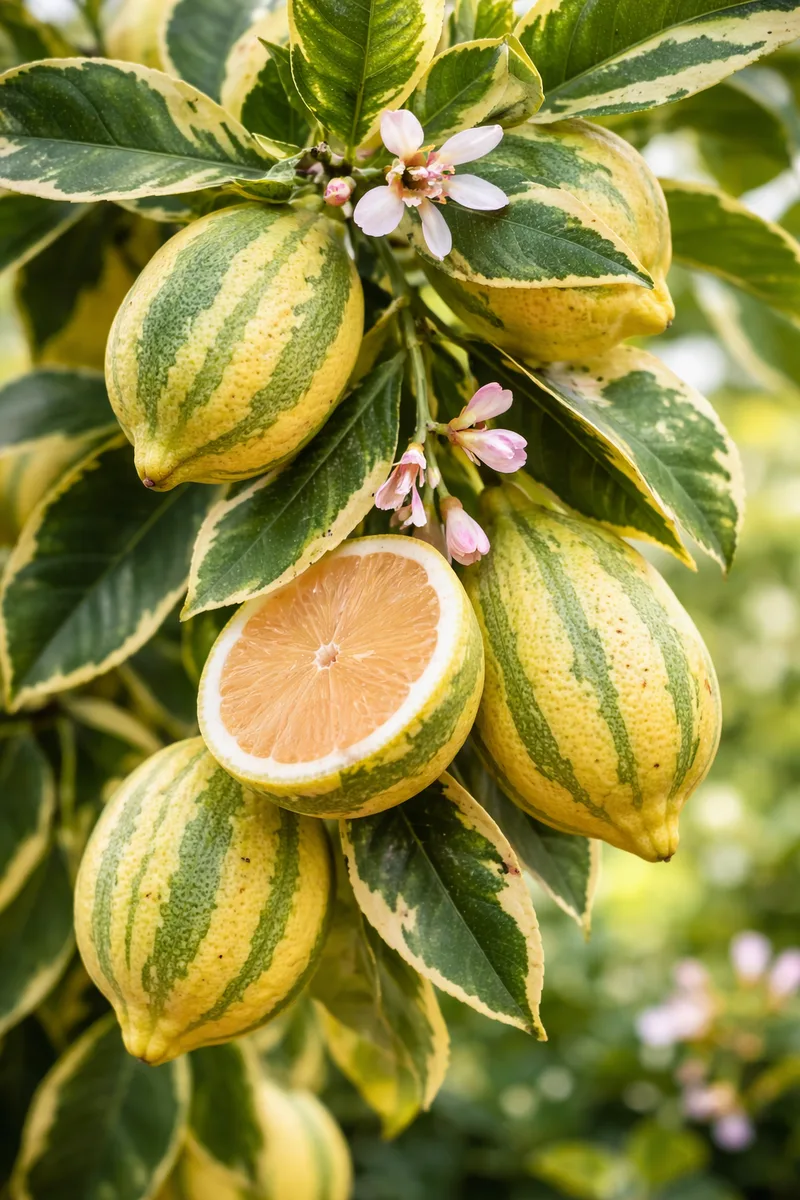
A spiny evergreen shrub with yellow-variegated, ovate leaves and fragrant white flowers, followed by ovoid fruits, striped with green when young, later almost entirely yellow
Scientific classification
- Species
- lemon 'Variegata' (Citrus × limon 'Variegata')
- Genus
- Citrus
- Family
- Rutaceae
- Order
- Sapindales
- Class
- Magnoliopsida
- Phylum
- Tracheophyta
- Fruit harmful to skin with sunlight/skin allergen. Wear gloves and other protective equipment when handling
- Toxicity
- Conservatory Greenhouse · Fruit Edible · Shrubs
- Plant type
- 2.5-4 metres
- Height
- 1.5-2.5 metres
- Spread
- Evergreen
- Foliage
- Bushy
- Habit
- Spring · Summer · Autumn · Winter
- Season of interest
- Full sun
- Sunlight
- Information to be completed
- Ideal temperature









lemon 'Variegata' pictures
Distribution of lemon 'Variegata'
Distribution map
- Native
- Introduced
- Cultivated
Source:WCVP v16 · Royal Botanic Gardens, Kew · CC BY 3.0 · Boundaries:WGSRPD / TDWG
Toxicity
Fruit harmful to skin with sunlight/skin allergen. Wear gloves and other protective equipment when handling
lemon 'Variegata' care guide
- Deep weekly root soak, extra irrigation as citrus fruits develop fully
- Watering
- Full sun
- Sunlight

Watering
Deep weekly root soak, extra irrigation as citrus fruits develop fully
Fertilizing
 Fertilizing
Citrus balanced liquid feed monthly spring through summer growth
Pruning
 Pruning
Little pruning is needed. Remove diseased, damaged, crowded or crossing shoots and unwanted growth. Timing depends on the plant: generally late winter or early spring; plants prone to bleeding and deciduous magnolias need different timing, and deciduous azaleas and lilacs are pruned after flowering.
Propagation
 Propagation
Propagate by seed (seedlings will not come true to type) or semi-hardwood cuttings
Growing
 Growing
Grow outdoors in full sun in frost-free areas with a well-drained, neutral or acidic soil. Under glass grow in loam-based potting compost in full light
Common pests and diseases
Diseases
Generally disease-free
Pests
May be susceptible to citrus red spider mite and glasshouse red spider mite, soft scale and fluted scale, aphids, caterpillars and mealybugs under glass
Explore the plant health library →




