
sea buckthorn 'Leikora'
Also known as: Information to be completed
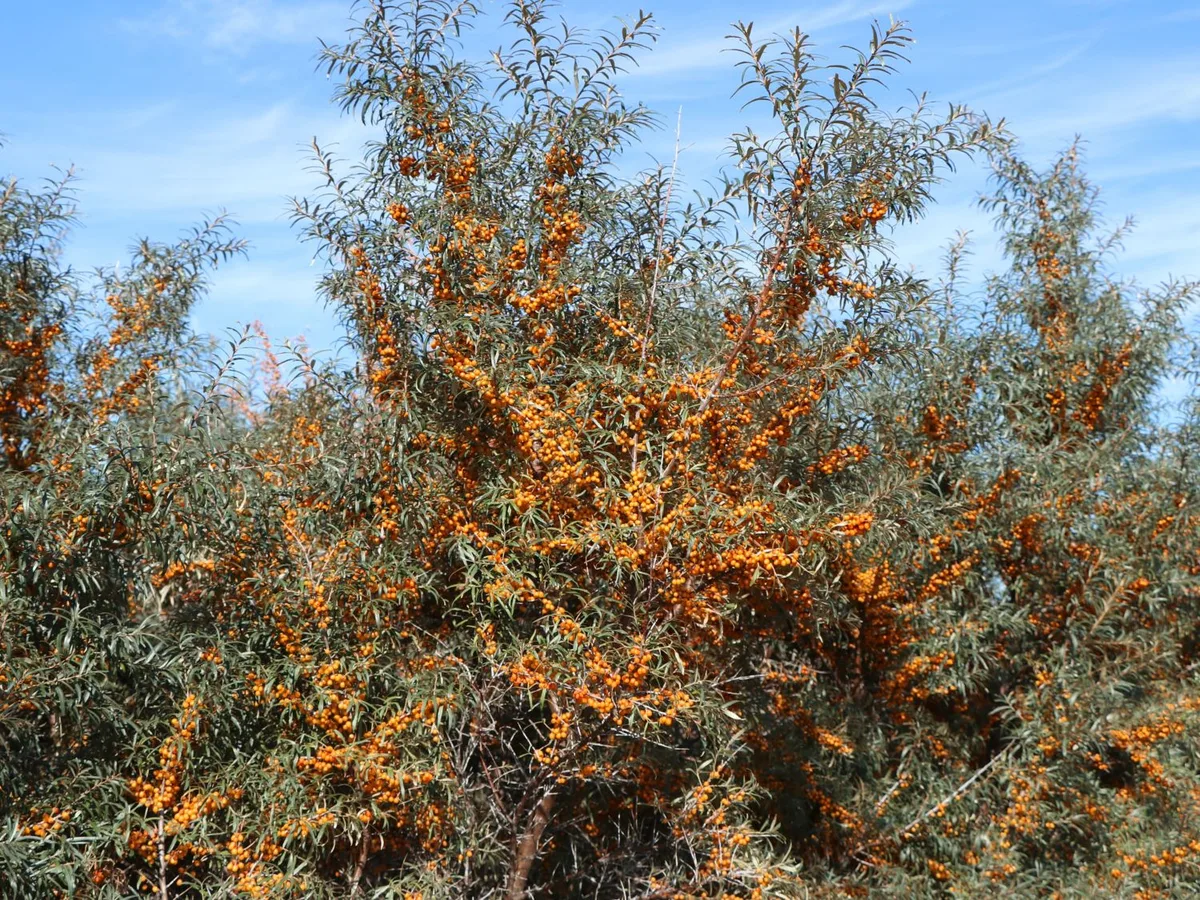
Leikora' is a female cultivar. It produces abundant large fruit, with a high content of vitamin C, that contrasts with the narrow silvery foliage
Scientific classification
- Species
- sea buckthorn 'Leikora' (Hippophae rhamnoides 'Leikora')
- Genus
- Hippophae
- Family
- Elaeagnaceae
- Order
- Rosales
- Class
- Magnoliopsida
- Phylum
- Magnoliophyta
- Information to be completed
- Toxicity
- Shrubs
- Plant type
- 4-8 metres
- Height
- 4-8 metres
- Spread
- Deciduous
- Foliage
- Bushy
- Habit
- Spring · Summer · Autumn · Winter
- Season of interest
- Full sun
- Sunlight
- Information to be completed
- Ideal temperature









sea buckthorn 'Leikora' pictures
Distribution of sea buckthorn 'Leikora'
Distribution map
- Native
- Introduced
- Cultivated
Source:WCVP v16 · Royal Botanic Gardens, Kew · CC BY 3.0 · Boundaries:WGSRPD / TDWG
sea buckthorn 'Leikora' care guide
- Moderate regular watering, allowing brief slight drying between soakings
- Watering
- Full sun
- Sunlight

Watering
Moderate regular watering, allowing brief slight drying between soakings
Fertilizing
 Fertilizing
Balanced perennial feed every four weeks from spring through summer
Pruning
 Pruning
Little pruning is needed. Remove diseased, damaged, crowded or crossing shoots and unwanted growth. Timing depends on the plant: generally late winter or early spring; plants prone to bleeding and deciduous magnolias need different timing, and deciduous azaleas and lilacs are pruned after flowering.
Propagation
 Propagation
Propagate by seed, semi-hardwood and hardwood cuttings
Growing
 Growing
Grow in an exposed or sheltered position in full sun; suitable for the mixed border or in coastal regions use as windbreak, hedging or stabilizing sand dunes. This cultivar requires a male form to produce fruit. This species is listed on Schedule 9 of The Wildlife (Northern Ireland) Order (1985) as amended, and on Schedule 3 of the EU (Birds and Natural Habitats) Regulations 2011 in the Republic of Ireland as an invasive non-native species. While this does not prevent it from being sold or being grown in gardens in Ireland, the RHS encourages those that do grow it to take great care with managing it and with disposing of unwanted material. The RHS also encourages gardeners to find alternative plants to grow to those listed
Common pests and diseases
Diseases
May be susceptible to honey fungus in gardens where it is present but insufficient data to determine degree of susceptibility
Pests
Generally pest-free
Explore the plant health library →




