
bastard jasmine 'Newellii'
Also known as: Information to be completed
A vigorous evergreen shrub to 3m, with dull green lance-shaped leaves and clusters of bright crimson, tubular flowers 2cm long, followed by purple berries
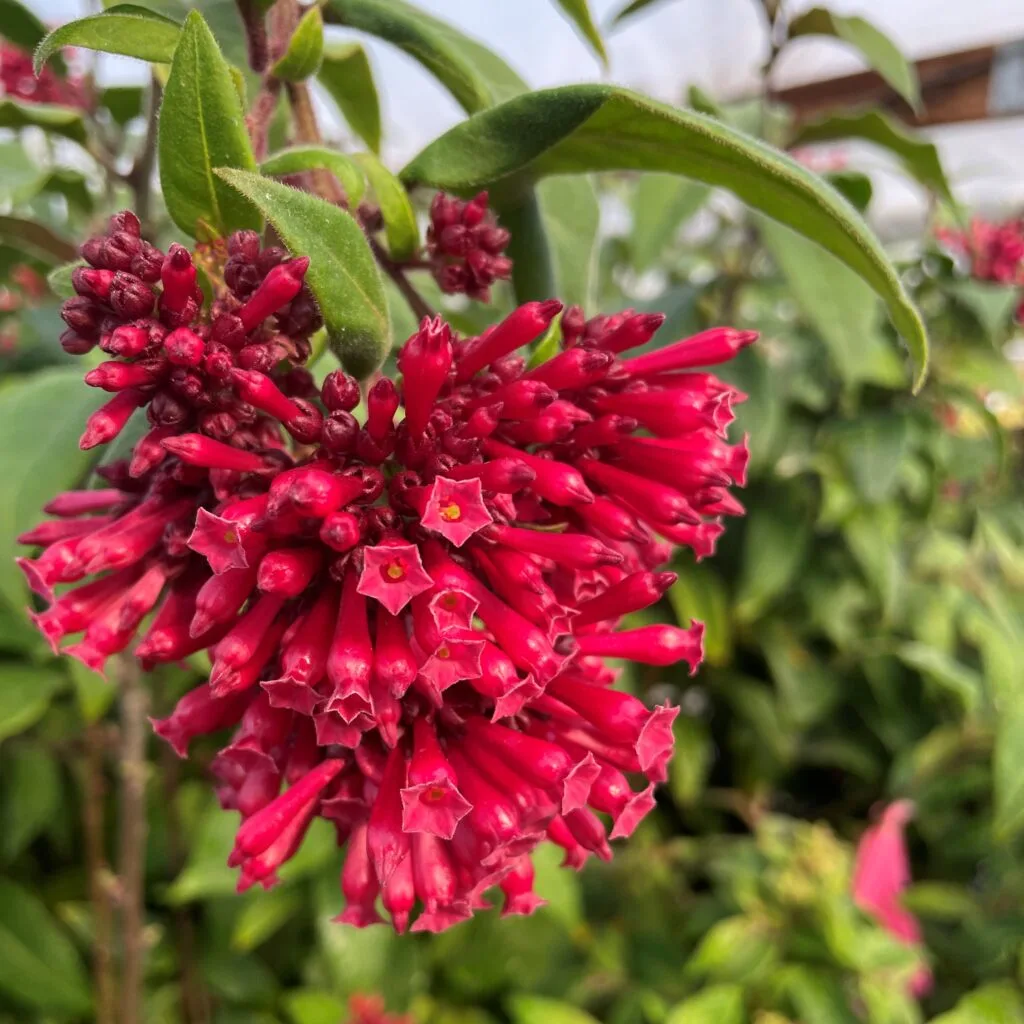
Scientific classification
- Species
- bastard jasmine 'Newellii' (Cestrum 'Newellii')
- Genus
- Cestrum
- Family
- Solanaceae
- Harmful of eaten. Wear gloves and other protective equipment when handling
- Toxicity
- Conservatory Greenhouse · Shrubs
- Plant type
- 2.5-4 metres
- Height
- 1.5-2.5 metres
- Spread
- Evergreen
- Foliage
- Bushy
- Habit
- Spring · Summer · Autumn · Winter
- Season of interest
- Full sun · Partial shade
- Sunlight
- Information to be completed
- Ideal temperature









bastard jasmine 'Newellii' pictures
Distribution of bastard jasmine 'Newellii'
Distribution map
Information to be completed
Information to be completed
Culture
Information to be completed
Toxicity
Harmful of eaten. Wear gloves and other protective equipment when handling
Quick identification of bastard jasmine 'Newellii'
Information to be completed
bastard jasmine 'Newellii' care guide
- Even mild soil dampness, reduce watering volume during winter dormancy
- Watering
- Full sun · Partial shade
- Sunlight
- Information to be completed
- Ideal temperature

Watering
Even mild soil dampness, reduce watering volume during winter dormancy
Fertilizing
 Fertilizing
Diluted tropical shrub feed monthly spring and summer growing months
Pruning
 Pruning
Prune lightly as needed to remove unwanted shoots and keep the shrub in shape. Prune in mid- to late spring.
Propagation
 Propagation
Propagate by seed in containers in a cold frame in spring or by softwood cuttings in summer
Growing
 Growing
Under glass grow in containers using loam-based potting compost such as John Innes No.3 in full light with good ventilation and shade from hot sun. Water freely in summer and keep just moist in winter. Can be grown outdoors in a sheltered sunny site and well drained soil
People also ask
Information to be completed
Common pests and diseases
Diseases
Generally disease-free
Pests
Generally pest-free
Explore the plant health library →




