
perennial phlox 'Eventide'
Also known as: Information to be completed
An herbaceous perennial with erect stems to 90cm, bearing lance-shaped leaves and fragrant, mauve-blue flowers in large terminal panicles
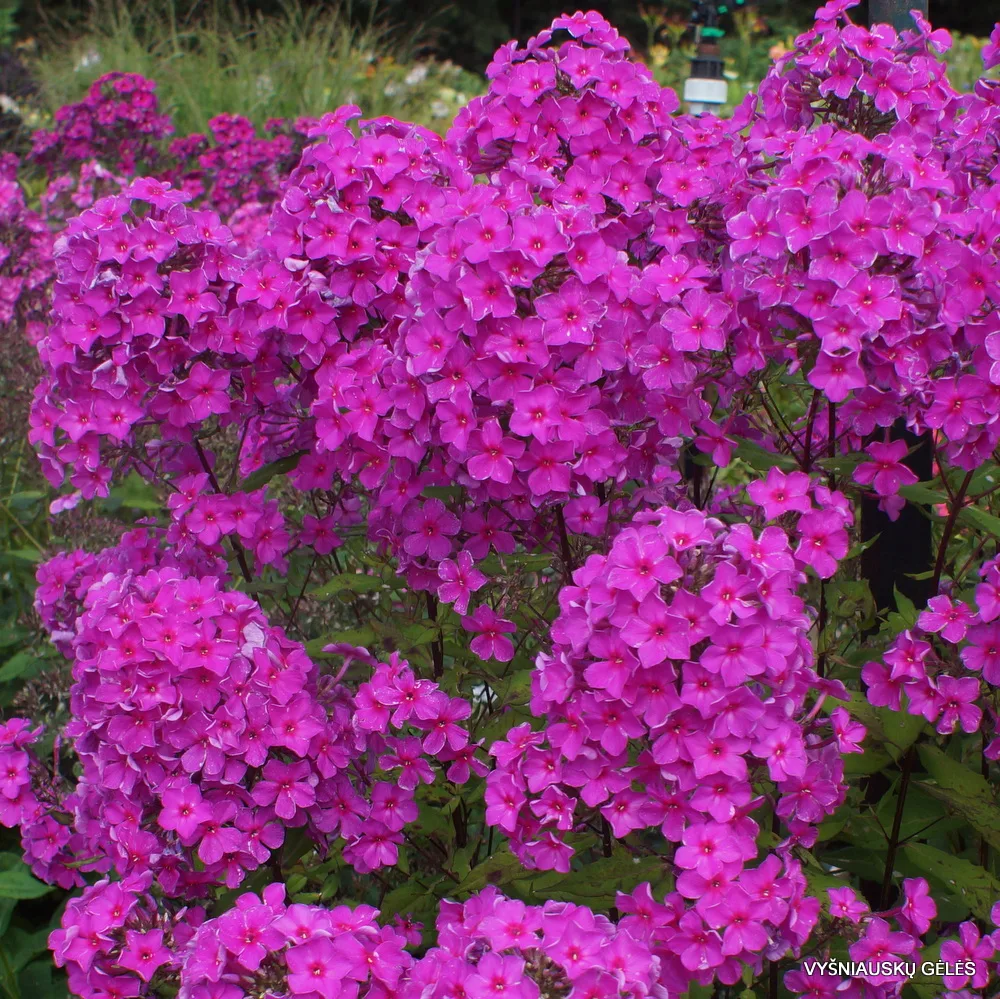
Scientific classification
- Species
- perennial phlox 'Eventide' (Phlox paniculata 'Eventide')
- Genus
- Phlox
- Family
- Polemoniaceae
- Information to be completed
- Toxicity
- Herbaceous Perennial
- Plant type
- 0.5-1 metres
- Height
- 0.1-0.5 metres
- Spread
- Deciduous
- Foliage
- Columnar upright
- Habit
- Spring · Summer · Autumn
- Season of interest
- Full sun · Partial shade
- Sunlight
- Information to be completed
- Ideal temperature









perennial phlox 'Eventide' pictures
Distribution of perennial phlox 'Eventide'
Distribution map
Information to be completed
Information to be completed
Culture
Information to be completed
Toxicity
Information to be completed
Quick identification of perennial phlox 'Eventide'
Information to be completed
perennial phlox 'Eventide' care guide
- Even moderate watering, avoid both extreme drought and soggy mud
- Watering
- Full sun · Partial shade
- Sunlight
- Information to be completed
- Ideal temperature

Watering
Even moderate watering, avoid both extreme drought and soggy mud
Fertilizing
 Fertilizing
Balanced diluted liquid fertilizer applied biweekly all summer long
Pruning
 Pruning
Deadhead to prolong flowering then cut down to the base in late autumn
Propagation
 Propagation
Propagate by division in autumn or spring. Propagate by basal cuttings spring or propagate by root cuttings in early autumn or winter.
Growing
 Growing
Grow in fertile, moist soil in full sun or partial shade
People also ask
Information to be completed
Common pests and diseases
Diseases
May be affected by powdery mildews
Pests
May be attacked by phlox eelworm
Explore the plant health library →




