
white wild saffron
Also known as: Information to be completed
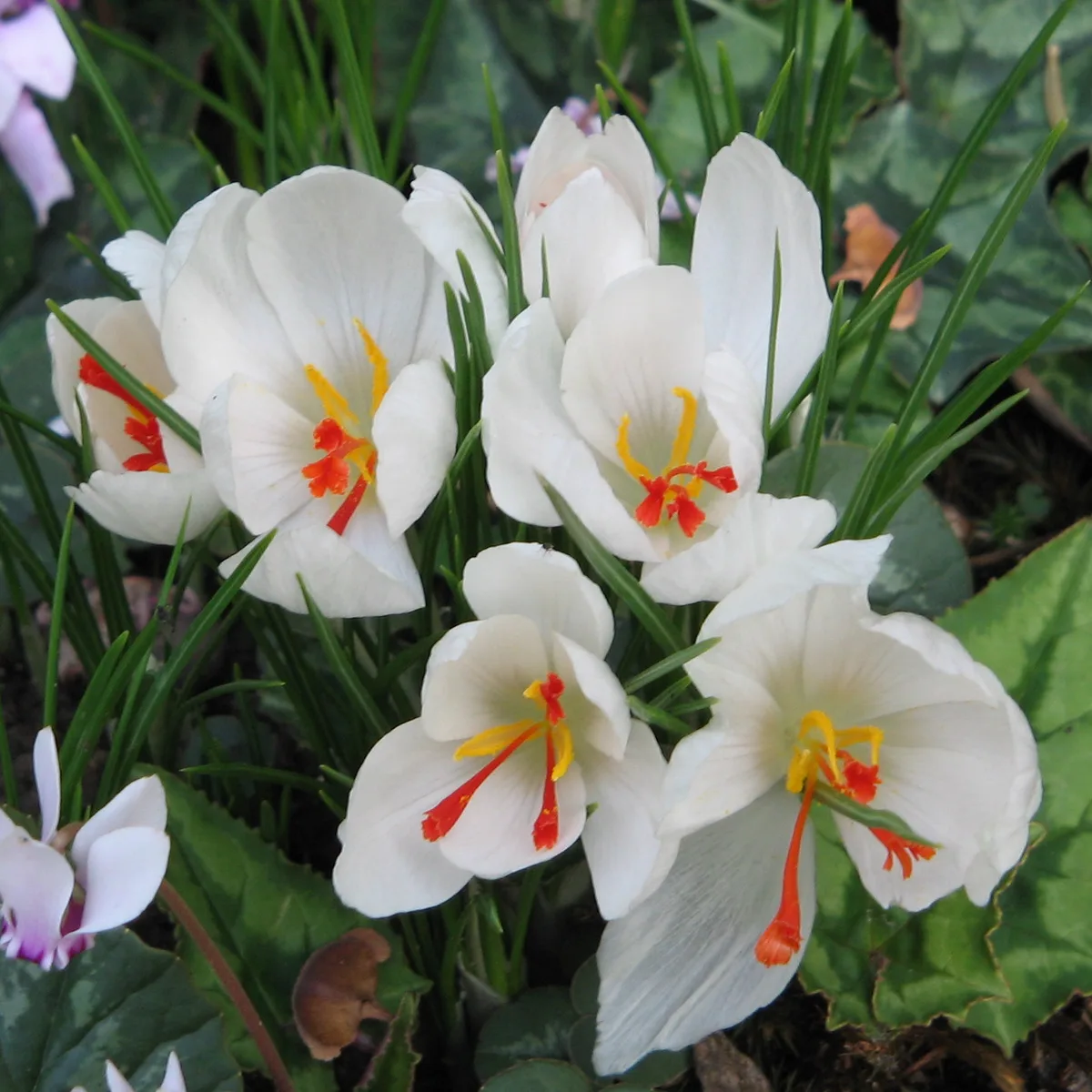
A perennial corm with leaves and flowers developing together in late autumn and early winter, the flowers pure white, with prominent red stigma lobes
Scientific classification
- Species
- white wild saffron (Crocus cartwrightianus 'Albus')
- Genus
- Crocus
- Family
- Iridaceae
- Order
- Asparagales
- Class
- Liliopsida
- Phylum
- Tracheophyta
- Ornamental bulbs - not to be eaten. Wear gloves and other protective equipment when handling
- Toxicity
- Bulbs
- Plant type
- Up to 10 cm
- Height
- 0-0.1 metre
- Spread
- Deciduous
- Foliage
- Tufted
- Habit
- Winter
- Season of interest
- Full sun
- Sunlight
- Information to be completed
- Ideal temperature









white wild saffron pictures
Distribution of white wild saffron
Distribution map
- Native
- Introduced
- Cultivated
Source:WCVP v16 · Royal Botanic Gardens, Kew · CC BY 3.0 · Boundaries:WGSRPD / TDWG
Toxicity
Ornamental bulbs - not to be eaten. Wear gloves and other protective equipment when handling
white wild saffron care guide
- Light watering only while growing, dry dormant bulb conditions
- Watering
- Full sun
- Sunlight

Watering
Light watering only while growing, dry dormant bulb conditions
Fertilizing
 Fertilizing
One gentle bulb fertilizer feed at early spring growth start
Pruning
 Pruning
No pruning required
Propagation
 Propagation
Propagate by seed sown in containers in a cold frame when ripe or remove cormlets when dormant
Growing
 Growing
Grow in a bulb frame or alpine house in a mix of equal parts loam, leaf mould and sharp sand or grit. Water freely in the growing season and apply a low-nitrogen fertiliser monthly. Keep completely dry in summer dormancy
Common pests and diseases
Diseases
Generally disease-free, corms may rot in storage
Pests
May be susceptible to rodents and birds
Explore the plant health library →




