
black fritillary 'Martha Roderick'
Also known as: Information to be completed
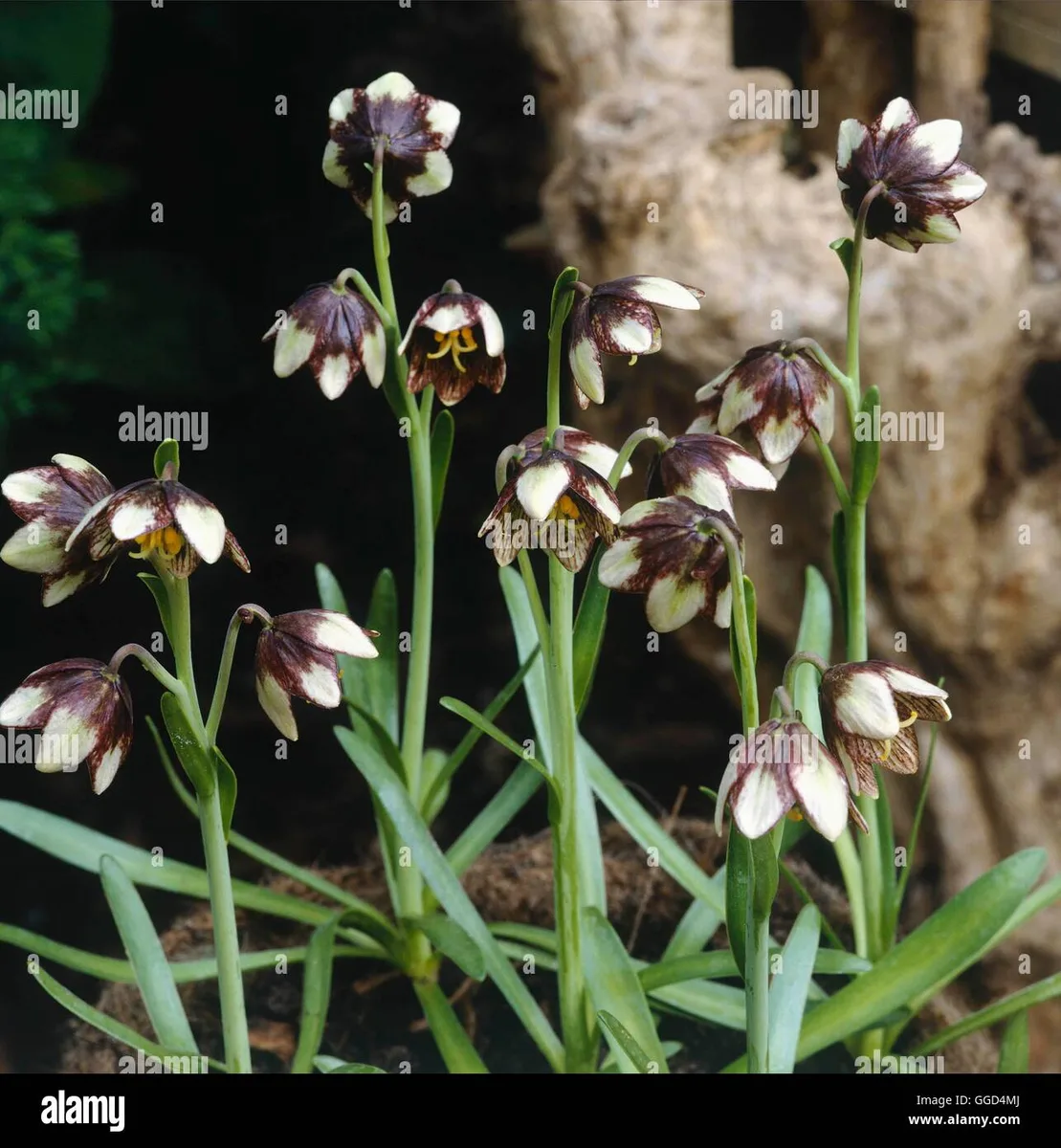
Martha Roderick' is a bulbous perennial to 30cm tall, with glossy lance-shaped leaves and deep reddish-purple, bell-shaped flowers, each tepal white in the outer half, opening in early spring
Scientific classification
- Species
- black fritillary 'Martha Roderick' (Fritillaria biflora 'Martha Roderick')
- Genus
- Fritillaria
- Family
- Liliaceae
- Order
- Liliales
- Class
- Liliopsida
- Phylum
- Tracheophyta
- Ornamental bulbs - not to be eaten. Wear gloves and other protective equipment when handling
- Toxicity
- Alpine Rockery · Conservatory Greenhouse · Bulbs
- Plant type
- 0.1-0.5 metres
- Height
- 0-0.1 metre
- Spread
- Deciduous
- Foliage
- Bushy
- Habit
- Spring
- Season of interest
- Full sun
- Sunlight
- Information to be completed
- Ideal temperature









black fritillary 'Martha Roderick' pictures
Toxicity
Ornamental bulbs - not to be eaten. Wear gloves and other protective equipment when handling
black fritillary 'Martha Roderick' care guide
- Moderate watering, partial soil dryness between irrigation cycles
- Watering
- Full sun
- Sunlight

Watering
Moderate watering, partial soil dryness between irrigation cycles
Fertilizing
 Fertilizing
Low-nitrogen bulb feed applied before spring budding growth
Pruning
 Pruning
No pruning required
Propagation
 Propagation
Propagate by seed in autumn in a cold frame. Expose to winter cold until germination in spring, then transfer to a cold greenhouse. Divide offsets in late summer
Growing
 Growing
Grow in a well-drained soil and full sun, with shelter from rain. Ideal to grow in a cold greenhouse or bulb frame in order to keep bulbs almost dry when dormant. Under glass, grow in loam-based potting compost with added grit and leaf mould
Common pests and diseases
Diseases
Generally disease-free
Pests
May be susceptible to slugs and lily beetle
Explore the plant health library →




