
Rhododendron 'Harvest Moon'
Also known as: Information to be completed
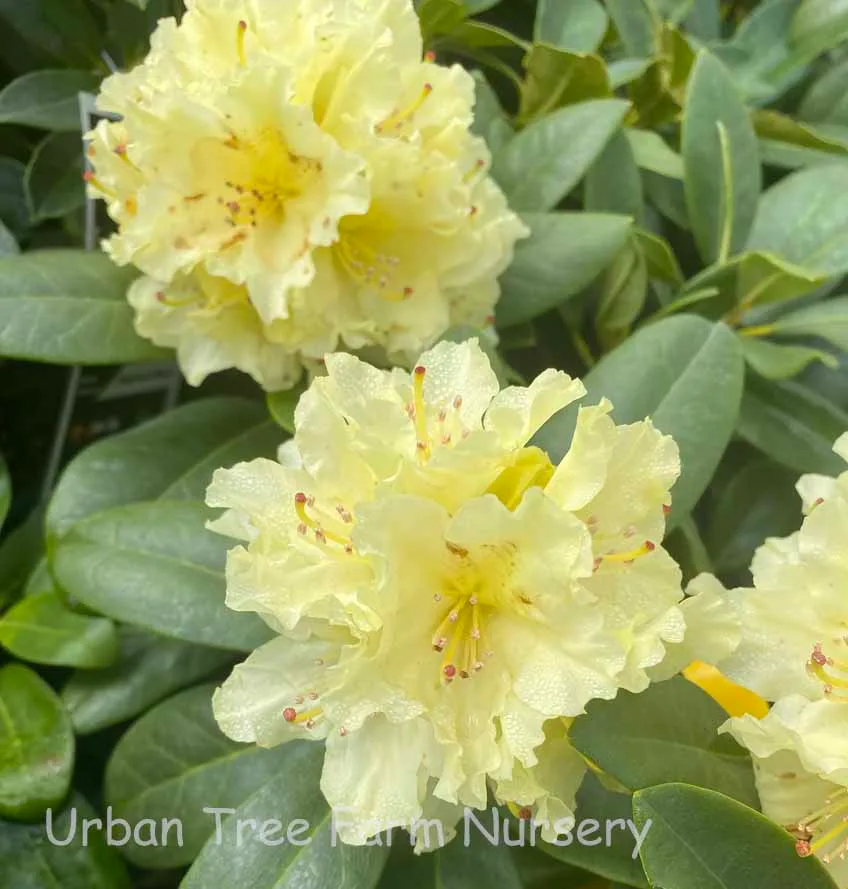
A deciduous azalea, to around 1.5m high, with a broadly upright habit and elliptic, dull green leaves. Produces loose clusters of 6-8 slightly scented soft yellow flowers, with wavy edges and darker yellow flare on the top petals, in late spring
Scientific classification
- Species
- Rhododendron 'Harvest Moon' (Rhododendron 'Harvest Moon')
- Genus
- Rhododendron
- Family
- Ericaceae
- Order
- Ericales
- Class
- Magnoliopsida
- Phylum
- Magnoliophyta
- Harmful if eaten. Wear gloves and other protective equipment when handling
- Toxicity
- Shrubs
- Plant type
- 1-1.5 metres
- Height
- 1-1.5 metres
- Spread
- Deciduous
- Foliage
- Columnar upright · Bushy
- Habit
- Autumn · Spring · Summer
- Season of interest
- Full sun · Partial shade
- Sunlight
- Information to be completed
- Ideal temperature









Rhododendron 'Harvest Moon' pictures
Toxicity
Harmful if eaten. Wear gloves and other protective equipment when handling
Rhododendron 'Harvest Moon' care guide
- Keep acidic root zone moist and cool, never soggy
- Watering
- Full sun · Partial shade
- Sunlight

Watering
Keep acidic root zone moist and cool, never soggy
Fertilizing
 Fertilizing
Ericaceous feed in spring and lightly after bloom
Pruning
 Pruning
Little pruning is needed. Remove diseased, damaged, crowded or crossing shoots and unwanted growth. If needed, prune lightly after flowering.
Propagation
 Propagation
Propagate by semi-ripe cuttings in late summer, or by grafting in winter
Growing
 Growing
Grow in moist but well-drained, humus rich, acidic soil, in sun or dappled shade. Choose a site away from frost pockets and sheltered from strong winds. Mulch annually, ideally with leaf mould. See rhododendron cultivation for more detailed advice
Common pests and diseases
Diseases
May be susceptible to powdery mildews, honey fungus, silver leaf and Phytophthora, as well as more specific Rhododendron diseases
Pests
May be susceptible to vine weevil, rhododendron and azalea whitefly, rhododendron leafhopper, pieris lacebug, scale insects, caterpillars and aphids
Explore the plant health library →




