
hornbeam 'Frans Fontaine'
Also known as: Information to be completed
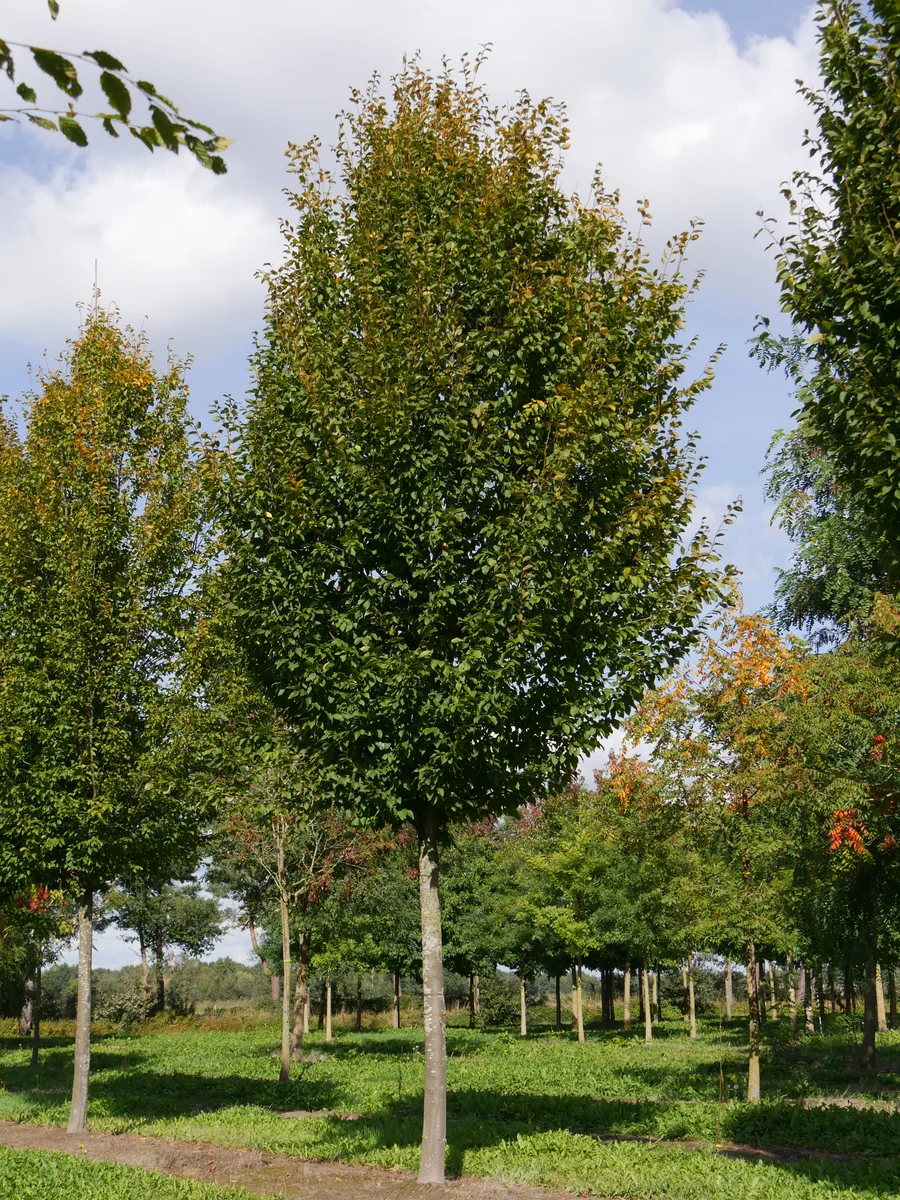
Narrow, columnar deciduous tree, about 10m in height, with smooth, grey bark darkening with age. Bears fresh green leaves in spring and summer, which turn to a rich, golden-yellow in autumn, often holding the dead, brown leaves through winter, before shedding them in spring. This cultivar only produces male catkins which are green and appear in April
Scientific classification
- Species
- hornbeam 'Frans Fontaine' (Carpinus betulus 'Frans Fontaine')
- Genus
- Carpinus
- Family
- Betulaceae
- Order
- Fagales
- Class
- Magnoliopsida
- Phylum
- Magnoliophyta
- Information to be completed
- Toxicity
- Trees
- Plant type
- 8-12 metres
- Height
- 2.5-4 metres
- Spread
- Deciduous
- Foliage
- Columnar upright
- Habit
- Autumn · Spring · Summer · Winter
- Season of interest
- Full sun · Partial shade
- Sunlight
- Information to be completed
- Ideal temperature









hornbeam 'Frans Fontaine' pictures
Distribution of hornbeam 'Frans Fontaine'
Distribution map
- Native
- Introduced
- Cultivated
Source:WCVP v16 · Royal Botanic Gardens, Kew · CC BY 3.0 · Boundaries:WGSRPD / TDWG
hornbeam 'Frans Fontaine' care guide
- Deep occasional watering with excellent drainage, less once established
- Watering
- Full sun · Partial shade
- Sunlight

Watering
Deep occasional watering with excellent drainage, less once established
Fertilizing
 Fertilizing
Light conifer feed once yearly in early spring only
Pruning
 Pruning
Little pruning is needed. Remove diseased, damaged, crowded or crossing shoots and unwanted growth. Timing depends on the plant: generally late winter or early spring; plants prone to bleeding and deciduous magnolias need different timing, and deciduous azaleas and lilacs are pruned after flowering.
Propagation
 Propagation
Propagate by softwood cuttings in spring and early summer or grafting
Growing
 Growing
Easy to grow in most soils after establishment including those which are dry or wet.
Common pests and diseases
Diseases
May be susceptible to powdery mildews, coral spot and sometimes honey fungus
Pests
May be susceptible to caterpillars and aphids
Explore the plant health library →




