
sweet potato
Also known as: Brazilian arrowroot; jalap tops; kumar; kumara; Spanish potato; yam
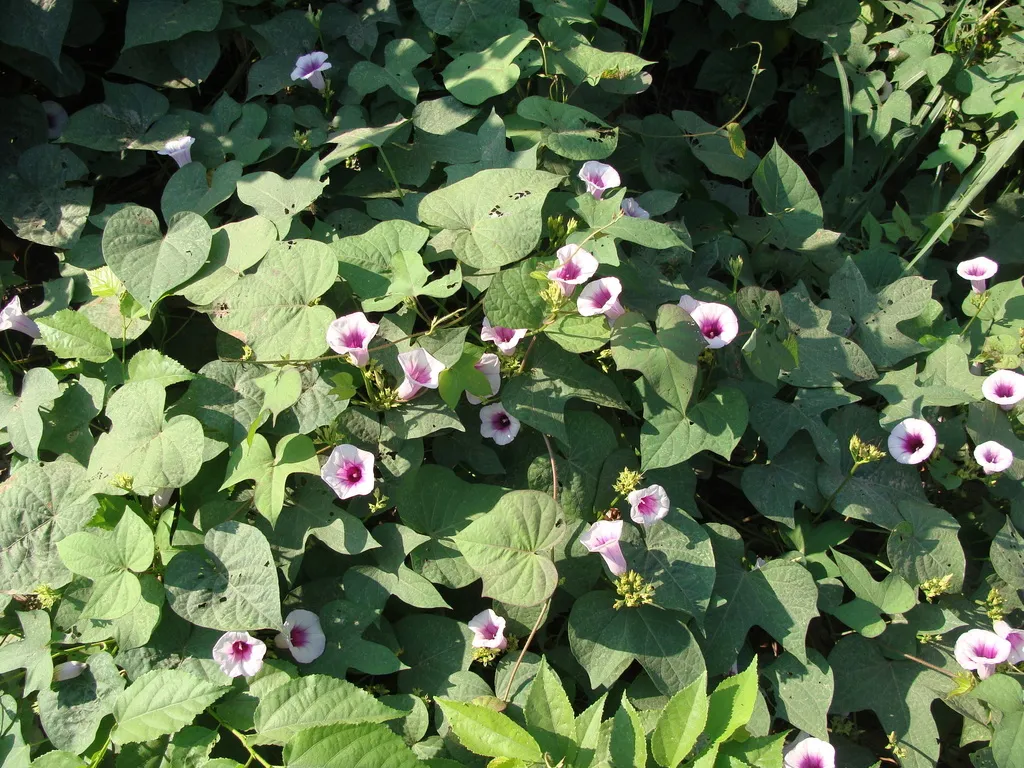
A variable species of twining perennial climber, often grown as an annual, with some cultivars valued for their edible roots. Leaves are usually ovate to heart-shaped, sometimes lobed and sometimes flushed with purple. Funnel-shaped flowers, often purple or occasionally white, are produced in summer
Scientific classification
- Species
- sweet potato (Ipomoea batatas)
- Genus
- Ipomoea
- Family
- Convolvulaceae
- Harmful if eaten. Wear gloves and other protective equipment when handling
- Toxicity
- Climber Wall Shrub · Conservatory Greenhouse
- Plant type
- 2.5-4 metres
- Height
- 1.5-2.5 metres
- Spread
- Deciduous
- Foliage
- Climbing
- Habit
- Spring · Summer · Autumn
- Season of interest
- Full sun
- Sunlight
- 20 – 30 °C
- Ideal temperature









sweet potato pictures


Distribution of sweet potato
Distribution map
Indonesia
Information to be completed
Culture
Information to be completed
Toxicity
Harmful if eaten. Wear gloves and other protective equipment when handling
Quick identification of sweet potato
Information to be completed
sweet potato care guide
- Moderate regular watering, allowing brief slight drying between soakings
- Watering
- Full sun
- Sunlight
- 20 – 30 °C
- Ideal temperature

Watering
Moderate regular watering, allowing brief slight drying between soakings
Fertilizing
 Fertilizing
Balanced perennial feed every four weeks from spring through summer
Pruning
 Pruning
Routine pruning is unnecessary; shorten overlong shoots to fit the available space. For last-year flowering growth, prune after flowering; for current-year flowering growth, prune in late winter or spring. This guidance is for established plants.
Propagation
 Propagation
Edible cultivars are grown from slips (rooted shoots from a tuber); these can be potted and grown indoors in spring and planted out after frosts
Growing
 Growing
Grow in well-drained, sandy loam in full sun, provide support for climbing stems. May be grown outdoors in warmer regions, but best grown under glass in colder areas (minimum temperature 7-10°C)
People also ask
Information to be completed
Common pests and diseases
Diseases
May be susceptible to fusarium wilt, powdery mildews and virus diseases
Pests
May be susceptible to glasshoouse red spider mite and glasshouse whitefly
Explore the plant health library →




