
rhododendron 'Klondyke'
Also known as: Information to be completed
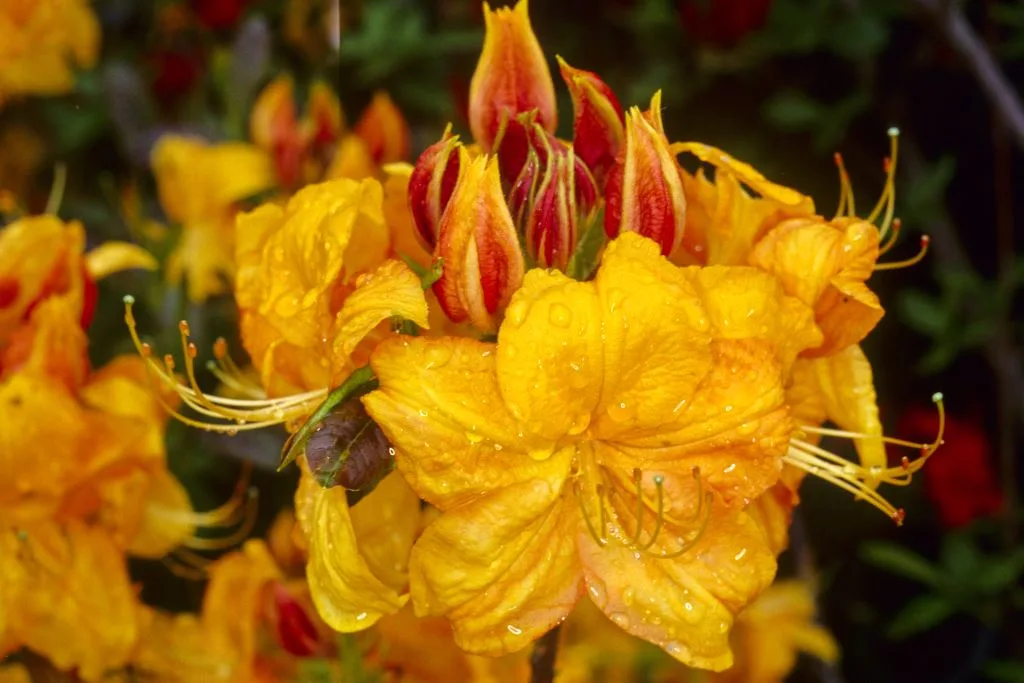
Klondyke' is a deciduous azalea to 2m tall, with coppery young foliage and clusters of large, deep golden-orange flowers, tinged red on the outside and in bud
Scientific classification
- Species
- rhododendron 'Klondyke' (Rhododendron 'Klondyke')
- Genus
- Rhododendron
- Family
- Ericaceae
- Order
- Ericales
- Class
- Magnoliopsida
- Phylum
- Magnoliophyta
- Harmful if eaten. Wear gloves and other protective equipment when handling
- Toxicity
- Shrubs
- Plant type
- 1.5-2.5 metres
- Height
- 1.5-2.5 metres
- Spread
- Deciduous
- Foliage
- Bushy
- Habit
- Spring · Summer
- Season of interest
- Full sun · Partial shade
- Sunlight
- Information to be completed
- Ideal temperature









rhododendron 'Klondyke' pictures
Toxicity
Harmful if eaten. Wear gloves and other protective equipment when handling
rhododendron 'Klondyke' care guide
- Soft acidic water for irrigation, soil lightly damp with zero standing excess water
- Watering
- Full sun · Partial shade
- Sunlight

Watering
Soft acidic water for irrigation, soil lightly damp with zero standing excess water
Fertilizing
 Fertilizing
Specialized rhododendron acid feed monthly spring extending to late summer months
Pruning
 Pruning
Little pruning is needed. Remove diseased, damaged, crowded or crossing shoots and unwanted growth. Timing depends on the plant: generally late winter or early spring; plants prone to bleeding and deciduous magnolias need different timing, and deciduous azaleas and lilacs are pruned after flowering.
Propagation
 Propagation
Propagate by semi-ripe cuttings in late summer, layering in autumn or grafting in late summer or late winter
Growing
 Growing
Suitable for an open site but best grown in moist but well-drained, leafy, humus-rich acid soil in part shade with shelter; see rhododendron cultivation
Common pests and diseases
Diseases
May be susceptible to various Rhododendron diseases including powdery mildews, rhododendron petal blight, rhododendron bud blast, silver leaf and honey fungus
Pests
May be susceptible to vine weevil, rhododendron and azalea whitefly, rhododendron leafhopper, pieris lacebug, scale insects, caterpillars and aphids
Explore the plant health library →




