
Chinese fir 'Glauca'
Also known as: Information to be completed
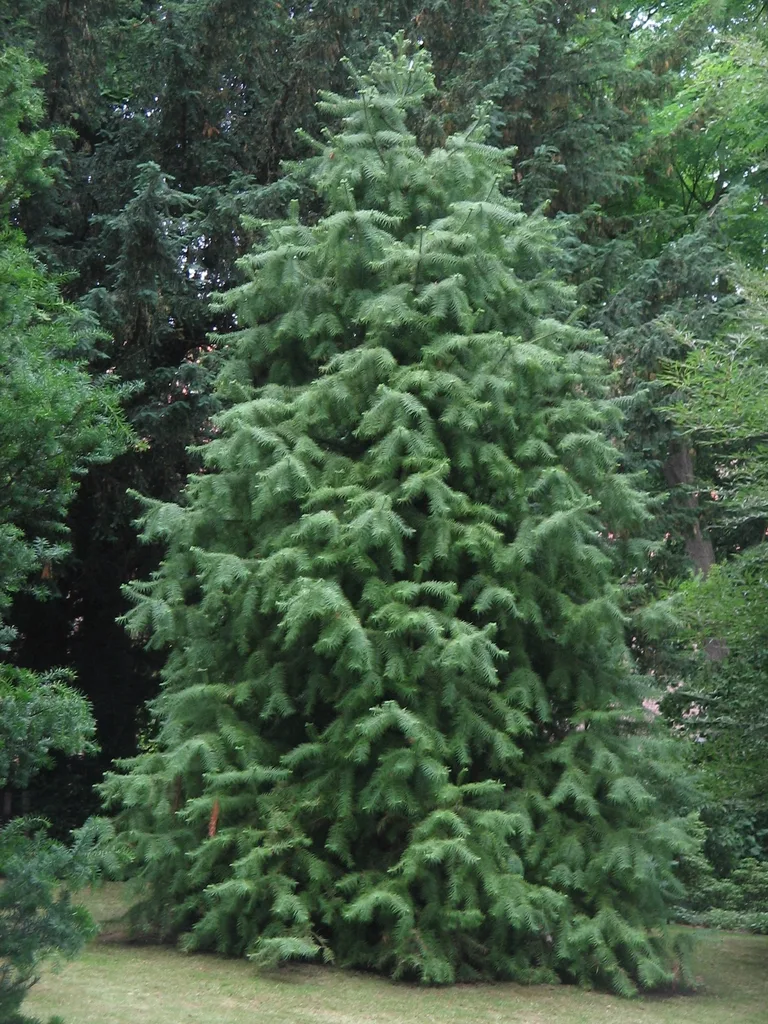
A tree up to about 20m high in cultivation (it may grow taller in its native habitat) with dark brown bark which is shed in narrow strips and lush lance-shaped leaves up to 7cm long, deep green with a blue-grey bloom so that they have a silvery sheen. Separate male and female wind-pollinated flowers appear at the shoot tips in spring followed by roundish cones, up to 4cm across, which start bright green and become glossy brown in the autumn
Scientific classification
- Species
- Chinese fir 'Glauca' (Cunninghamia lanceolata 'Glauca')
- Genus
- Cunninghamia
- Family
- Cupressaceae
- Information to be completed
- Toxicity
- Conifers
- Plant type
- Higher than 12 metres
- Height
- wider than 8 metres
- Spread
- Evergreen
- Foliage
- Columnar upright
- Habit
- Spring · Summer · Autumn · Winter
- Season of interest
- Full sun · Partial shade
- Sunlight
- Information to be completed
- Ideal temperature









Chinese fir 'Glauca' pictures
Distribution of Chinese fir 'Glauca'
Distribution map
Information to be completed
Information to be completed
Culture
Information to be completed
Toxicity
Information to be completed
Quick identification of Chinese fir 'Glauca'
Information to be completed
Chinese fir 'Glauca' care guide
- Moderate regular watering, allowing brief slight drying between soakings
- Watering
- Full sun · Partial shade
- Sunlight
- Information to be completed
- Ideal temperature

Watering
Moderate regular watering, allowing brief slight drying between soakings
Fertilizing
 Fertilizing
Balanced perennial feed every four weeks from spring through summer
Pruning
 Pruning
No pruning required
Propagation
 Propagation
Propagate by heeled greenwood cuttings in late summer in a humid cold frame, or by softwood cuttings in summer under glass with bottom heat
Growing
 Growing
Plant when small (less than 1m high) in a sheltered position in sun or partial shade in moist well-drained soil that does not contain free lime; it prefers a mild, humid climate but may tolerate low temperatures
People also ask
Information to be completed
Common pests and diseases
Diseases
Generally disease free
Pests
Generally pest-free
Explore the plant health library →




