
Sibthorp primrose
Also known as: Information to be completed
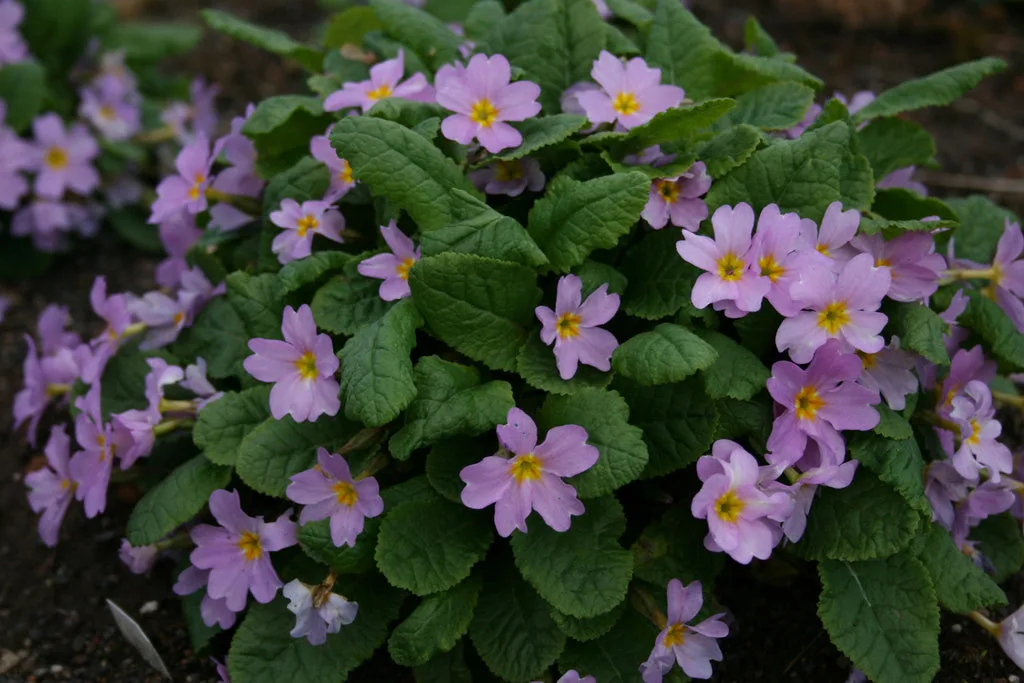
P. vulgaris subsp. sibthorpii is a semi-evergreen perennial to to 15cm tall, with a rosette of obovate leaves and clusters of long-stalked purplish-pink flowers 2-3cm wide in early spring
Scientific classification
- Species
- Sibthorp primrose (Primula vulgaris subsp. sibthorpii)
- Genus
- Primula
- Family
- Primulaceae
- Order
- Ericales
- Class
- Magnoliopsida
- Phylum
- Magnoliophyta
- Information to be completed
- Toxicity
- Alpine Rockery · Herbaceous Perennial
- Plant type
- 0.1-0.5 metres
- Height
- 0-0.1 metre
- Spread
- Deciduous
- Foliage
- Bushy
- Habit
- Spring · Summer · Autumn · Winter
- Season of interest
- Full sun · Partial shade
- Sunlight
- Information to be completed
- Ideal temperature









Sibthorp primrose pictures
Distribution of Sibthorp primrose
Distribution map
- Native
- Introduced
- Cultivated
Source:WCVP v16 · Royal Botanic Gardens, Kew · CC BY 3.0 · Boundaries:WGSRPD / TDWG
Sibthorp primrose care guide
- Keep soil evenly moist and cool, never fully dry
- Watering
- Full sun · Partial shade
- Sunlight

Watering
Keep soil evenly moist and cool, never fully dry
Fertilizing
 Fertilizing
Weak balanced feed during spring growing season
Pruning
 Pruning
No pruning required
Propagation
 Propagation
Propagate by seed; take root cuttings when dormant in winter. Divide between autumn and early spring
Growing
 Growing
Best planted in dappled shade in humus-rich, moist neutral to acid soil. Tolerates full sun if soil remains moist at all times
Common pests and diseases
Diseases
May be affected by primula brown core, grey mould, primula leaf spot and a virus
Pests
Susceptible to leafhoppers, vine weevil, slugs and snails, caterpillars and aphids
Explore the plant health library →




