
Syngonium 'White Butterfly'
Also known as: Information to be completed
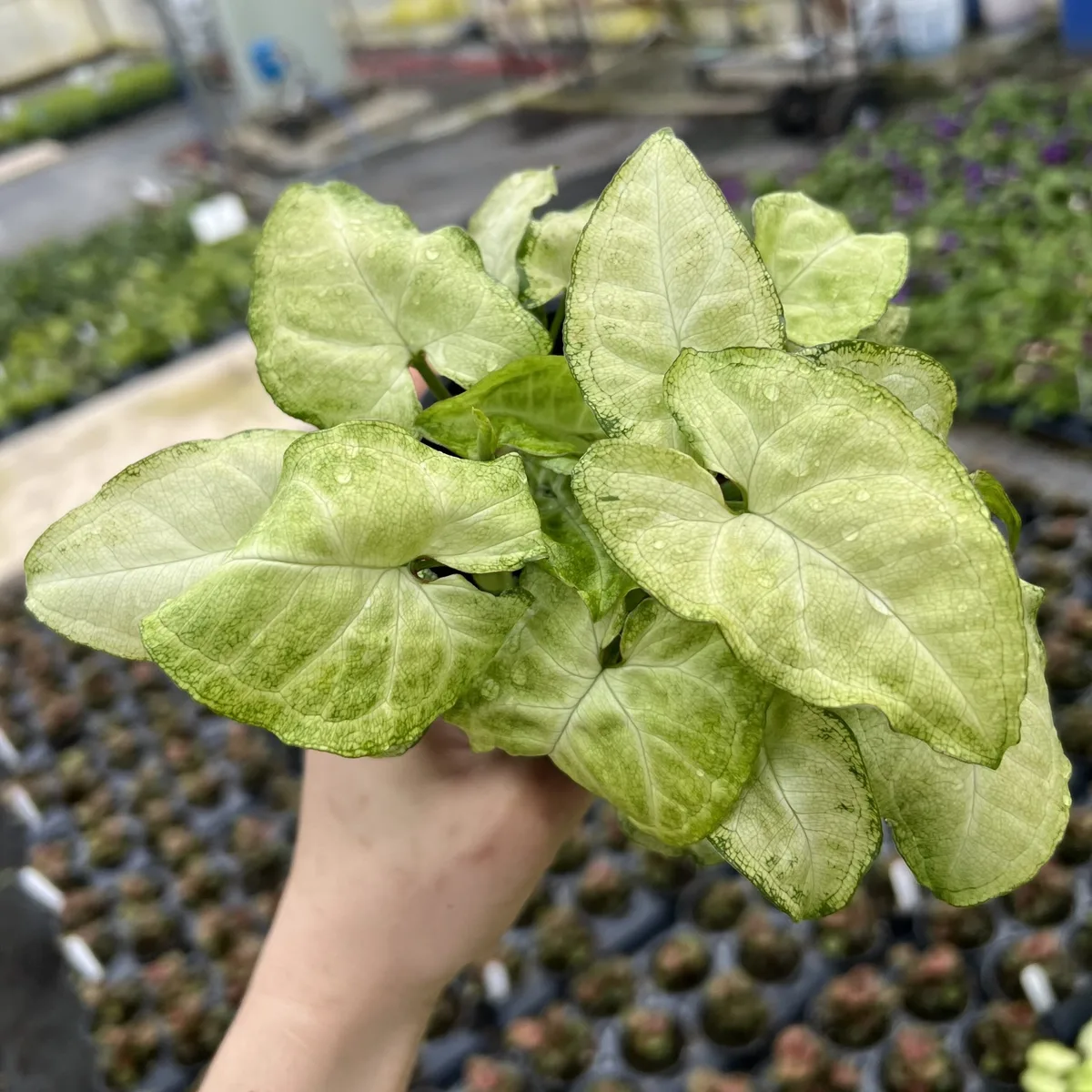
An evergreen herbaceous perennial which is trailing when young but when older can climb with aerial roots to about 50cm or more high, and its juvenile leaves are arrow-shaped and green, marked with cream along the veins, and with green margins
Scientific classification
- Species
- Syngonium 'White Butterfly' (Syngonium 'White Butterfly')
- Genus
- Syngonium
- Family
- Araceae
- Order
- Alismatales
- Class
- Liliopsida
- Phylum
- Magnoliophyta
- Harmful if eaten, skin/eye irritant. Wear gloves and other protective equipment when handling]
- Toxicity
- Herbaceous Perennial · Houseplants · Conservatory Greenhouse
- Plant type
- 0.5-1 metres
- Height
- 0.5-1 metres
- Spread
- Evergreen
- Foliage
- Trailing · Climbing
- Habit
- Spring · Summer · Autumn · Winter
- Season of interest
- Partial shade
- Sunlight
- Information to be completed
- Ideal temperature









Syngonium 'White Butterfly' pictures
Toxicity
Harmful if eaten, skin/eye irritant. Wear gloves and other protective equipment when handling]
Syngonium 'White Butterfly' care guide
- Moderate regular watering, allowing brief slight drying between soakings
- Watering
- Partial shade
- Sunlight

Watering
Moderate regular watering, allowing brief slight drying between soakings
Fertilizing
 Fertilizing
Balanced perennial feed every four weeks from spring through summer
Pruning
 Pruning
Routine pruning is unnecessary; shorten overlong shoots to fit the available space. For last-year flowering growth, prune after flowering; for current-year flowering growth, prune in late winter or spring. This guidance is for established plants.
Propagation
 Propagation
Propagate by stem-tip cuttings or leaf-bud cuttings, taken in summer and rooted with bottom heat
Growing
 Growing
In cooler climates, grow in a warm greenhouse (minimum 15ºC) or as a houseplant, in loamless potting compost, with a moss-covered pole for support, in bright filtered light and moderate humidity, and water freely, with a balanced liquid fertilizer every few weeks, in the growing season, but moderately in winter; in warmer climates, grow outdoors in fertile, moist soil, in light dappled shade or partial shade
Common pests and diseases
Diseases
Generally disease-free
Pests
May be susceptible to mealybugs and glasshouse red spider mites
Explore the plant health library →




