
comfrey 'Hidcote Pink'
Also known as: Information to be completed
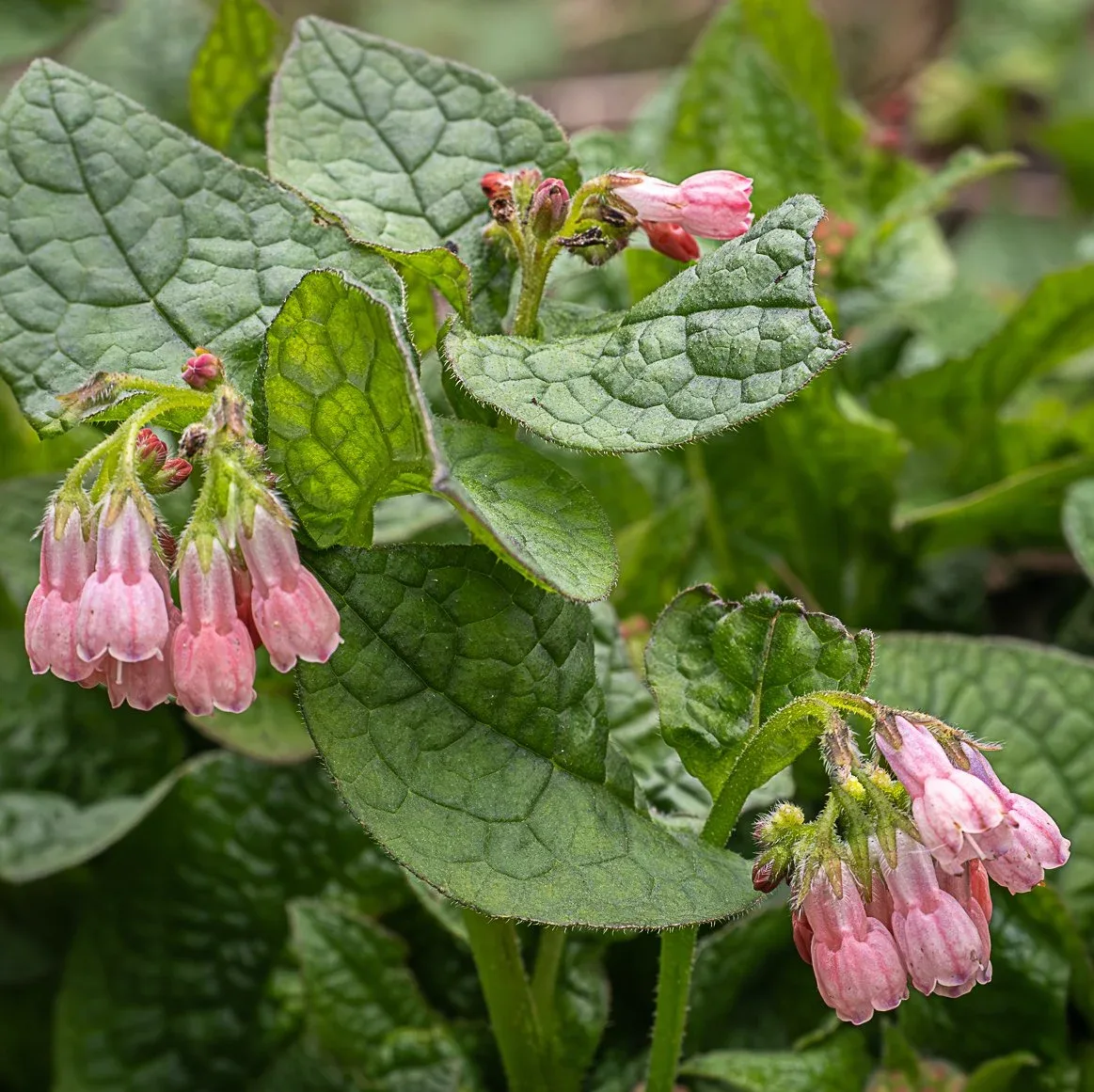
Clump-forming perennial to 45cm tall, with rough, oval mid-green leaves, to 25cm long, and small pink and white tubular flowers, fading with age, are borne in clusters in mid and late spring
Scientific classification
- Species
- comfrey 'Hidcote Pink' (Symphytum 'Hidcote Pink')
- Genus
- Symphytum
- Family
- Boraginaceae
- Harmful if eaten repeatedly. Wear gloves and other protective equipment when handling
- Toxicity
- Herbaceous Perennial
- Plant type
- 0.1-0.5 metres
- Height
- 0.1-0.5 metres
- Spread
- Deciduous
- Foliage
- Clump forming
- Habit
- Spring · Summer · Autumn
- Season of interest
- Full sun · Partial shade
- Sunlight
- Information to be completed
- Ideal temperature









comfrey 'Hidcote Pink' pictures
Distribution of comfrey 'Hidcote Pink'
Distribution map
Information to be completed
Information to be completed
Culture
Information to be completed
Toxicity
Harmful if eaten repeatedly. Wear gloves and other protective equipment when handling
Quick identification of comfrey 'Hidcote Pink'
Information to be completed
comfrey 'Hidcote Pink' care guide
- Moderate regular watering, allowing brief slight drying between soakings
- Watering
- Full sun · Partial shade
- Sunlight
- Information to be completed
- Ideal temperature

Watering
Moderate regular watering, allowing brief slight drying between soakings
Fertilizing
 Fertilizing
Balanced perennial feed every four weeks from spring through summer
Pruning
 Pruning
Cut back after flowering to encourage neat, young foliage
Propagation
 Propagation
Propagate by division of fleshy roots in spring or from root cuttings in early winter
Growing
 Growing
Grow in moderately fertile, moist soil in sun or partial shade. Be aware this plant has the potential to become a nuisance, so may require appropriate management
People also ask
Information to be completed
Common pests and diseases
Diseases
Generally disease-free
Pests
Generally pest-free
Explore the plant health library →




