
chives 'Forescate'
Also known as: Information to be completed
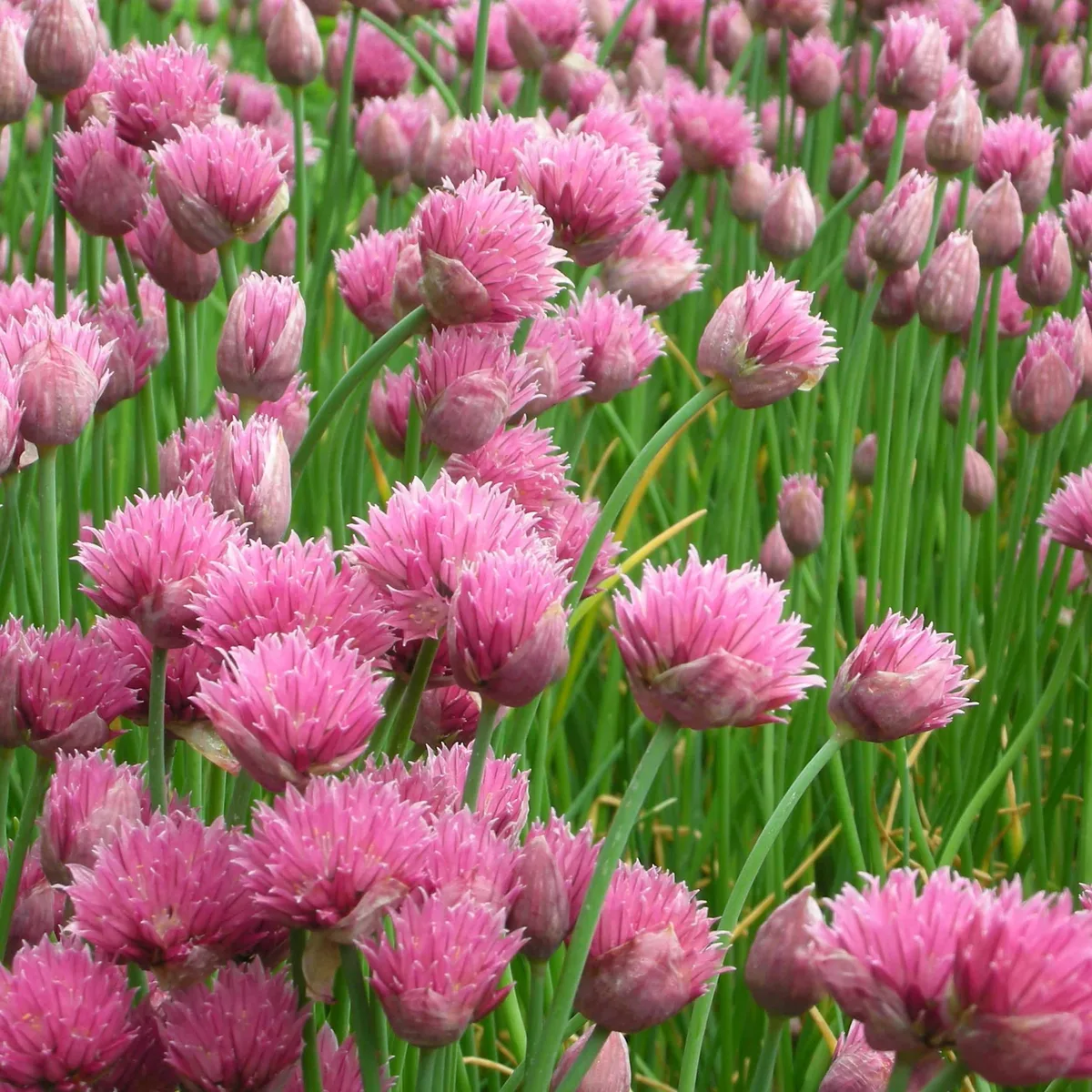
This cultivar is larger than common chives and forms a good sized dense clump to 30cm tall, with hollow, tubular, bright green, onion-scented leaves. In early summer it bears attractive large clusters of pink flowers. Both leaves and flowers are edible, the flowers also make good cut flowers.
Scientific classification
- Species
- chives 'Forescate' (Allium schoenoprasum 'Forescate')
- Genus
- Allium
- Family
- Amaryllidaceae
- Order
- Asparagales
- Class
- Liliopsida
- Phylum
- Magnoliophyta
- Information to be completed
- Toxicity
- Herbs - Culinary
- Plant type
- 0.1-0.5 metres
- Height
- 0.1-0.5 metres
- Spread
- Deciduous
- Foliage
- Clump forming
- Habit
- Spring · Summer · Autumn
- Season of interest
- Full sun · Partial shade
- Sunlight
- Information to be completed
- Ideal temperature









chives 'Forescate' pictures
Distribution of chives 'Forescate'
Distribution map
- Native
- Introduced
- Cultivated
Source:WCVP v16 · Royal Botanic Gardens, Kew · CC BY 3.0 · Boundaries:WGSRPD / TDWG
chives 'Forescate' care guide
- Moist soil during active growth, then reduce watering after foliage yellows
- Watering
- Full sun · Partial shade
- Sunlight

Watering
Moist soil during active growth, then reduce watering after foliage yellows
Fertilizing
 Fertilizing
Light bulb fertilizer at emergence and again after flowering
Pruning
 Pruning
Remove dead flower heads or cut back after flowering to encourage fresh new growth.
Propagation
 Propagation
Propagate by seed or division
Growing
 Growing
Chives are easy to grow in moisture-retentive, well-drained soil in a sunny or partially shaded spot. They can also be grown in containers of soil-based compost. See chive cultivation for further advice
Common pests and diseases
Diseases
May be susceptible to onion downy mildew and leek rust
Pests
Generally pest-free
Explore the plant health library →




