
Ligustrum ovalifolium 'Argenteum'
Also known as: Information to be completed
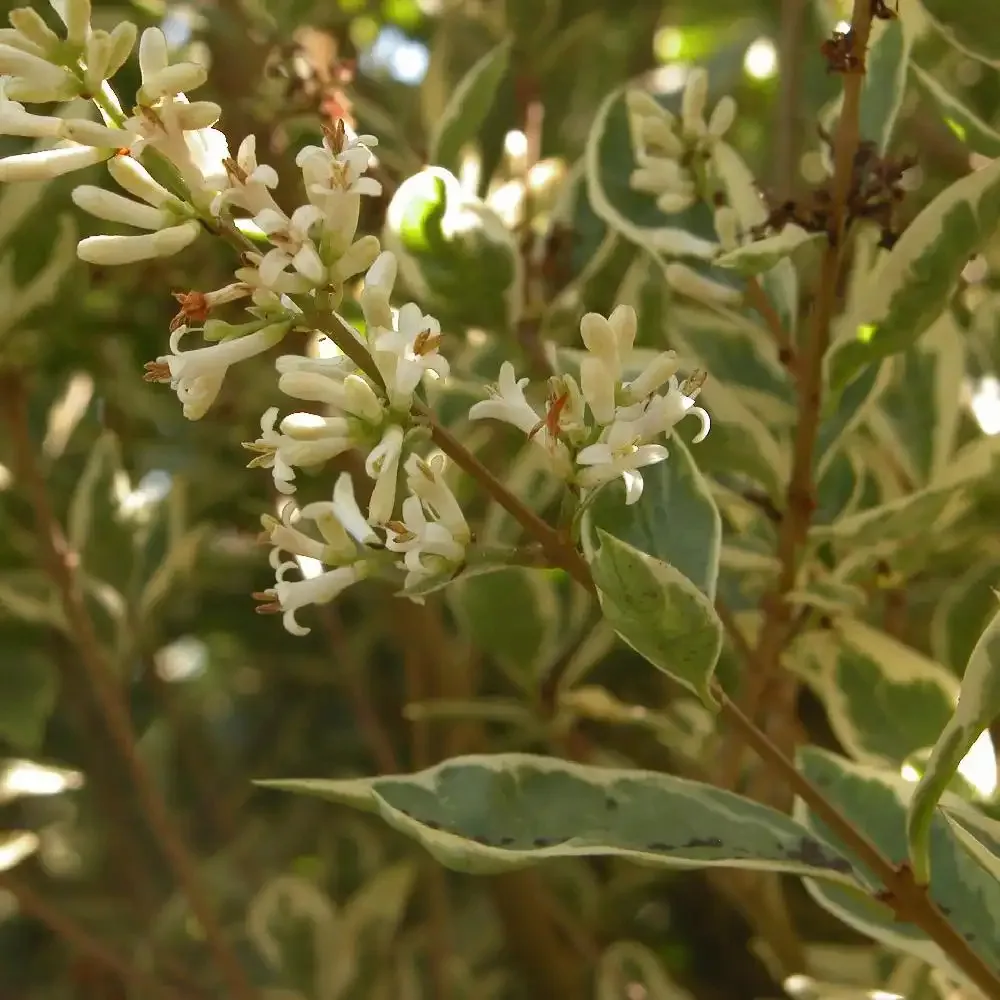
A semi-evergreen shrub, up to around 4m high, with an upright habit and oval green leaves with creamy white margins. Dense clusters of small, strongly scented white flowers are produced in early summer, followed by blue-black berries
Scientific classification
- Species
- Ligustrum ovalifolium 'Argenteum' (Ligustrum ovalifolium 'Argenteum')
- Genus
- Ligustrum
- Family
- Oleaceae
- Order
- Lamiales
- Class
- Magnoliopsida
- Phylum
- Magnoliophyta
- Harmful if eaten. Wear gloves and other protective equipment when handling
- Toxicity
- Shrubs
- Plant type
- 2.5-4 metres
- Height
- 1.5-2.5 metres
- Spread
- Semi evergreen · Evergreen
- Foliage
- Bushy
- Habit
- Spring · Summer · Autumn · Winter
- Season of interest
- Full sun · Partial shade
- Sunlight
- Information to be completed
- Ideal temperature









Ligustrum ovalifolium 'Argenteum' pictures
Distribution of Ligustrum ovalifolium 'Argenteum'
Distribution map
- Native
- Introduced
- Cultivated
Source:WCVP v16 · Royal Botanic Gardens, Kew · CC BY 3.0 · Boundaries:WGSRPD / TDWG
Toxicity
Harmful if eaten. Wear gloves and other protective equipment when handling
Ligustrum ovalifolium 'Argenteum' care guide
- Let top soil dry slightly then water fully around root base
- Watering
- Full sun · Partial shade
- Sunlight

Watering
Let top soil dry slightly then water fully around root base
Fertilizing
 Fertilizing
Balanced slow-release feed added once annually early springtime
Pruning
 Pruning
Little pruning is needed. Remove diseased, damaged, crowded or crossing shoots and unwanted growth. Timing depends on the plant: generally late winter or early spring; plants prone to bleeding and deciduous magnolias need different timing, and deciduous azaleas and lilacs are pruned after flowering. Trim hedges twice during summer.
Propagation
 Propagation
Propagate by semi-ripe cuttings in summer or by hardwood cuttings in winter
Growing
 Growing
Grow in any well-drained soil in full sun or part shade. Avoid planting in areas prone to waterlogging
Common pests and diseases
Diseases
May be susceptible to honey fungus, white root rot, leaf spots and Verticillium wilt
Pests
May be susceptible to privet aphid, willow scale insects, lilac leaf-mining moth and privet thrips
Explore the plant health library →




