
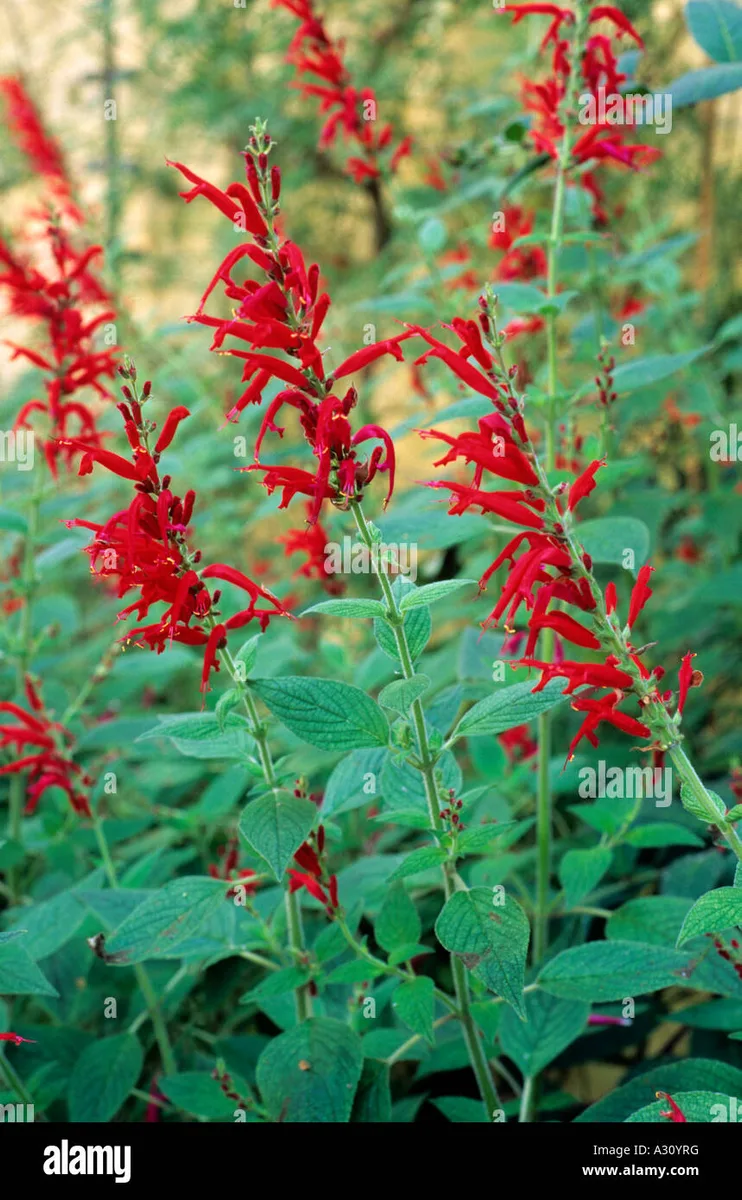
pineapple-scented sage 'Scarlet Pineapple'
Also known as: Information to be completed
Scarlet Pineapple' is a bushy sub-shrub to 90cm tall, with light green, ovate leaves strongly pineapple-scented, and tubular scarlet flowers 3cm long in short spikes in winter and spring
Scientific classification
- Species
- pineapple-scented sage 'Scarlet Pineapple' (Salvia elegans 'Scarlet Pineapple')
- Genus
- Salvia
- Family
- Lamiaceae
- Information to be completed
- Toxicity
- Herbaceous Perennial · Conservatory Greenhouse
- Plant type
- 0.5-1 metres
- Height
- 0.1-0.5 metres
- Spread
- Deciduous
- Foliage
- Bushy
- Habit
- Spring · Summer · Autumn · Winter
- Season of interest
- Full sun
- Sunlight
- Information to be completed
- Ideal temperature









pineapple-scented sage 'Scarlet Pineapple' pictures
Distribution of pineapple-scented sage 'Scarlet Pineapple'
Distribution map
- Native
- Introduced
- Cultivated
Source:WCVP v16 · Royal Botanic Gardens, Kew · CC BY 3.0 · Boundaries:WGSRPD / TDWG
Culture
Information to be completed
Toxicity
Information to be completed
Quick identification of pineapple-scented sage 'Scarlet Pineapple'
Information to be completed
pineapple-scented sage 'Scarlet Pineapple' care guide
- Moderate regular watering, allowing brief slight drying between soakings
- Watering
- Full sun
- Sunlight
- Information to be completed
- Ideal temperature

Watering
Moderate regular watering, allowing brief slight drying between soakings
Fertilizing
 Fertilizing
Balanced perennial feed every four weeks from spring through summer
Pruning
 Pruning
Prune lightly as needed to remove unwanted shoots and keep the shrub in shape. Prune in mid- to late spring.
Propagation
 Propagation
Propagate by softwood cuttings in spring or early summer or semi-ripe cuttings in late summer or autumn with bottom heat
Growing
 Growing
Under glass, grow in well-drained, loamless or loam-based potting compost (John Innes No.2 or 3) in full light with shade from hot sun. While in gowth, water freely and apply a balanced liquid fertiliser monthly; water moderately in winter. Maintain low to moderate humidity. Outdoors, grow in light, moderately fertile, humus-rich, moist but well-drained soil in full sun and shelter from cold, drying winds
People also ask
Information to be completed
Common pests and diseases
Diseases
May be susceptible to foot and root rots under glass
Pests
May be susceptible to slug, snail and capsid bug damage on young growth. Under glass, aphids, glasshouse red spider mite and glasshouse whitefly may be a problem
Explore the plant health library →




