
butterfly bush 'Pink Delight'
Also known as: Information to be completed
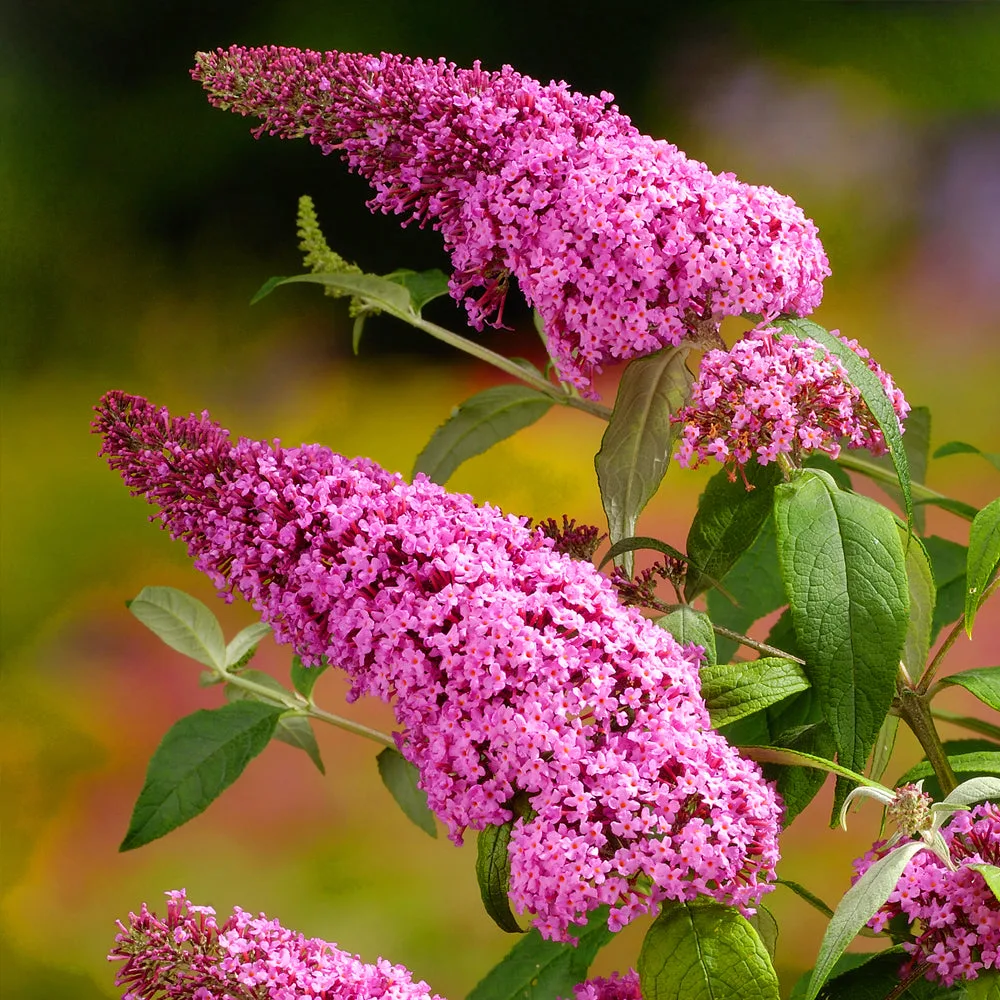
Deciduous shrub about 1.8m tall, with arching stems bearing narrow, grey-green leaves whitish beneath, and slender panicles to 30cm long of bright pink flowers with orange eyes, produced from mid to late summer
Scientific classification
- Species
- butterfly bush 'Pink Delight' (Buddleja 'Pink Delight')
- Genus
- Buddleja
- Family
- Scrophulariaceae
- Information to be completed
- Toxicity
- Shrubs
- Plant type
- 2.5-4 metres
- Height
- 2.5-4 metres
- Spread
- Deciduous
- Foliage
- Bushy
- Habit
- Spring · Summer · Autumn
- Season of interest
- Full sun · Partial shade
- Sunlight
- Information to be completed
- Ideal temperature









butterfly bush 'Pink Delight' pictures
Distribution of butterfly bush 'Pink Delight'
Distribution map
Information to be completed
Information to be completed
Culture
Information to be completed
Toxicity
Information to be completed
Quick identification of butterfly bush 'Pink Delight'
Information to be completed
butterfly bush 'Pink Delight' care guide
- Moderate deep watering during dry periods, free drainage preferred
- Watering
- Full sun · Partial shade
- Sunlight
- Information to be completed
- Ideal temperature

Watering
Moderate deep watering during dry periods, free drainage preferred
Fertilizing
 Fertilizing
Balanced shrub feed once in spring
Pruning
 Pruning
Shorten last year's flowering stems to one or two buds from the older woody framework. Remove thin, weak and dead shoots. Prune in early to mid-spring as growth resumes; avoid winter pruning that exposes new shoots to frost.
Propagation
 Propagation
Propagate by semi-hardwood cuttings in summer
Growing
 Growing
Grow in well-drained soil in full sun or partial shade. See buddleja cultivation for more detailed advice
People also ask
Information to be completed
Common pests and diseases
Diseases
May be susceptible to honey fungus, fungal leaf spot, and virus diseases
Pests
May be susceptible to aphids, capsid bugs, caterpillars, earwigs, figwort weevils, glasshouse red spider mite, leaf and bud eelworm, and mullein moth
Explore the plant health library →




