
thyme 'Doone Valley'
Also known as: Information to be completed
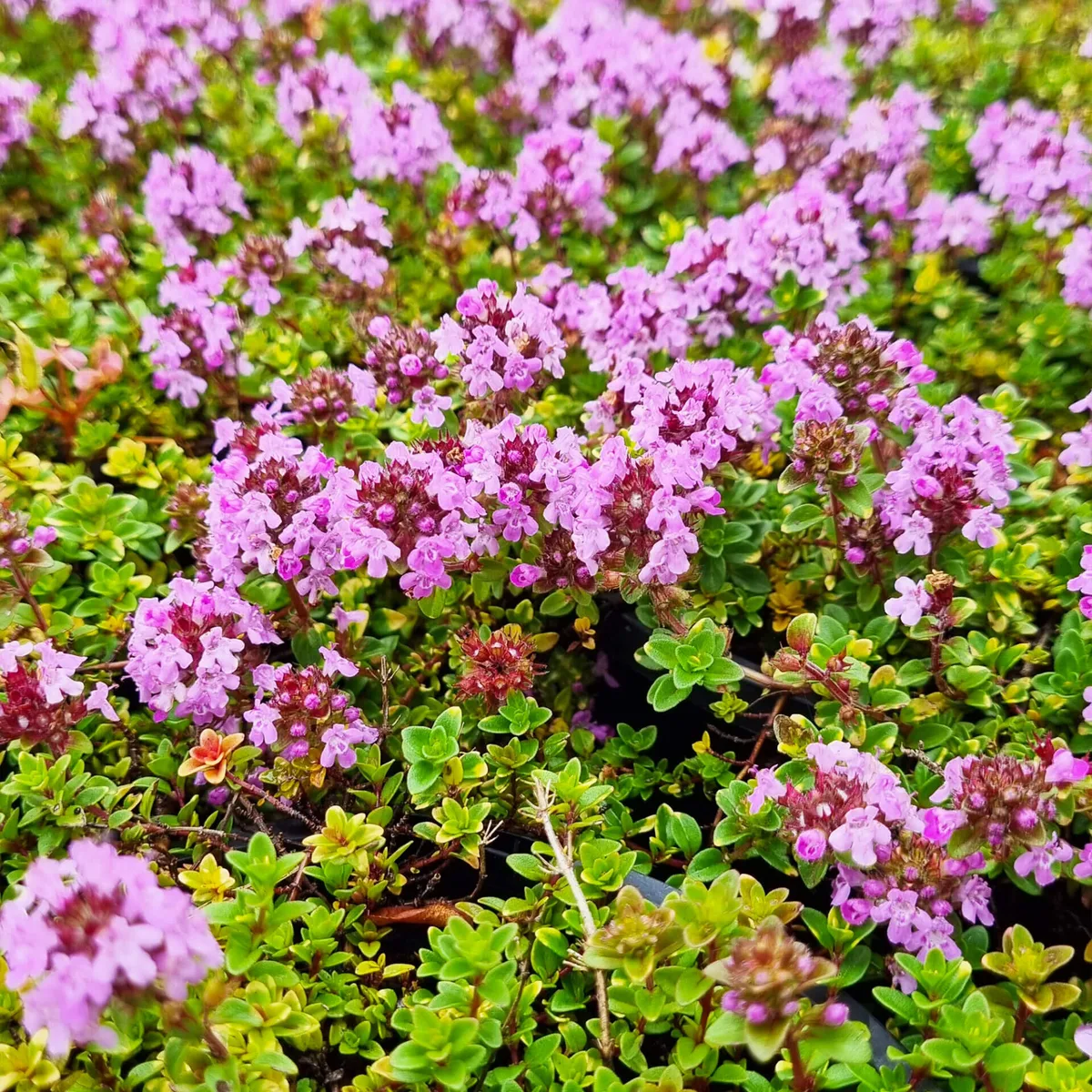
An aromatic, evergreen, mat-forming, dwarf shrub. The tiny leaves are dark green with yellow splashes, and the flowers, borne in rounded heads in summer, are lavender-pink opening from red buds
Scientific classification
- Species
- thyme 'Doone Valley' (Thymus 'Doone Valley')
- Genus
- Thymus
- Family
- Lamiaceae
- Information to be completed
- Toxicity
- Herbs - Culinary · Shrubs · Alpine Rockery
- Plant type
- Up to 10 cm
- Height
- 0.1-0.5 metres
- Spread
- Evergreen
- Foliage
- Matforming
- Habit
- Spring · Summer · Autumn · Winter
- Season of interest
- Full sun
- Sunlight
- Information to be completed
- Ideal temperature









thyme 'Doone Valley' pictures
Distribution of thyme 'Doone Valley'
Distribution map
Information to be completed
Information to be completed
Culture
Information to be completed
Toxicity
Information to be completed
Quick identification of thyme 'Doone Valley'
Information to be completed
thyme 'Doone Valley' care guide
- Moderate regular watering, avoid prolonged drought or waterlogging
- Watering
- Full sun
- Sunlight
- Information to be completed
- Ideal temperature

Watering
Moderate regular watering, avoid prolonged drought or waterlogging
Fertilizing
 Fertilizing
Balanced feed in spring and light repeat in growth season
Pruning
 Pruning
Shorten flowered shoots to about 1.5–2.5 cm from the previous year's growth. If flowering is on last year's growth, prune after flowering; if on current-year growth, prune the following early to mid-spring.
Propagation
 Propagation
Propagate by division in spring. Semi-hardwood cuttings may be taken in mid- to late-summer although some bottom heat may be required
Growing
 Growing
Requires very good drainage, neutral to alkaline soil and a sunny position. Very intolerant of winter wet
People also ask
Information to be completed
Common pests and diseases
Diseases
Generally disease free
Pests
Generally pest-free
Explore the plant health library →




