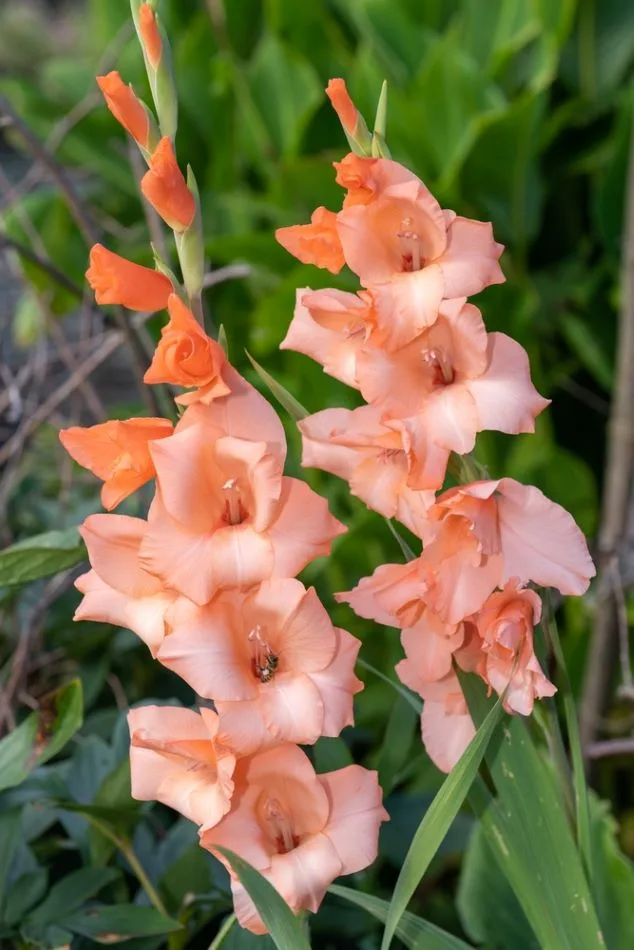
sword lily 'Peter Pears'
Also known as: Information to be completed
A large-flowered gladiolus with peachy-orange flowers from early to late summer
Scientific classification
- Species
- sword lily 'Peter Pears' (Gladiolus 'Peter Pears')
- Genus
- Gladiolus
- Family
- Iridaceae
- Order
- Asparagales
- Class
- Liliopsida
- Phylum
- Tracheophyta
- Ornamental bulbs, not to be eaten. Wear gloves and other protective equipment when handling]
- Toxicity
- Bulbs
- Plant type
- 1-1.5 metres
- Height
- 0-0.1 metre
- Spread
- Deciduous
- Foliage
- Columnar upright
- Habit
- Spring · Summer
- Season of interest
- Full sun
- Sunlight
- Information to be completed
- Ideal temperature









sword lily 'Peter Pears' pictures
Toxicity
Ornamental bulbs, not to be eaten. Wear gloves and other protective equipment when handling]
sword lily 'Peter Pears' care guide
- Regular watering spring growth, reduce irrigation autumn leaf dieback
- Watering
- Full sun
- Sunlight

Watering
Regular watering spring growth, reduce irrigation autumn leaf dieback
Fertilizing
 Fertilizing
Weak bulb liquid feed applied once before spring leaf emergence phase
Pruning
 Pruning
No pruning required
Propagation
 Propagation
Propagate by separating cormlets when dormant
Growing
 Growing
Plant 10 to 16cm deep on a bed of sharp sand in fertile, well-drained soil. Lift when foliage dies back, discard old corms and store new corms in a dry frost-free place until planting in the spring. In milder areas a thick dry winter mulch may suffice
Common pests and diseases
Diseases
May be susceptible to gladiolus corm rot, grey moulds (Botrytis), Fusarium bulb rot, gladiolus core rot, gladiolus dry rot, gladiolus scab and neck rot, fungal leaf spot, and virus diseases
Pests
May be susceptible to gladiolus thrip, aphids and slugs
Explore the plant health library →