
Slovak pasqueflower
Also known as: Information to be completed
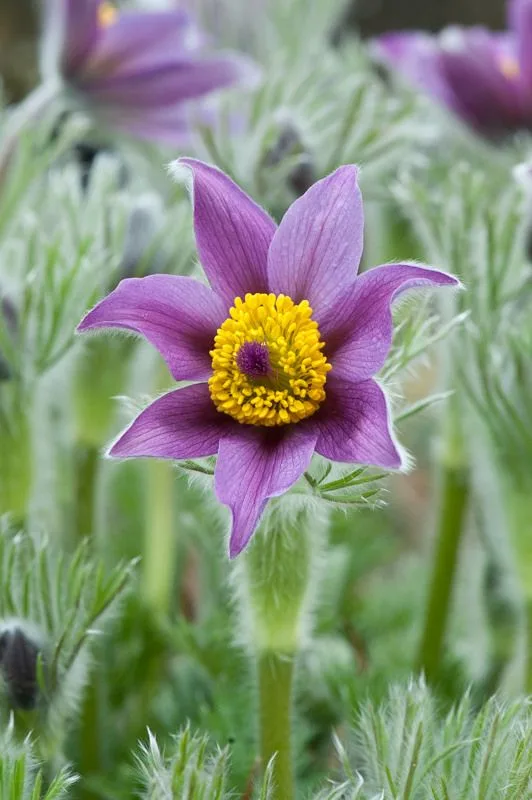
P. halleri subsp. slavica is a clump-forming herbaceous perennial to 20cm, with deeply dissected, woolly basal leaves and erect deep violet-purple flowers 5-8cm wide, followed by silky fruiting heads
Scientific classification
- Species
- Slovak pasqueflower (Pulsatilla halleri subsp. slavica)
- Genus
- Pulsatilla
- Family
- Ranunculaceae
- Order
- Ranunculales
- Class
- Magnoliopsida
- Phylum
- Magnoliophyta
- Can cause mild stomach upset if ingested. Wear gloves and wash hands after handling
- Toxicity
- Alpine Rockery · Herbaceous Perennial
- Plant type
- 0.1-0.5 metres
- Height
- 0.1-0.5 metres
- Spread
- Deciduous
- Foliage
- Clump forming
- Habit
- Spring · Summer
- Season of interest
- Full sun
- Sunlight
- Information to be completed
- Ideal temperature









Slovak pasqueflower pictures
Distribution of Slovak pasqueflower
Distribution map
- Native
- Introduced
- Cultivated
Source:WCVP v16 · Royal Botanic Gardens, Kew · CC BY 3.0 · Boundaries:WGSRPD / TDWG
Toxicity
Can cause mild stomach upset if ingested. Wear gloves and wash hands after handling
Slovak pasqueflower care guide
- Cool lightly moist soil, shelter plant from hot drying midday sunlight
- Watering
- Full sun
- Sunlight

Watering
Cool lightly moist soil, shelter plant from hot drying midday sunlight
Fertilizing
 Fertilizing
Thin alpine perennial feed monthly spring through early summer growth
Pruning
 Pruning
Leave faded flowers as seedheads are an attractive feature
Propagation
 Propagation
Propagate by seed sown in pots in an open frame as soon as seed is ripe. Propagate by taking root cuttings in winter
Growing
 Growing
Grow in fertile, very well-drained soil in full sun. It resents root disturbance and may be difficult to establish, so plant when small and leave undisturbed. Can also be grown in pots in an alpine house
Common pests and diseases
Diseases
Generally disease free
Pests
Generally pest-free
Explore the plant health library →




