
elephant's ears 'Pugsley's Pink'
Also known as: Information to be completed
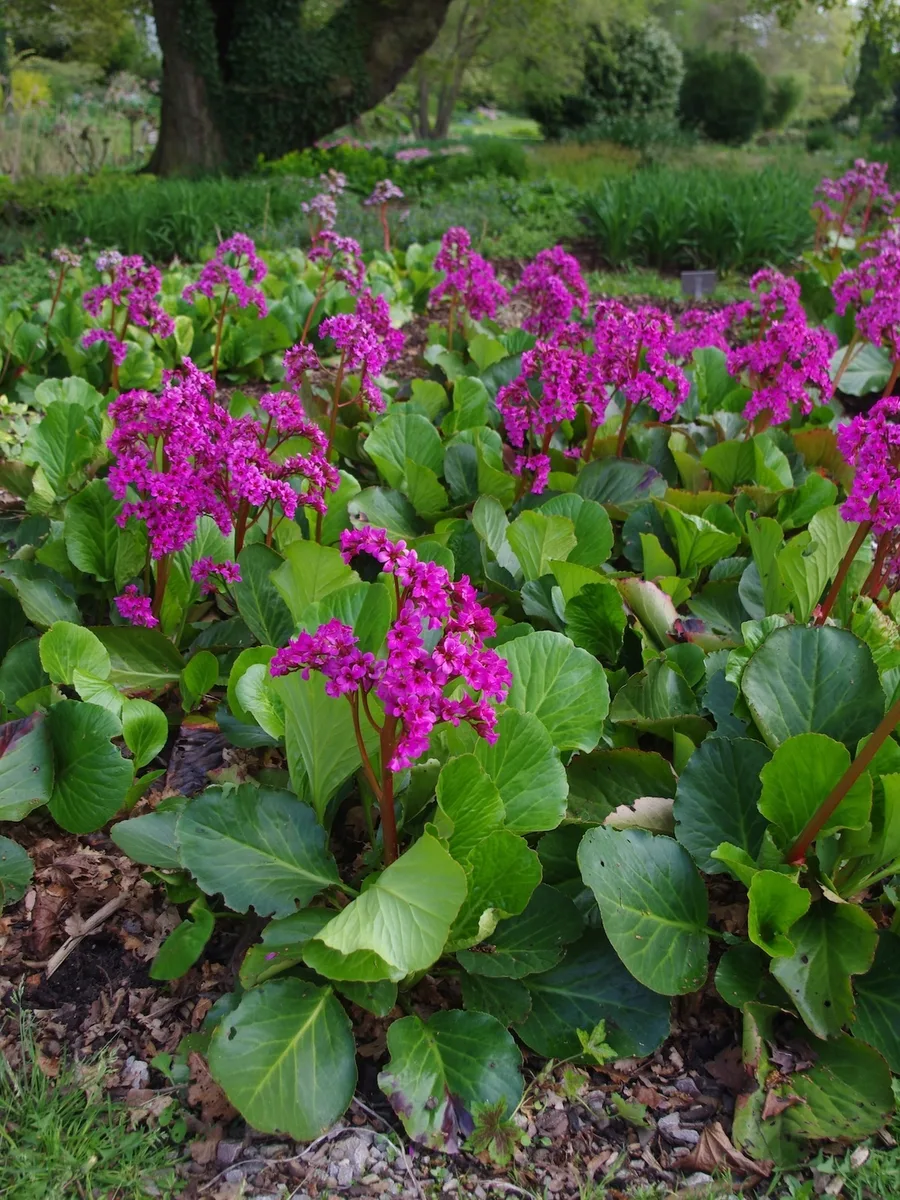
Pugsley's Pink' has showy purple-pink flowers with a red central stripe, held up to 70cm over mid-green leaves with a fine red edge and red reverse
Scientific classification
- Species
- elephant's ears 'Pugsley's Pink' (Bergenia 'Pugsley's Pink')
- Genus
- Bergenia
- Family
- Saxifragaceae
- Order
- Saxifragales
- Class
- Magnoliopsida
- Phylum
- Magnoliophyta
- Information to be completed
- Toxicity
- Herbaceous Perennial
- Plant type
- 0.5-1 metres
- Height
- 0.5-1 metres
- Spread
- Evergreen
- Foliage
- Matforming
- Habit
- Spring · Summer · Autumn · Winter
- Season of interest
- Full sun · Partial shade
- Sunlight
- Information to be completed
- Ideal temperature









elephant's ears 'Pugsley's Pink' pictures
elephant's ears 'Pugsley's Pink' care guide
- Moderate regular watering, allowing brief slight drying between soakings
- Watering
- Full sun · Partial shade
- Sunlight

Watering
Moderate regular watering, allowing brief slight drying between soakings
Fertilizing
 Fertilizing
Balanced perennial feed every four weeks from spring through summer
Pruning
 Pruning
Remove faded flower spikes and older brown or damaged leaves in spring
Propagation
 Propagation
Propagate by division or by rhizome section cuttings in Spring or Autumn
Growing
 Growing
Grows well in most humus-rich soils but dislikes extremes of heat and drought. Frosts may damage early flowers. See Bergenia cultivation for further advice
Common pests and diseases
Diseases
May be susceptible to a leaf spot
Pests
May be susceptible to vine weevil and slugs and snails
Explore the plant health library →




