
Cyclamen coum subsp. caucasicum
Also known as: Information to be completed
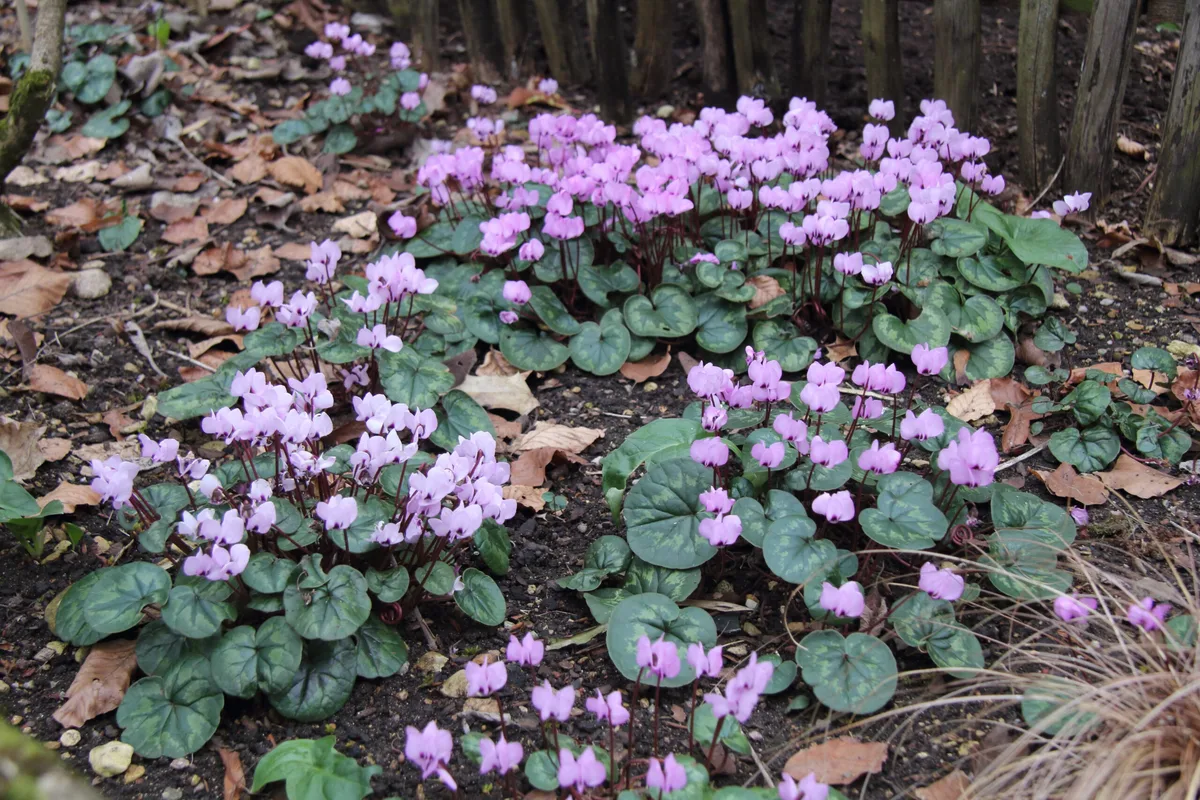
A low-growing, tuberous perennial, with heart-shaped deep green leaves, marbled with silver and occasionally toothed or scalloped at the edges. Flowers are pale pink to deep pink with swept back petals, and are held above the leaves in winter and early spring
Scientific classification
- Species
- Cyclamen coum subsp. caucasicum (Cyclamen coum subsp. caucasicum)
- Genus
- Cyclamen
- Family
- Primulaceae
- Ornamental bulbs, not to be eaten. Wear gloves and other protective equipment when handling
- Toxicity
- Bulbs
- Plant type
- Up to 10 cm
- Height
- 0-0.1 metre
- Spread
- Deciduous
- Foliage
- Clump forming
- Habit
- Spring · Autumn · Winter
- Season of interest
- Partial shade
- Sunlight
- Information to be completed
- Ideal temperature









Cyclamen coum subsp. caucasicum pictures
Distribution of Cyclamen coum subsp. caucasicum
Distribution map
Eastern Turkey Northern Iran Caucasus
Information to be completed
Culture
Information to be completed
Toxicity
Ornamental bulbs, not to be eaten. Wear gloves and other protective equipment when handling
Quick identification of Cyclamen coum subsp. caucasicum
Information to be completed
Cyclamen coum subsp. caucasicum care guide
- Moderate regular watering, allowing brief slight drying between soakings
- Watering
- Partial shade
- Sunlight
- Information to be completed
- Ideal temperature

Watering
Moderate regular watering, allowing brief slight drying between soakings
Fertilizing
 Fertilizing
Balanced perennial feed every four weeks from spring through summer
Pruning
 Pruning
No pruning required
Propagation
 Propagation
Propagate by seed sown as soon as ripe; exclude light. Can be beneficial to soak seed for 10 hours prior to sowing
Growing
 Growing
Plant 5cm deep in moderately fertile, humus-rich, well-drained soil. Avoid excessive summer moisture and mulch well when leaves wither. See hardy cyclamen cultivation
People also ask
Information to be completed
Common pests and diseases
Diseases
Generally disease-free
Pests
May be susceptible to mice and squirrels
Explore the plant health library →




