
Cape figwort 'Devil's Tears'
Also known as: Information to be completed
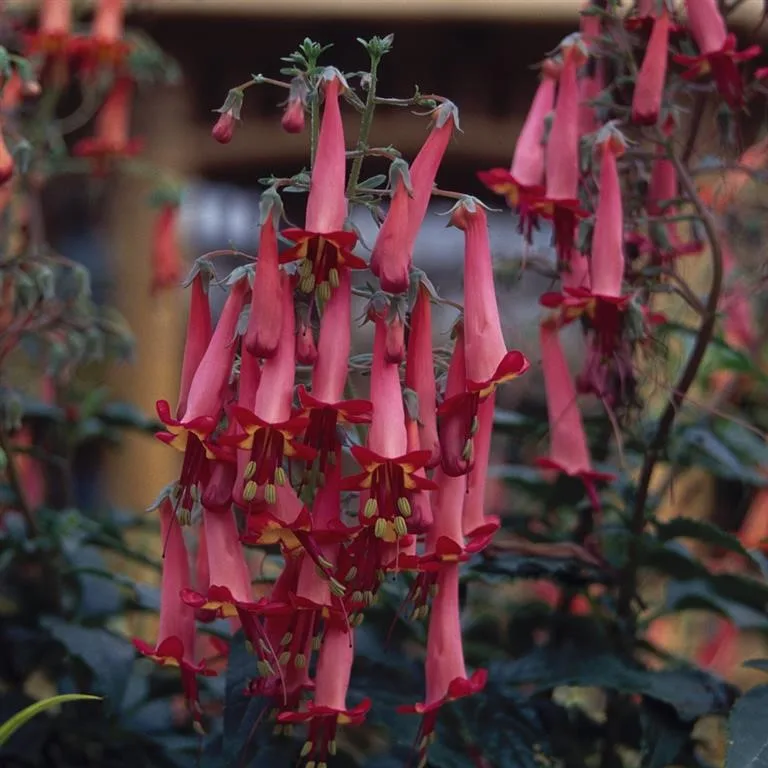
Devil's Tears' is a robust suckering shrub with dark green ovate leaves and large panicles of red buds opening to pendent, tubular deep pink flowers with orange lobes and yellow throats
Scientific classification
- Species
- Cape figwort 'Devil's Tears' (Phygelius × rectus 'Devil's Tears')
- Genus
- Phygelius
- Family
- Scrophulariaceae
- Information to be completed
- Toxicity
- Shrubs
- Plant type
- 1-1.5 metres
- Height
- 1-1.5 metres
- Spread
- Semi evergreen
- Foliage
- Bushy
- Habit
- Spring · Summer · Autumn · Winter
- Season of interest
- Full sun
- Sunlight
- Information to be completed
- Ideal temperature









Cape figwort 'Devil's Tears' pictures
Distribution of Cape figwort 'Devil's Tears'
Distribution map
Information to be completed
Information to be completed
Culture
Information to be completed
Toxicity
Information to be completed
Quick identification of Cape figwort 'Devil's Tears'
Information to be completed
Cape figwort 'Devil's Tears' care guide
- Moderate regular watering, allowing brief slight drying between soakings
- Watering
- Full sun
- Sunlight
- Information to be completed
- Ideal temperature

Watering
Moderate regular watering, allowing brief slight drying between soakings
Fertilizing
 Fertilizing
Balanced perennial feed every four weeks from spring through summer
Pruning
 Pruning
Prune lightly as needed to remove unwanted shoots and keep the shrub in shape. Prune in mid- to late spring.
Propagation
 Propagation
Propagate by seed sown in containers in a cold frame in spring or take softwood cuttings in late spring. Suckers may be detached and rooted in spring
Growing
 Growing
Grows well in most fertile soils but may require some winter protection in colder areas. Can be grown as a shrub or as a herbaceous perennial
People also ask
Information to be completed
Common pests and diseases
Diseases
May be susceptible to honey fungus (rarely)
Pests
May be susceptible to figwort weevil and capsid bug
Explore the plant health library →




