
Penstemon 'Charles Rudd'
Also known as: Information to be completed
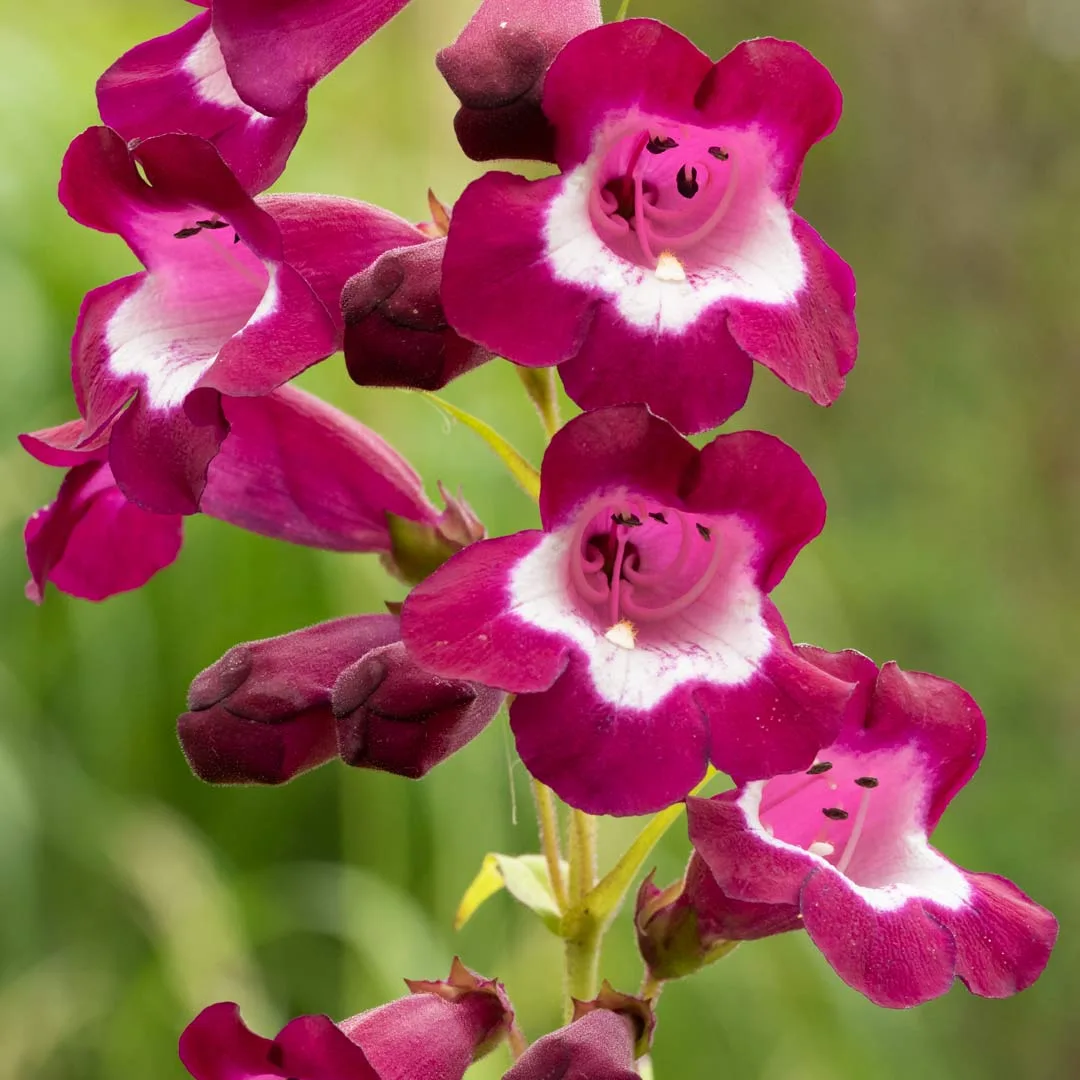
An upright, clump-forming, semi-evergreen perennial to 75cm, with lance-shaped, mid-green leaves. Spikes of bell-shaped, rich red-purple flowers with white throats are produced from mid-summer to mid-autumn
Scientific classification
- Species
- Penstemon 'Charles Rudd' (Penstemon 'Charles Rudd')
- Genus
- Penstemon
- Family
- Plantaginaceae
- Information to be completed
- Toxicity
- Herbaceous Perennial
- Plant type
- 0.5-1 metres
- Height
- 0.1-0.5 metres
- Spread
- Semi evergreen
- Foliage
- Clump forming
- Habit
- Spring · Summer · Autumn · Winter
- Season of interest
- Full sun · Partial shade
- Sunlight
- Information to be completed
- Ideal temperature









Penstemon 'Charles Rudd' pictures
Distribution of Penstemon 'Charles Rudd'
Distribution map
Information to be completed
Information to be completed
Culture
Information to be completed
Toxicity
Information to be completed
Quick identification of Penstemon 'Charles Rudd'
Information to be completed
Penstemon 'Charles Rudd' care guide
- Let top half soil dry before each full watering maintenance cycle
- Watering
- Full sun · Partial shade
- Sunlight
- Information to be completed
- Ideal temperature

Watering
Let top half soil dry before each full watering maintenance cycle
Fertilizing
 Fertilizing
Low-strength diluted flower feed monthly warm spring summer months
Pruning
 Pruning
Regular deadheading can encourage a longer flowering season. In autumn, cut back to by about a third to tidy and reduce windrock, but leave enough to protect the crown over winter. In mid- to late spring cut back to lowest new shoots
Propagation
 Propagation
Propagate by softwood cuttings in early summer or semi-ripe cuttings in midsummer
Growing
 Growing
Grow in fertile, well-drained soil in full sun or partial shade. In cold areas, protect plant over winter with a dry mulch. See penstemon cultivation
People also ask
Information to be completed
Common pests and diseases
Diseases
May be susceptible to Powdery mildews
Pests
May be susceptible to aphids and chrysanthemum eelworm
Explore the plant health library →




