
clustered bellflower 'Superba'
Also known as: Information to be completed
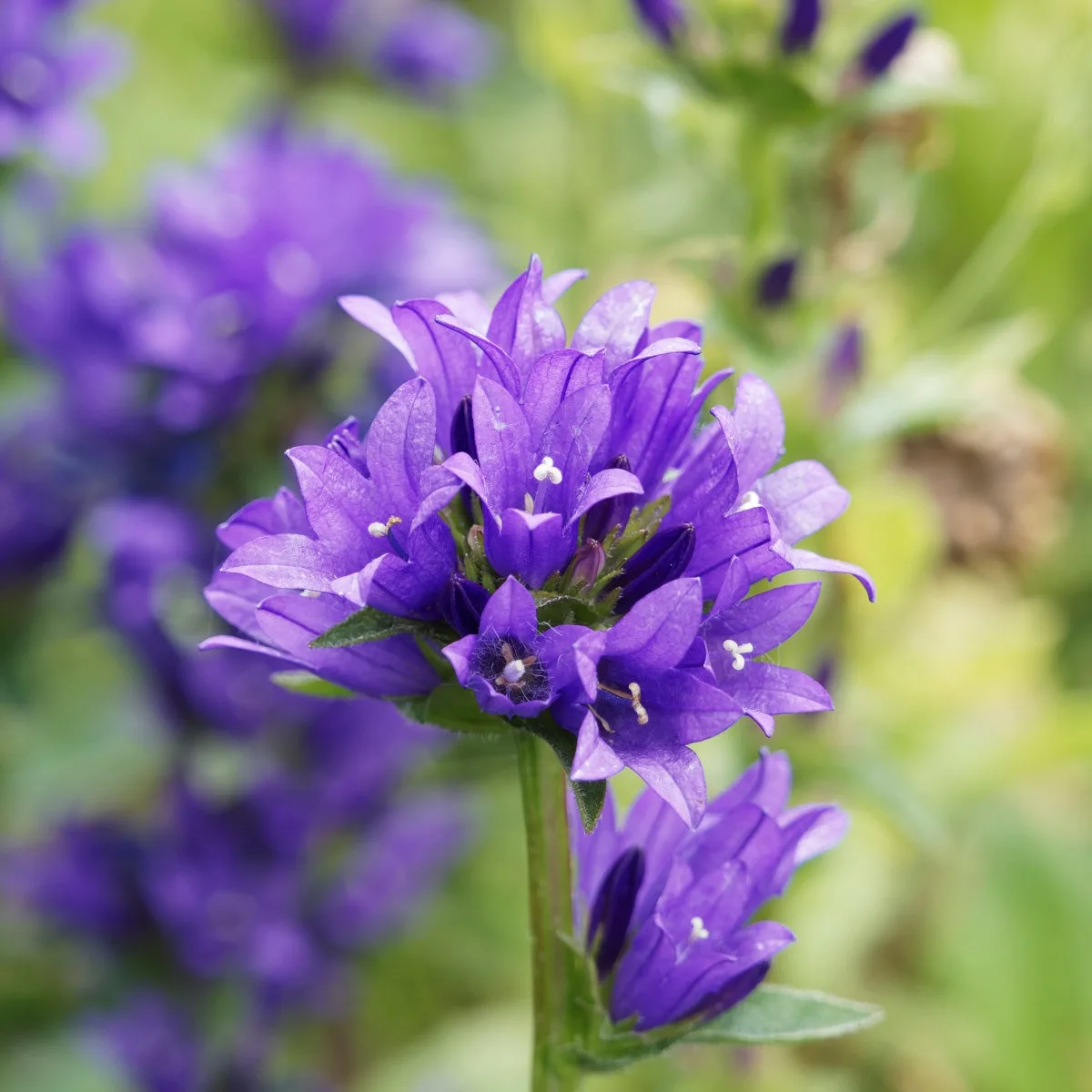
Superba' is a strong-growing rhizomatous perennial forming a wide colony of erect stems to 60cm, with oblong to ovate leaves and dense clusters of deep violet-purple, bell-shaped flowers 3cm in length
Scientific classification
- Species
- clustered bellflower 'Superba' (Campanula glomerata 'Superba')
- Genus
- Campanula
- Family
- Campanulaceae
- Information to be completed
- Toxicity
- Herbaceous Perennial
- Plant type
- 0.1-0.5 metres
- Height
- 0.5-1 metres
- Spread
- Deciduous
- Foliage
- Clump forming
- Habit
- Spring · Summer · Autumn
- Season of interest
- Full sun · Partial shade
- Sunlight
- Information to be completed
- Ideal temperature









clustered bellflower 'Superba' pictures
Distribution of clustered bellflower 'Superba'
Distribution map
Information to be completed
Information to be completed
Culture
Information to be completed
Toxicity
Information to be completed
Quick identification of clustered bellflower 'Superba'
Information to be completed
clustered bellflower 'Superba' care guide
- Even mild soil dampness, supply extra water during hot dry summer spells
- Watering
- Full sun · Partial shade
- Sunlight
- Information to be completed
- Ideal temperature

Watering
Even mild soil dampness, supply extra water during hot dry summer spells
Fertilizing
 Fertilizing
Diluted bellflower feed every three weeks spring through mid summer months
Pruning
 Pruning
Cut back after flowering to encourage a second flush of flowers
Propagation
 Propagation
Propagate by division in spring or autumn or take basal cuttings in winter
Growing
 Growing
Best grown in fertile, neutral to alkaline soil that is moist but well-drained, in partial shade or sun. No need to stake
People also ask
Information to be completed
Common pests and diseases
Diseases
May be infected by a rust, powdery mildews and a leaf spot
Pests
Damaged by slugs, snails and aphids
Explore the plant health library →




