
dwarf jasmine
Also known as: Information to be completed
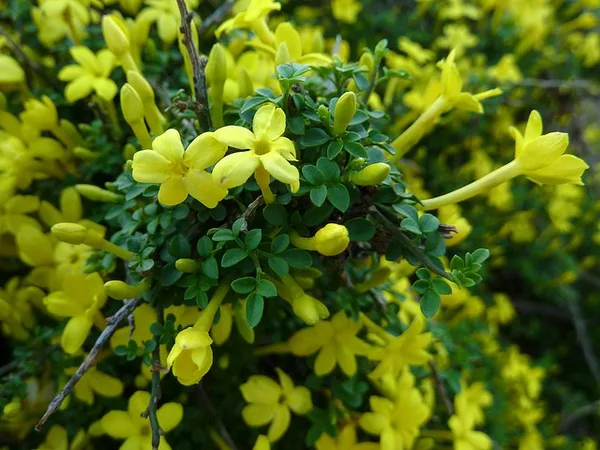
A small, slow growing shrub to just 30cm with congested branches forming a dense evergreen mound of tiny dark green leaves. Small, fragrant, flat yellow flowers appear in early summer, followed by green-tinged white berries
Scientific classification
- Species
- dwarf jasmine (Jasminum parkeri)
- Genus
- Jasminum
- Family
- Oleaceae
- Information to be completed
- Toxicity
- Shrubs
- Plant type
- 0.1-0.5 metres
- Height
- 0.1-0.5 metres
- Spread
- Evergreen
- Foliage
- Clump forming
- Habit
- Spring · Summer · Autumn · Winter
- Season of interest
- Full sun · Partial shade
- Sunlight
- Information to be completed
- Ideal temperature









dwarf jasmine pictures
Distribution of dwarf jasmine
Distribution map
- Native
- Introduced
- Cultivated
Source:WCVP v16 · Royal Botanic Gardens, Kew · CC BY 3.0 · Boundaries:WGSRPD / TDWG
Culture
Information to be completed
Toxicity
Information to be completed
Quick identification of dwarf jasmine
Information to be completed
dwarf jasmine care guide
- Moderate regular watering, allowing brief slight drying between soakings
- Watering
- Full sun · Partial shade
- Sunlight
- Information to be completed
- Ideal temperature

Watering
Moderate regular watering, allowing brief slight drying between soakings
Fertilizing
 Fertilizing
Balanced perennial feed every four weeks from spring through summer
Pruning
 Pruning
No pruning required
Propagation
 Propagation
Propagate by semi-ripe cuttings in summer
Growing
 Growing
Ideal for a rock garden, or border in well-drained soil in full sun or partial shade\r\nBorderline hardy so a sheltered position is required
People also ask
Information to be completed
Common pests and diseases
Diseases
May be susceptible to honey fungus (rarely)
Pests
May be susceptible to aphids and mealybugs under glass
Explore the plant health library →




