
Allium roseum var. bulbiferum
Also known as: Information to be completed
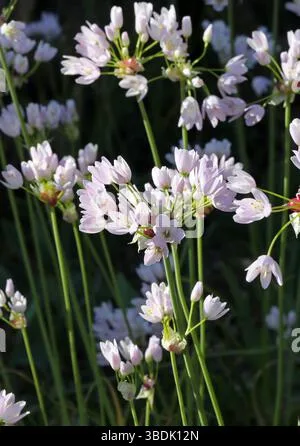
Bulbous perennial about 65cm tall, with linear mid-green basal leaves to 35cm long. Loose umbels of cup-shaped pale pink flowers with bulbils present, are produced in summer, but often have more bulbils and less flowers; may become a nuisance if conditions allow, and is now naturalised in parts of the British Isles
Scientific classification
- Species
- Allium roseum var. bulbiferum (Allium roseum var. bulbiferum)
- Genus
- Allium
- Family
- Amaryllidaceae
- Order
- Asparagales
- Class
- Liliopsida
- Phylum
- Magnoliophyta
- Information to be completed
- Toxicity
- Bulbs
- Plant type
- Information to be completed
- Height
- Information to be completed
- Spread
- Deciduous
- Foliage
- Clump forming
- Habit
- Information to be completed
- Season of interest
- Full sun
- Sunlight
- Information to be completed
- Ideal temperature









Allium roseum var. bulbiferum pictures
Distribution of Allium roseum var. bulbiferum
Distribution map
- Native
- Introduced
- Cultivated
Source:WCVP v16 · Royal Botanic Gardens, Kew · CC BY 3.0 · Boundaries:WGSRPD / TDWG
Allium roseum var. bulbiferum care guide
- Water moderately in growth, keep drier after flowering
- Watering
- Full sun
- Sunlight

Watering
Water moderately in growth, keep drier after flowering
Fertilizing
 Fertilizing
Light bulb feed in spring before flowering
Pruning
 Pruning
No pruning required, other than to remove unwanted bulbils, old flowered stems and foliage
Propagation
 Propagation
Propagate by seed, or bulbils, or division of clumps in spring or autumn. See bulb propagation
Growing
 Growing
Grow in full sun and fertile well-drained soil. It is best to grow in containers where garden soil is heavy clay and prone to saturation over winter. Note: may become a nuisance where bulbils are plentiful. See allium cultivation
Common pests and diseases
Diseases
May be susceptible to onion white rot, and onion downy mildew
Pests
May be susceptible to allium leaf miner and onion fly
Explore the plant health library →




