
Chinese lantern
Also known as: Information to be completed
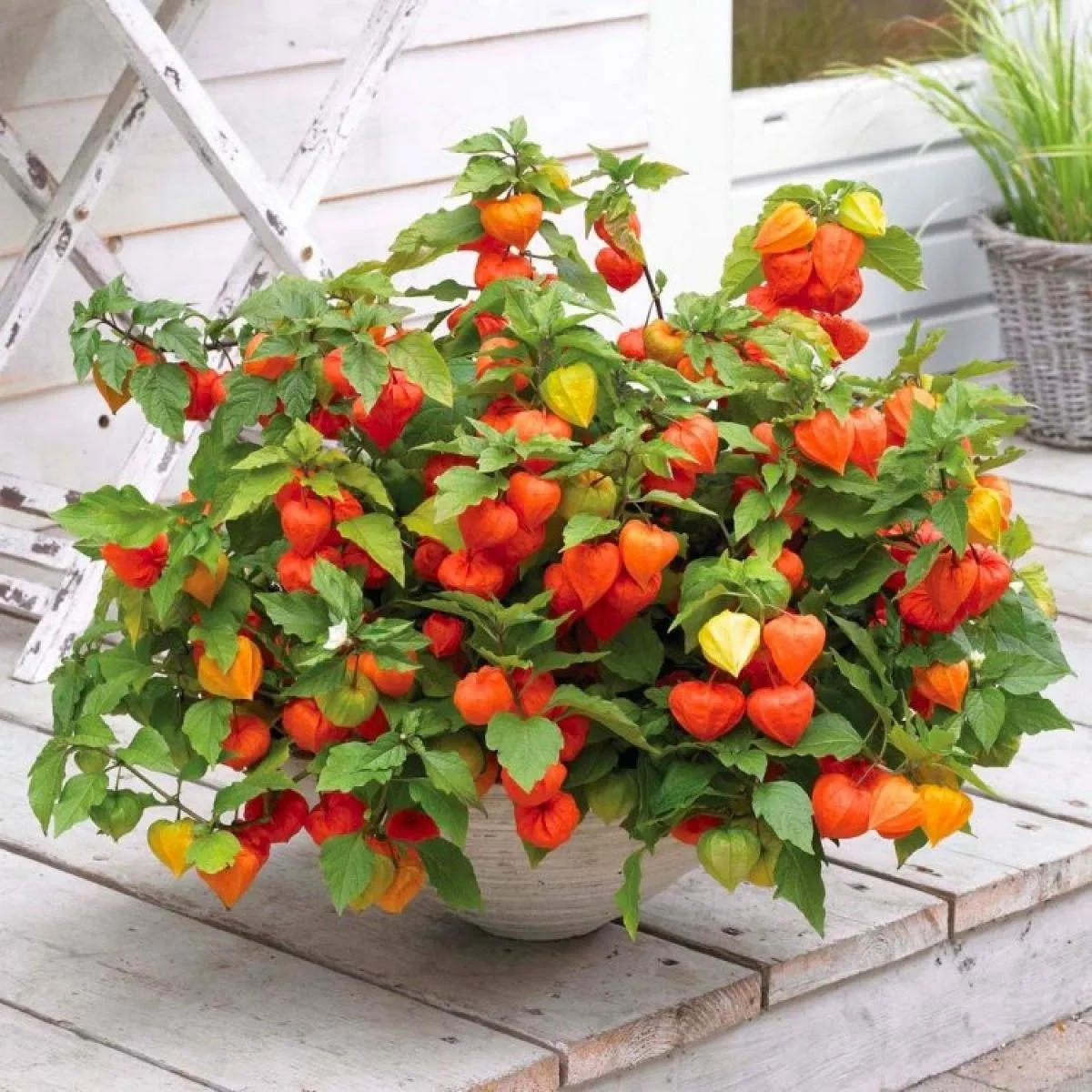
P. alkekengi var. franchetii is a vigorous, spreading herbaceous perennial to 60 cm high, with ovate green leaves and small white flowers in summer followed in autumn by large, bright orange lantern-shaped calyces, enclosing red fruits, which persist through winter
Scientific classification
- Species
- Chinese lantern (Physalis alkekengi var. franchetii)
- Genus
- Physalis
- Family
- Solanaceae
- Order
- Solanales
- Class
- Magnoliopsida
- Phylum
- Magnoliophyta
- Harmful if eaten, except ripe fruit. Wear gloves and other protective equipment when handling]
- Toxicity
- Herbaceous Perennial
- Plant type
- 0.5-1 metres
- Height
- 1-1.5 metres
- Spread
- Deciduous
- Foliage
- Bushy
- Habit
- Spring · Summer · Autumn · Winter
- Season of interest
- Full sun · Partial shade
- Sunlight
- Information to be completed
- Ideal temperature









Chinese lantern pictures
Distribution of Chinese lantern
Distribution map
- Native
- Introduced
- Cultivated
Source:WCVP v16 · Royal Botanic Gardens, Kew · CC BY 3.0 · Boundaries:WGSRPD / TDWG
Toxicity
Harmful if eaten, except ripe fruit. Wear gloves and other protective equipment when handling]
Chinese lantern care guide
- Keep soil consistently moist for tender leafy growth
- Watering
- Full sun · Partial shade
- Sunlight

Watering
Keep soil consistently moist for tender leafy growth
Fertilizing
 Fertilizing
Nitrogen-rich vegetable feed during active growth
Pruning
 Pruning
No pruning required
Propagation
 Propagation
Propagate by seed in spring, by division in spring, or by basal cuttings in early summer
Growing
 Growing
Grow in any well-drained soil in sun or partial shade. Has the potential to become a nuisance if not managed well
Common pests and diseases
Diseases
Generally disease-free
Pests
May be susceptible to caterpillar damage
Explore the plant health library →




