
variegated dusky cranesbill
Also known as: Information to be completed
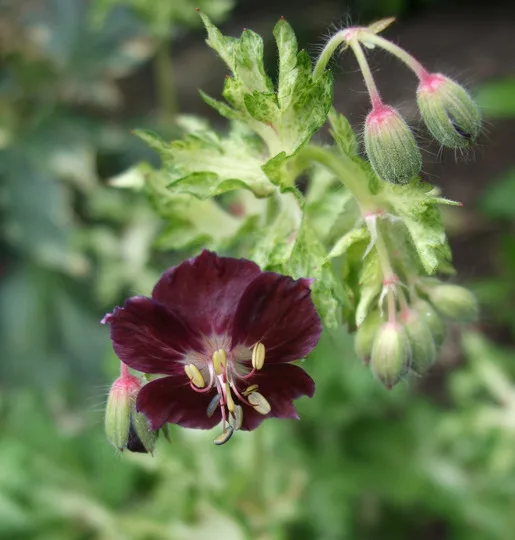
An upright perennial to 60cm tall, with lobed leaves irregularly margined with cream and also blotched with maroon between the main lobes; flowers are deep maroon, opening in late spring and early summer
Scientific classification
- Species
- variegated dusky cranesbill (Geranium phaeum 'Variegatum')
- Genus
- Geranium
- Family
- Geraniaceae
- Information to be completed
- Toxicity
- Herbaceous Perennial
- Plant type
- 0.5-1 metres
- Height
- 0.1-0.5 metres
- Spread
- Deciduous
- Foliage
- Bushy
- Habit
- Spring · Summer
- Season of interest
- Full shade · Full sun · Partial shade
- Sunlight
- Information to be completed
- Ideal temperature









variegated dusky cranesbill pictures
Distribution of variegated dusky cranesbill
Distribution map
Information to be completed
Information to be completed
Culture
Information to be completed
Toxicity
Information to be completed
Quick identification of variegated dusky cranesbill
Information to be completed
variegated dusky cranesbill care guide
- Moderate regular watering, avoid prolonged drought and stagnant waterlogging
- Watering
- Full shade · Full sun · Partial shade
- Sunlight
- Information to be completed
- Ideal temperature

Watering
Moderate regular watering, avoid prolonged drought and stagnant waterlogging
Fertilizing
 Fertilizing
Balanced perennial feed every four weeks spring through summer growth
Pruning
 Pruning
Remove flowered stems and old leaves to encourage the production of fresh leaves and flowers
Propagation
 Propagation
Divide between early autumn and early spring or cut back plants after flowering in summer then divide, replant and water well
Growing
 Growing
Grows best in moderately fertile well-drained soil in full sun, partial shade or deep shade. Most soils (unless waterlogged) in either sun or shade are tolerated
People also ask
Information to be completed
Common pests and diseases
Diseases
Downy mildew and a virus are occasional problems. Powdery mildew in dry conditions may be troublesome
Pests
May be damaged by vine weevil larvae, Geranium sawfly larvae, capsid bug or slugs and snails
Explore the plant health library →




