
Sargent hydrangea
Also known as: Information to be completed
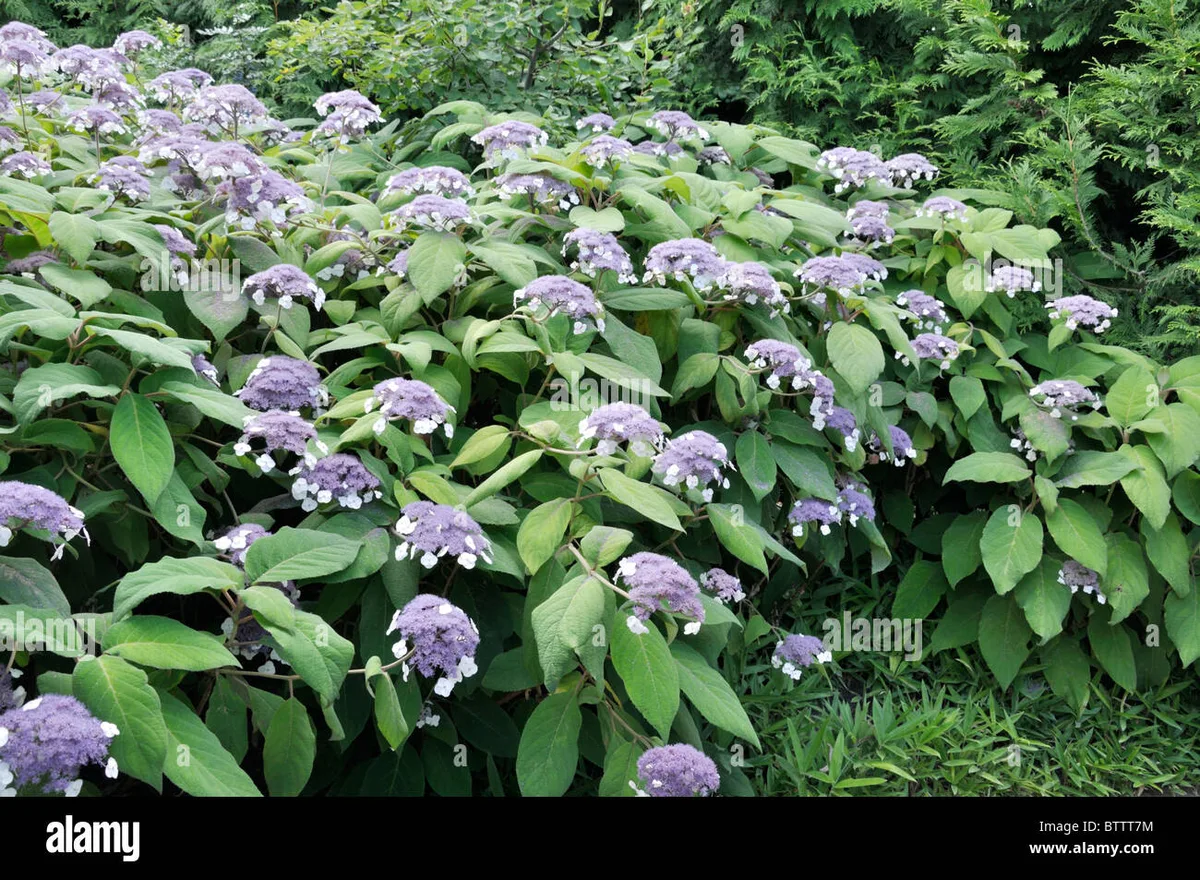
H. aspera subsp. sargentiana is an upright medium-sized deciduous shrub of open habit, with peeling bark and large, velvety ovate leaves. Flowers in large flat heads, purple or blue, surrounded by white ray florets
Scientific classification
- Species
- Sargent hydrangea (Hydrangea aspera subsp. sargentiana)
- Genus
- Hydrangea
- Family
- Hydrangeaceae
- Skin allergen. Wear gloves and other protective equipment when handling
- Toxicity
- Shrubs
- Plant type
- 1.5-2.5 metres
- Height
- 1.5-2.5 metres
- Spread
- Deciduous
- Foliage
- Bushy
- Habit
- Spring · Summer · Autumn
- Season of interest
- Full sun · Partial shade
- Sunlight
- Information to be completed
- Ideal temperature









Sargent hydrangea pictures
Distribution of Sargent hydrangea
Distribution map
China
Information to be completed
Culture
Information to be completed
Toxicity
Skin allergen. Wear gloves and other protective equipment when handling
Quick identification of Sargent hydrangea
Information to be completed
Sargent hydrangea care guide
- Maintain evenly damp acidic soil, shield roots from harsh summer drought
- Watering
- Full sun · Partial shade
- Sunlight
- Information to be completed
- Ideal temperature

Watering
Maintain evenly damp acidic soil, shield roots from harsh summer drought
Fertilizing
 Fertilizing
Diluted ericaceous shrub feed monthly spring to mid summer growth
Pruning
 Pruning
Little pruning is needed. Remove diseased, damaged, crowded or crossing shoots and unwanted growth. Timing depends on the plant: generally late winter or early spring; plants prone to bleeding and deciduous magnolias need different timing, and deciduous azaleas and lilacs are pruned after flowering.
Propagation
 Propagation
Propagate by softwood cuttings
Growing
 Growing
Grows best in moist but well-drained soil in full sun or partial shade; tolerates full shade
People also ask
Information to be completed
Common pests and diseases
Diseases
May be susceptible to a leaf spot, powdery mildews, grey moulds (Botrytis) and honey fungus (rarely)
Pests
May be susceptible to aphids, capsid bug, hydrangea scale and vine weevil
Explore the plant health library →




