
silver-edged primrose 'Beamish'
Also known as: Information to be completed
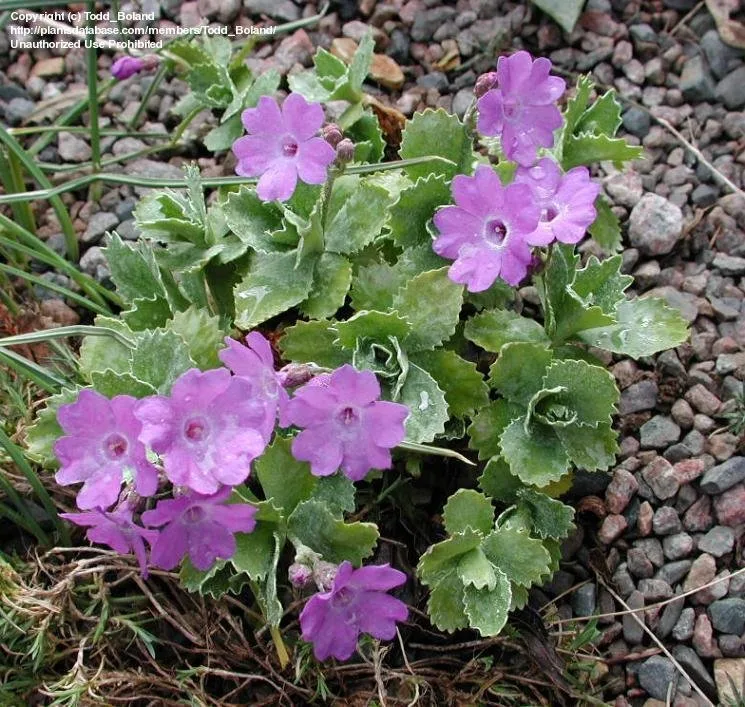
A perennial to 15cm, with oval, grey-green, mealy leaves and stout stems carrying up to eight fragrant, white-eyed, deep reddish-violet flowers 2.5cm across
Scientific classification
- Species
- silver-edged primrose 'Beamish' (Primula marginata 'Beamish')
- Genus
- Primula
- Family
- Primulaceae
- Information to be completed
- Toxicity
- Alpine Rockery · Herbaceous Perennial
- Plant type
- 0.1-0.5 metres
- Height
- 0.1-0.5 metres
- Spread
- Semi evergreen
- Foliage
- Clump forming
- Habit
- Spring · Summer · Autumn · Winter
- Season of interest
- Full sun · Partial shade
- Sunlight
- Information to be completed
- Ideal temperature









silver-edged primrose 'Beamish' pictures
Distribution of silver-edged primrose 'Beamish'
Distribution map
Information to be completed
Information to be completed
Culture
Information to be completed
Toxicity
Information to be completed
Quick identification of silver-edged primrose 'Beamish'
Information to be completed
silver-edged primrose 'Beamish' care guide
- Moderate regular watering, avoid prolonged drought and stagnant waterlogging
- Watering
- Full sun · Partial shade
- Sunlight
- Information to be completed
- Ideal temperature

Watering
Moderate regular watering, avoid prolonged drought and stagnant waterlogging
Fertilizing
 Fertilizing
Balanced perennial feed every four weeks spring through summer growth
Pruning
 Pruning
Deadhead after flowering
Propagation
 Propagation
Propagate by detaching offsets in autumn or early spring
Growing
 Growing
Grow in moist but well-drained, humus-rich, slightly alkaline soil in full sun with some midday shade or partial shade. Although hardy it is recommended for cultivation in an alpine house in the south of England
People also ask
Information to be completed
Common pests and diseases
Diseases
May be subject to a virus, primula brown core and grey moulds
Pests
May be attacked by aphids, glasshouse red spider mite, slugs, leafhoppers and vineweevils
Explore the plant health library →




