
Magnolia sprengeri var. diva
Also known as: Information to be completed
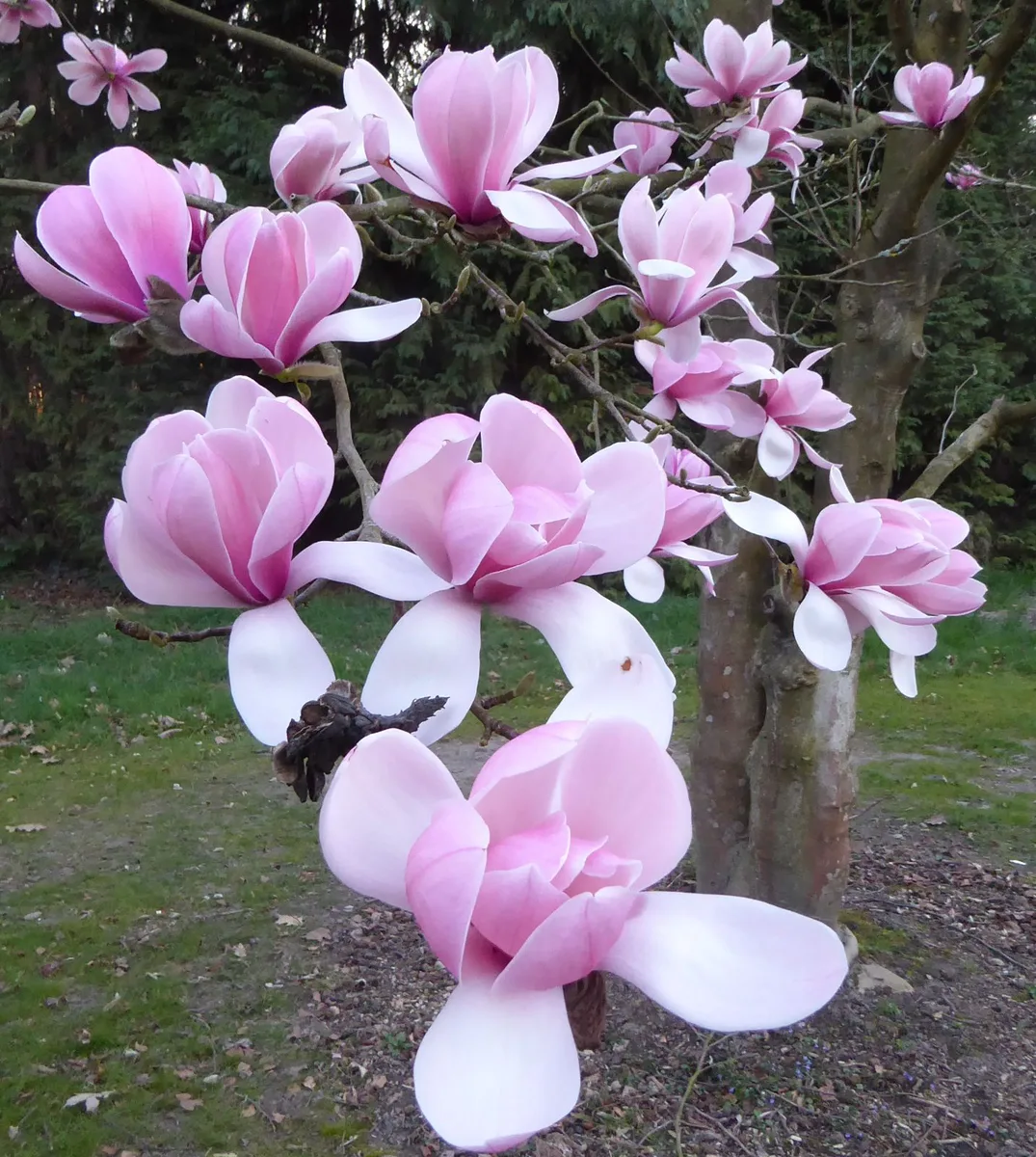
A spreading tree to about 15m with large, oval leaves, silvery on the reverse, and cup-shaped, pink flowers up to 20cm across in early spring
Scientific classification
- Species
- Magnolia sprengeri var. diva (Magnolia sprengeri var. diva)
- Genus
- Magnolia
- Family
- Magnoliaceae
- Order
- Magnoliales
- Class
- Magnoliopsida
- Phylum
- Magnoliophyta
- Information to be completed
- Toxicity
- Trees
- Plant type
- Higher than 12 metres
- Height
- wider than 8 metres
- Spread
- Deciduous
- Foliage
- Bushy
- Habit
- Spring · Summer · Autumn
- Season of interest
- Full sun · Partial shade
- Sunlight
- Information to be completed
- Ideal temperature









Magnolia sprengeri var. diva pictures
Distribution of Magnolia sprengeri var. diva
Distribution map
- Native
- Introduced
- Cultivated
Source:WCVP v16 · Royal Botanic Gardens, Kew · CC BY 3.0 · Boundaries:WGSRPD / TDWG
Magnolia sprengeri var. diva care guide
- Deep watering at root base, reduce moisture supply through winter
- Watering
- Full sun · Partial shade
- Sunlight

Watering
Deep watering at root base, reduce moisture supply through winter
Fertilizing
 Fertilizing
Magnolia tree slow release feed once per early spring growth cycle
Pruning
 Pruning
Magnolia pruning should be carried out in midsummer when in full leaf
Propagation
 Propagation
Propagate by softwood cuttings in early summer or semi-hardwood cuttings in late summer
Growing
 Growing
Grow in moist, humus-rich, well-drained, neutral to acid soil in full sun or part shade with shelter from cold winds. Late frosts may damage flower buds. See magnolia cultivation
Common pests and diseases
Diseases
May be susceptible to coral spot, phytophthora, grey moulds, honey fungus, a virus or fungal leaf spot
Pests
May be susceptible to scale insects, horse chestnut scale and capsid bug
Explore the plant health library →




