
Aster alpinus [Violet-flowered]
Also known as: Information to be completed
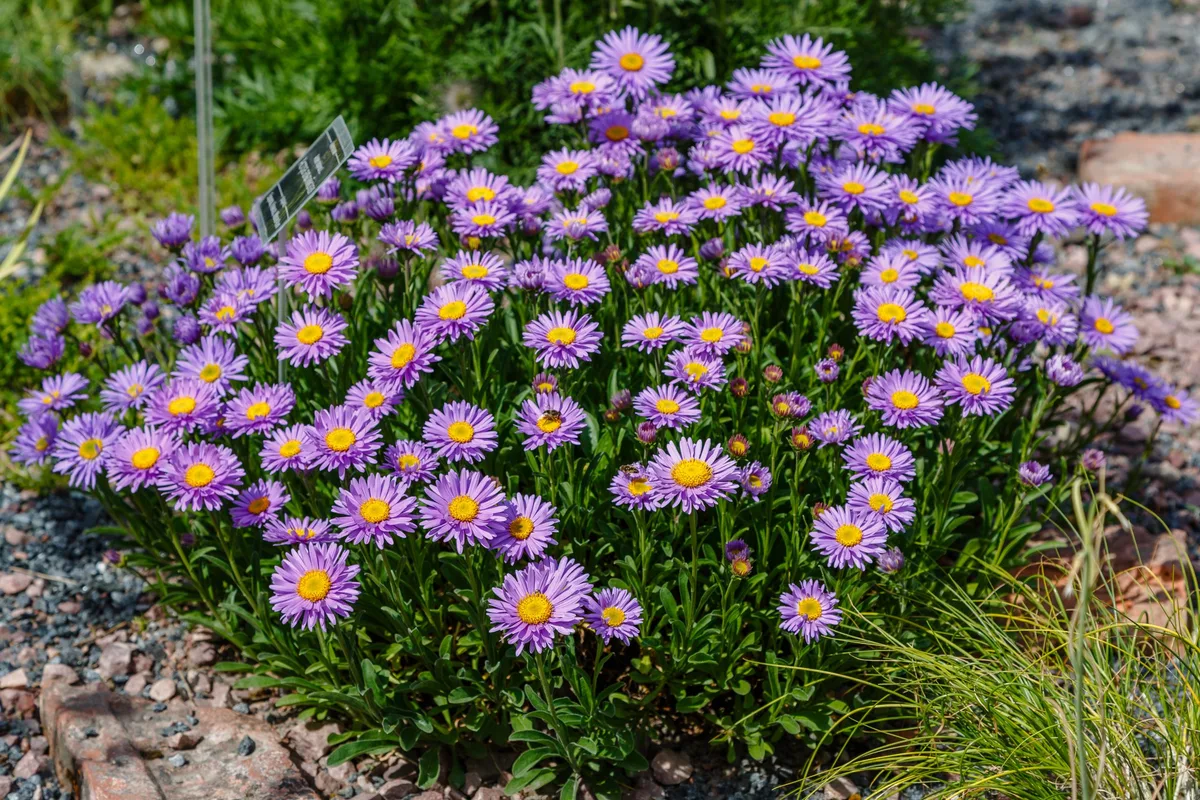
An herbaceous perennial forming a clump to 30cm in height when in flower, with narrow dark green, lance-shaped leaves and daisy-like flower-heads to 5cm in width, with blue-violet rays and a yellow centre, from late spring to summer
Scientific classification
- Species
- Aster alpinus [Violet-flowered] (Aster alpinus [Violet-flowered])
- Genus
- Aster
- Family
- Asteraceae
- Information to be completed
- Toxicity
- Herbaceous Perennial
- Plant type
- 0.1-0.5 metres
- Height
- 0.1-0.5 metres
- Spread
- Deciduous
- Foliage
- Clump forming
- Habit
- Spring · Summer · Autumn
- Season of interest
- Full sun
- Sunlight
- Information to be completed
- Ideal temperature









Aster alpinus [Violet-flowered] pictures
Distribution of Aster alpinus [Violet-flowered]
Distribution map
Information to be completed
Information to be completed
Culture
Information to be completed
Toxicity
Information to be completed
Quick identification of Aster alpinus [Violet-flowered]
Information to be completed
Aster alpinus [Violet-flowered] care guide
- Deep occasional watering with excellent drainage, less once established
- Watering
- Full sun
- Sunlight
- Information to be completed
- Ideal temperature

Watering
Deep occasional watering with excellent drainage, less once established
Fertilizing
 Fertilizing
Light conifer feed once yearly in early spring only
Pruning
 Pruning
Cut back after flowering
Propagation
 Propagation
Propagate by seed in pots in cold frame in spring or autumn or propagate by division in spring
Growing
 Growing
Grow in moderately fertile, well-drained soil in an open sunny position
People also ask
Information to be completed
Common pests and diseases
Diseases
May be susceptible to wilts, leaf spot and grey moulds
Pests
May be susceptible to slugs, snails, leaf and bud eelworms and aphids
Explore the plant health library →




