
purple wolf's bane 'Bicolor'
Also known as: Information to be completed
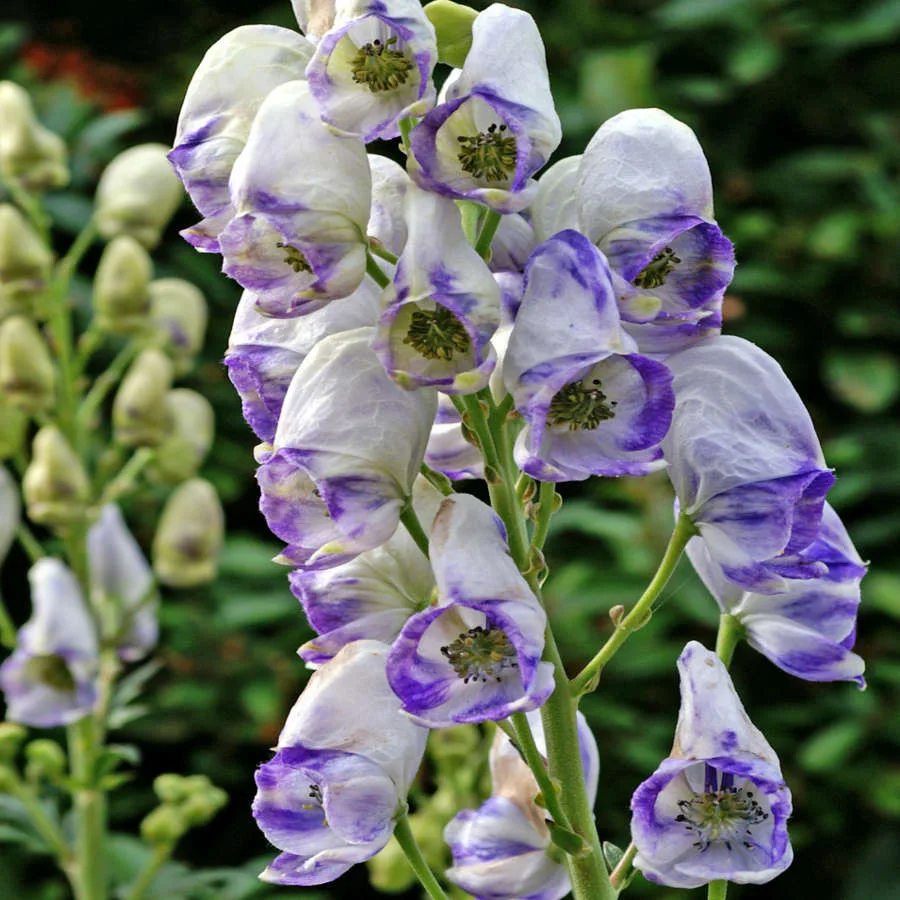
An herbaceous perennial to 1.2m, with deeply divided, glossy dark green leaves and widely-branched spikes of hooded, violet-blue and white flowers
Scientific classification
- Species
- purple wolf's bane 'Bicolor' (Aconitum × cammarum 'Bicolor')
- Genus
- Aconitum
- Family
- Ranunculaceae
- Order
- Ranunculales
- Class
- Magnoliopsida
- Phylum
- Magnoliophyta
- TOXIC if eaten, avoid skin contact. Wear gloves and other protective equipment when handling]
- Toxicity
- Herbaceous Perennial
- Plant type
- 1-1.5 metres
- Height
- 0.1-0.5 metres
- Spread
- Deciduous
- Foliage
- Columnar upright
- Habit
- Spring · Summer · Autumn
- Season of interest
- Full sun · Partial shade
- Sunlight
- Information to be completed
- Ideal temperature









purple wolf's bane 'Bicolor' pictures
Distribution of purple wolf's bane 'Bicolor'
Distribution map
- Native
- Introduced
- Cultivated
Source:WCVP v16 · Royal Botanic Gardens, Kew · CC BY 3.0 · Boundaries:WGSRPD / TDWG
Toxicity
TOXIC if eaten, avoid skin contact. Wear gloves and other protective equipment when handling]
purple wolf's bane 'Bicolor' care guide
- Keep soil moderately moist, cut irrigation supply late autumn months
- Watering
- Full sun · Partial shade
- Sunlight

Watering
Keep soil moderately moist, cut irrigation supply late autumn months
Fertilizing
 Fertilizing
Balanced aconite feed every three weeks spring pre-bloom growth
Pruning
 Pruning
No pruning required except cutting back dead stems; use protective gloves
Propagation
 Propagation
Propagate by division in autumn or late winter to maintain vigour but plants may be slow to re-establish. Use protective gloves when handling any part of the plant
Growing
 Growing
Grows best in deep, cool, moisture-retentive soil in partial shade, but will also tolerate most soils and full sun if soil is humus-rich and protected with mulch to ensure that it is moist throughout the growing season; use protective gloves
Common pests and diseases
Diseases
May be susceptible to powdery mildews
Pests
Generally pest-free but may be susceptible to aphids
Explore the plant health library →




