
Chaenomeles speciosa 'Umbilicata'
Also known as: Information to be completed
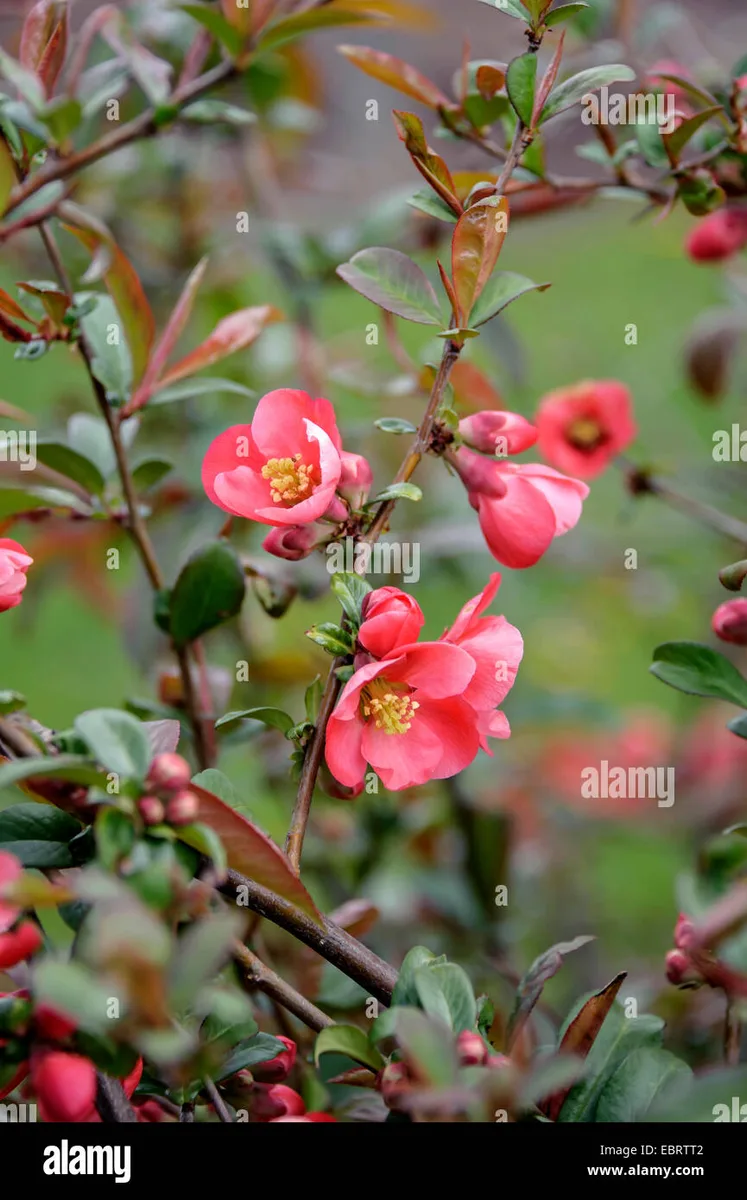
Spreading deciduous shrub to 2.5m in height, with dark green, glossy leaves. Clusters of single, dark pink flowers are produced in spring on bare branches, followed, in autumn, by aromatic green-yellow fruits
Scientific classification
- Species
- Chaenomeles speciosa 'Umbilicata' (Chaenomeles speciosa 'Umbilicata')
- Genus
- Chaenomeles
- Family
- Rosaceae
- Order
- Rosales
- Class
- Magnoliopsida
- Phylum
- Magnoliophyta
- Fruit are ornamental - not to be eaten. Wear gloves and other protective equipment when handling
- Toxicity
- Shrubs
- Plant type
- 1.5-2.5 metres
- Height
- 1.5-2.5 metres
- Spread
- Deciduous
- Foliage
- Bushy
- Habit
- Spring · Summer · Autumn
- Season of interest
- Full sun · Partial shade
- Sunlight
- Information to be completed
- Ideal temperature









Chaenomeles speciosa 'Umbilicata' pictures
Distribution of Chaenomeles speciosa 'Umbilicata'
Distribution map
- Native
- Introduced
- Cultivated
Source:WCVP v16 · Royal Botanic Gardens, Kew · CC BY 3.0 · Boundaries:WGSRPD / TDWG
Toxicity
Fruit are ornamental - not to be eaten. Wear gloves and other protective equipment when handling
Chaenomeles speciosa 'Umbilicata' care guide
- Moderate regular watering, allowing slight drying between waterings
- Watering
- Full sun · Partial shade
- Sunlight

Watering
Moderate regular watering, allowing slight drying between waterings
Fertilizing
 Fertilizing
Balanced feed monthly during active growth season
Pruning
 Pruning
For free-standing plants: Cut flowered growth back to strong young shoots below, removing up to a fifth of old stems near the base each year. Prune immediately after flowering. For wall-trained specimens: On established wall-trained shrubs, shorten sideshoots to two to four buds from the framework; remove shoots growing towards the wall. Prune annually after flowering on last-year growth, or in late winter or early spring on current-year growth.
Propagation
 Propagation
Propagate by semi-ripe cuttings in summer or layering in autumn
Growing
 Growing
Grow in full sun or part shade in well-drained soil, lime tolerant but may become chlorotic on very alkaline soils
Common pests and diseases
Diseases
May be susceptible to fireblight, blossom wilt, brown rot and honey fungus (rarely)
Pests
May be susceptible to scale insects, brown scale and aphids
Explore the plant health library →




