
camellia 'Lady Vansittart'
Also known as: Information to be completed
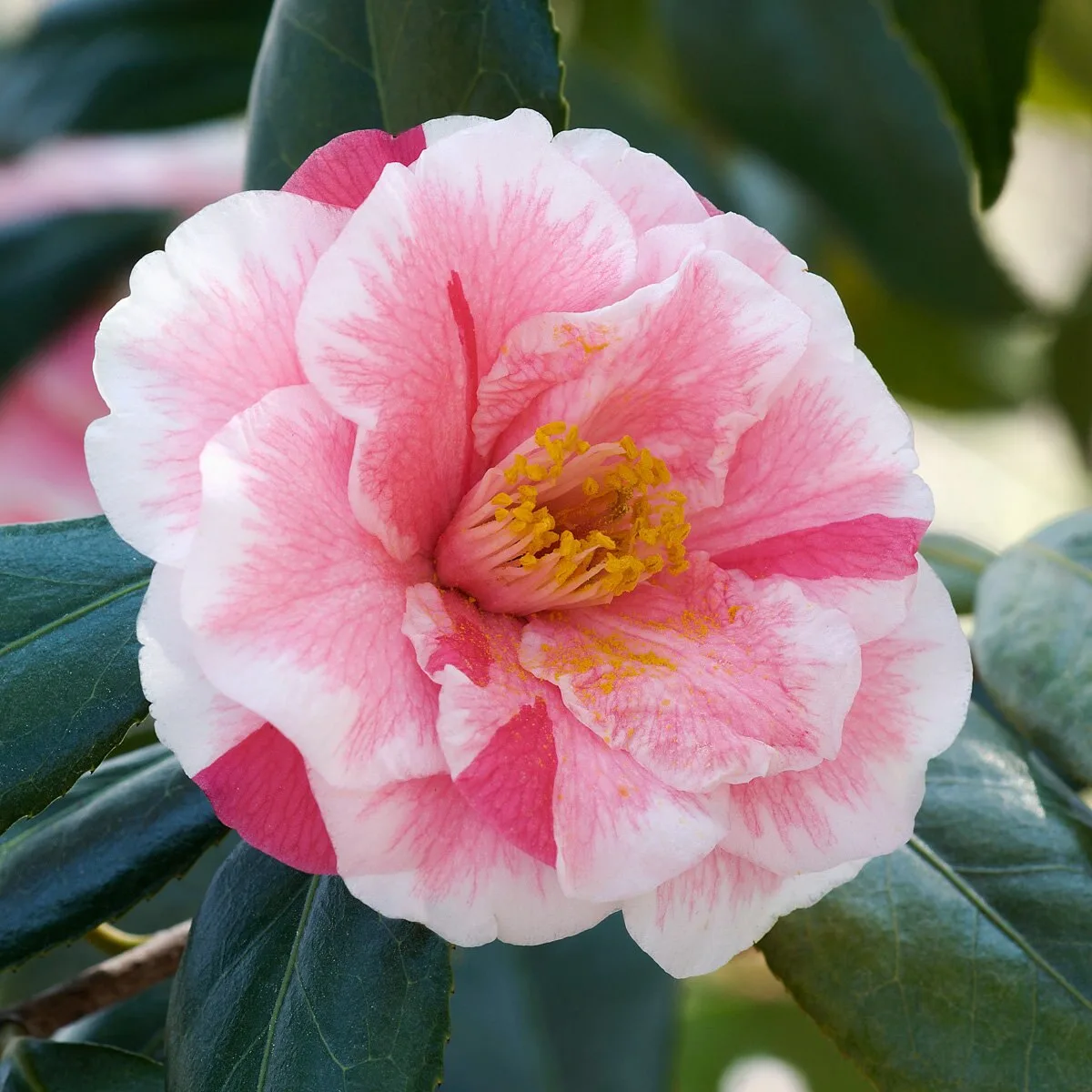
An upright, evergreen shrub with elliptic, dark green leaves and, from late winter to mid-spring, semi-double, white flowers, variably striped with pink or red.
Scientific classification
- Species
- camellia 'Lady Vansittart' (Camellia japonica 'Lady Vansittart')
- Genus
- Camellia
- Family
- Theaceae
- Order
- Ericales
- Class
- Magnoliopsida
- Phylum
- Magnoliophyta
- Information to be completed
- Toxicity
- Shrubs
- Plant type
- 8-12 metres
- Height
- 4-8 metres
- Spread
- Evergreen
- Foliage
- Bushy
- Habit
- Spring · Summer · Autumn · Winter
- Season of interest
- Partial shade
- Sunlight
- Information to be completed
- Ideal temperature









camellia 'Lady Vansittart' pictures
Distribution of camellia 'Lady Vansittart'
Distribution map
- Native
- Introduced
- Cultivated
Source:WCVP v16 · Royal Botanic Gardens, Kew · CC BY 3.0 · Boundaries:WGSRPD / TDWG
camellia 'Lady Vansittart' care guide
- Moderate watering, slight top soil dryness allowed before full rehydration
- Watering
- Partial shade
- Sunlight

Watering
Moderate watering, slight top soil dryness allowed before full rehydration
Fertilizing
 Fertilizing
Acidic camellia feed every four weeks spring through summer growing months
Pruning
 Pruning
Group 8. Best left unpruned except for removal of unsightly shoots and deadheading, unless some shaping is required, and if so, as it is early flowering, carry out carry out thereafter.
Propagation
 Propagation
Propagate by semi-hardwood cuttings
Growing
 Growing
Grow in moist but well-drained, neutral to acid soil in partial to full shade. Plant in a sheltered site as cold, drying winds and morning sun can damage buds and flowers. Feed in mid-spring and early summer with a sequestered iron fertiliser. Maintain a deep mulch of leaf mould or shredded bark at the base of the plant.
Common pests and diseases
Diseases
May be susceptible to honey fungus (rarely), phytophthora root rot, camellia gall, camellia leaf blight, camellia yellow mottle virus and flowers and camellia petal blight
Pests
May be susceptible to aphids, scale insects and vine weevil
Explore the plant health library →




