
drumstick primula rose-flowered
Also known as: Information to be completed
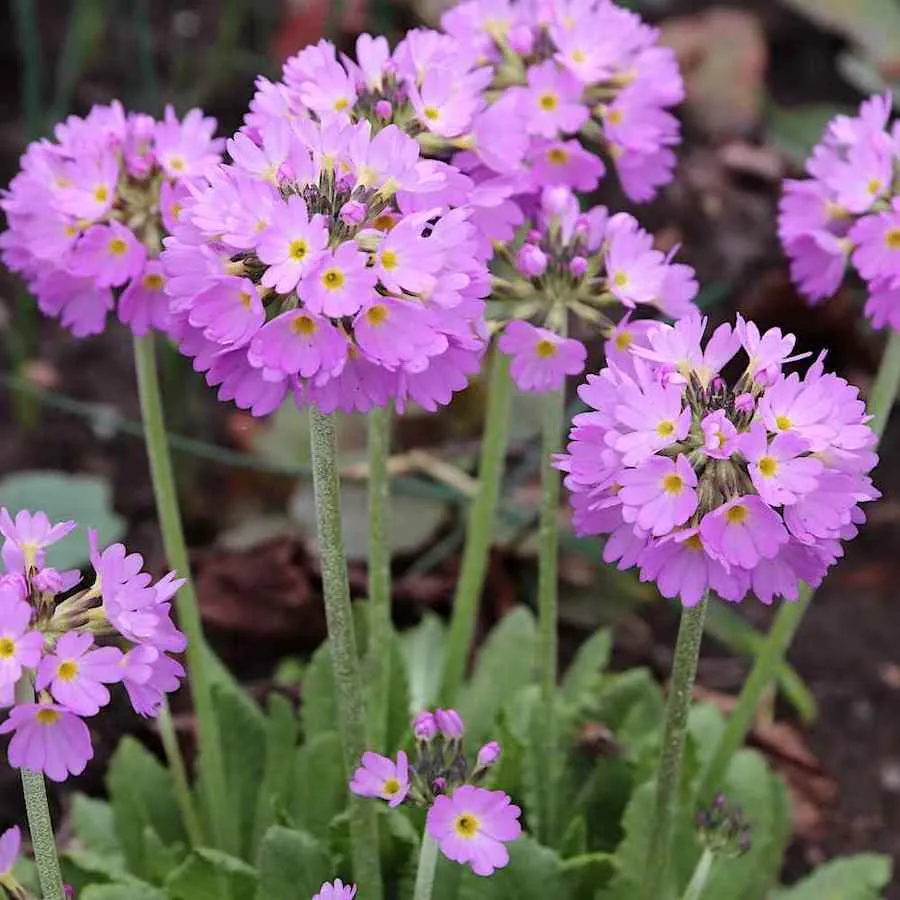
A compact, rosette-forming semi-evergreen perennial to around 30cm with wrinkled green foliage and upright stems which produce spherical clusters of rose-pink flowers in Spring
Scientific classification
- Species
- drumstick primula rose-flowered (Primula denticulata [Rose-flowered])
- Genus
- Primula
- Family
- Primulaceae
- Information to be completed
- Toxicity
- Herbaceous Perennial
- Plant type
- 0.1-0.5 metres
- Height
- 0.1-0.5 metres
- Spread
- Deciduous
- Foliage
- Clump forming
- Habit
- Spring · Summer · Autumn
- Season of interest
- Full sun · Partial shade
- Sunlight
- Information to be completed
- Ideal temperature









drumstick primula rose-flowered pictures
Distribution of drumstick primula rose-flowered
Distribution map
Information to be completed
Information to be completed
Culture
Information to be completed
Toxicity
Information to be completed
Quick identification of drumstick primula rose-flowered
Information to be completed
drumstick primula rose-flowered care guide
- Keep soil evenly moist and cool, never fully dry
- Watering
- Full sun · Partial shade
- Sunlight
- Information to be completed
- Ideal temperature

Watering
Keep soil evenly moist and cool, never fully dry
Fertilizing
 Fertilizing
Weak balanced feed during spring growing season
Pruning
 Pruning
No pruning required but you can deadhead after flowering
Propagation
 Propagation
Propagate by division after flowering or take root cuttings when dormant
Growing
 Growing
Grow in moist but well-drained neutral to acid, humus-rich soil in full sun or partial shade
People also ask
Information to be completed
Common pests and diseases
Diseases
May be susceptible to primula leaf spot, primula brown core and grey moulds
Pests
May be susceptible to aphids, vine weevil, slugs, leaf and bud eelworms, leaf-mining flies and glasshouse red spider mite
Explore the plant health library →




