
dwarf sweet box
Also known as: Information to be completed
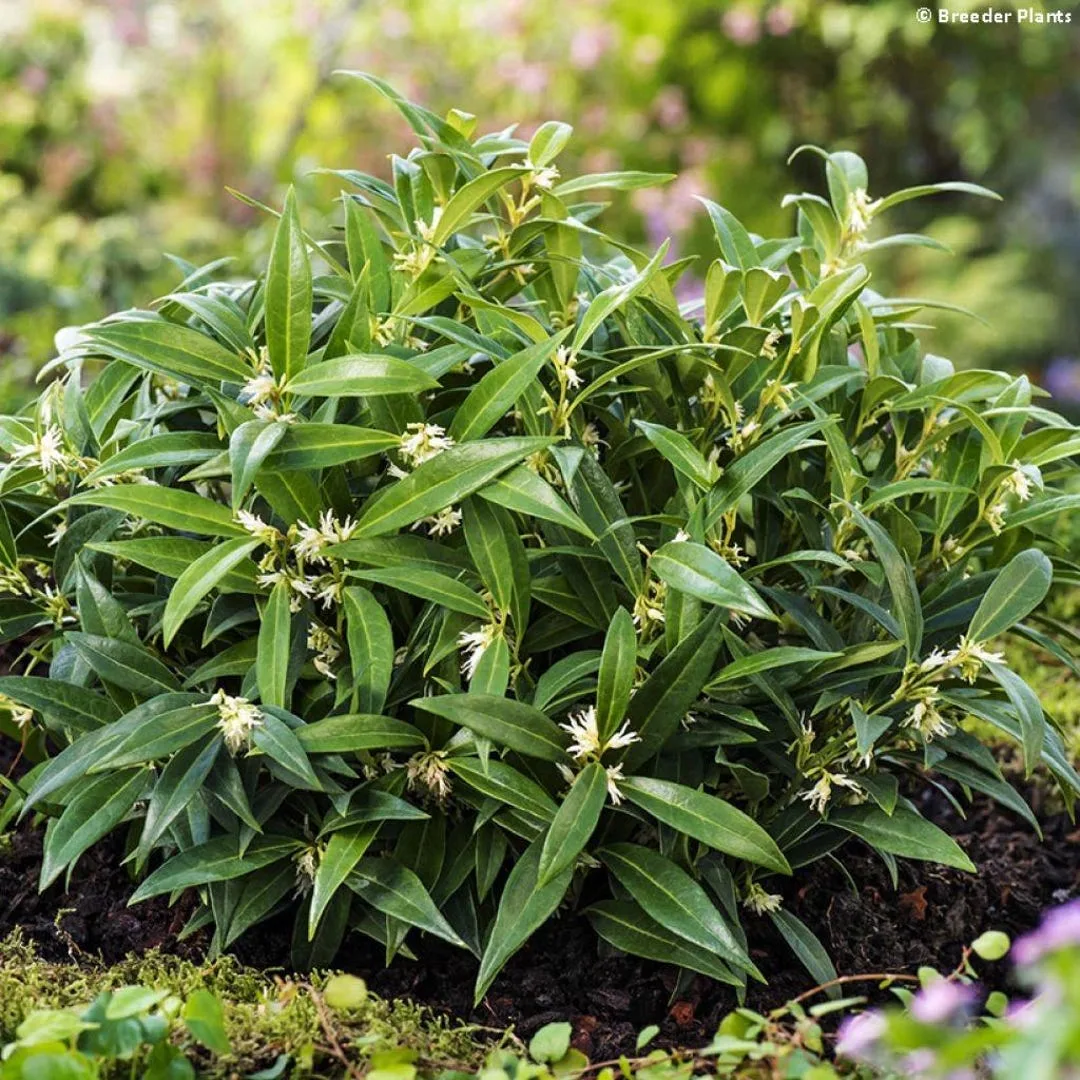
S. hookeriana var. humilis is a compact suckering shrub to 60cm tall, forming a neat clump of glossy, elliptic leaves, with small clusters of very fragrant creamy-white flowers with crimson anthers, in winter, followed by black berries
Scientific classification
- Species
- dwarf sweet box (Sarcococca hookeriana var. humilis)
- Genus
- Sarcococca
- Family
- Buxaceae
- Fruit are ornamental - not to be eaten. Wear gloves and other protective equipment when handling
- Toxicity
- Shrubs
- Plant type
- 0.5-1 metres
- Height
- 0.5-1 metres
- Spread
- Evergreen
- Foliage
- Suckering
- Habit
- Spring · Summer · Autumn · Winter
- Season of interest
- Full shade · Partial shade
- Sunlight
- Information to be completed
- Ideal temperature









dwarf sweet box pictures
Distribution of dwarf sweet box
Distribution map
- Native
- Introduced
- Cultivated
Source:WCVP v16 · Royal Botanic Gardens, Kew · CC BY 3.0 · Boundaries:WGSRPD / TDWG
Toxicity
Fruit are ornamental - not to be eaten. Wear gloves and other protective equipment when handling
dwarf sweet box care guide
- Deep watering during dry spells, allowing slight surface drying between soakings
- Watering
- Full shade · Partial shade
- Sunlight

Watering
Deep watering during dry spells, allowing slight surface drying between soakings
Fertilizing
 Fertilizing
Balanced shrub or tree feed once each early spring
Pruning
 Pruning
Usually little pruning is needed. Lightly shape if necessary, removing dead, damaged or diseased shoots. Prune after flowering.
Propagation
 Propagation
Propagate by semi-hardwood cuttings in late summer or propagate by seed sown in containers outdoors in autumn or spring
Growing
 Growing
Grow in moderately fertile, moist but well-drained humus-rich soil in shade. Full sun may be tolerated when planted in damp soil. Also tolerant of atmospheric pollution, dry shade and neglect
Common pests and diseases
Diseases
May be susceptible to honey fungus
Pests
Generally pest-free
Explore the plant health library →




