
spiny aloe
Also known as: Information to be completed
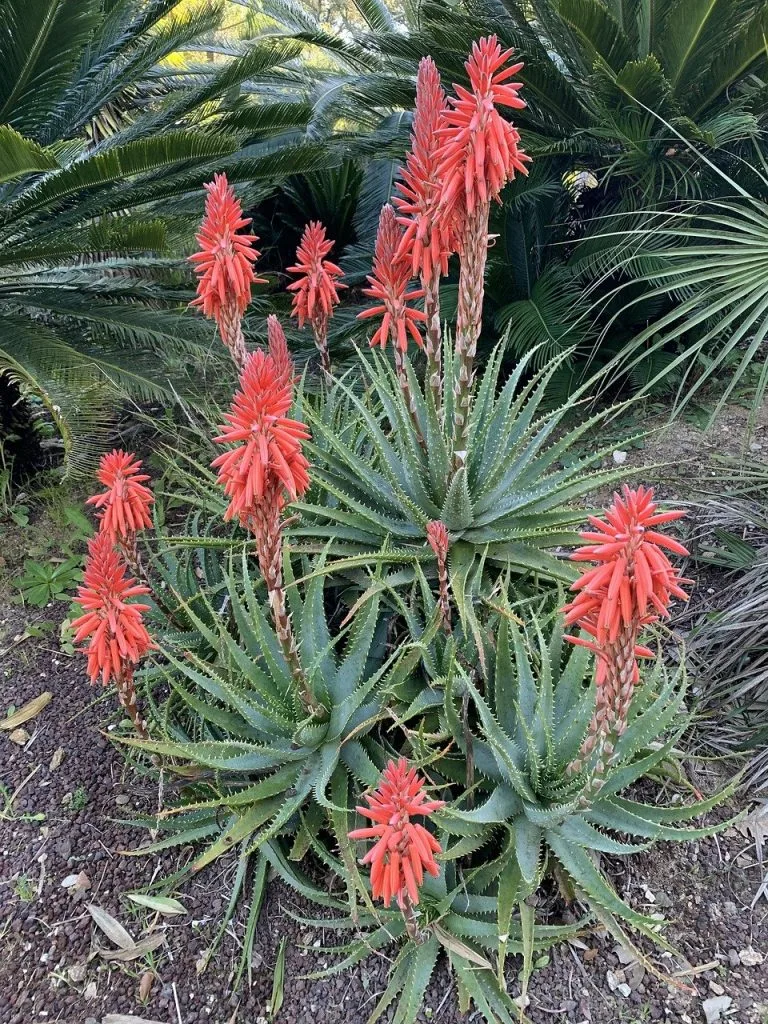
An evergreen succulent comprising a number of rosettes of long, narrow, fleshy leaves with stubby spines along the edges and on both surfaces, clustered around a short woody trunk. Upright spires of coral red, tubular flowers are produced in late winter
Scientific classification
- Species
- spiny aloe (Aloe × spinosissima)
- Genus
- Aloe
- Family
- Asphodelaceae
- Order
- Asparagales
- Class
- Liliopsida
- Phylum
- Magnoliophyta
- Harmful if eaten. Wear gloves and other protective equipment when handling
- Toxicity
- Cactus Succulent · Conservatory Greenhouse
- Plant type
- 0.5-1 metres
- Height
- 0.1-0.5 metres
- Spread
- Evergreen
- Foliage
- Clump forming
- Habit
- Spring · Summer · Autumn · Winter
- Season of interest
- Full sun
- Sunlight
- Information to be completed
- Ideal temperature









spiny aloe pictures
Toxicity
Harmful if eaten. Wear gloves and other protective equipment when handling
spiny aloe care guide
- Let gritty soil dry fully before each thorough watering cycle
- Watering
- Full sun
- Sunlight

Watering
Let gritty soil dry fully before each thorough watering cycle
Fertilizing
 Fertilizing
Very dilute low-nitrogen succulent feed monthly in warm growth
Pruning
 Pruning
No pruning required
Propagation
 Propagation
Propagate from offsets in late spring or early summer
Growing
 Growing
Grow in loam-based potting compost with added grit in frost-free conditions in full sun or light shade
Common pests and diseases
Diseases
Generally disease-free
Pests
May be susceptible to scale insects and mealybugs
Explore the plant health library →




