
red maple 'October Glory'
Also known as: Information to be completed
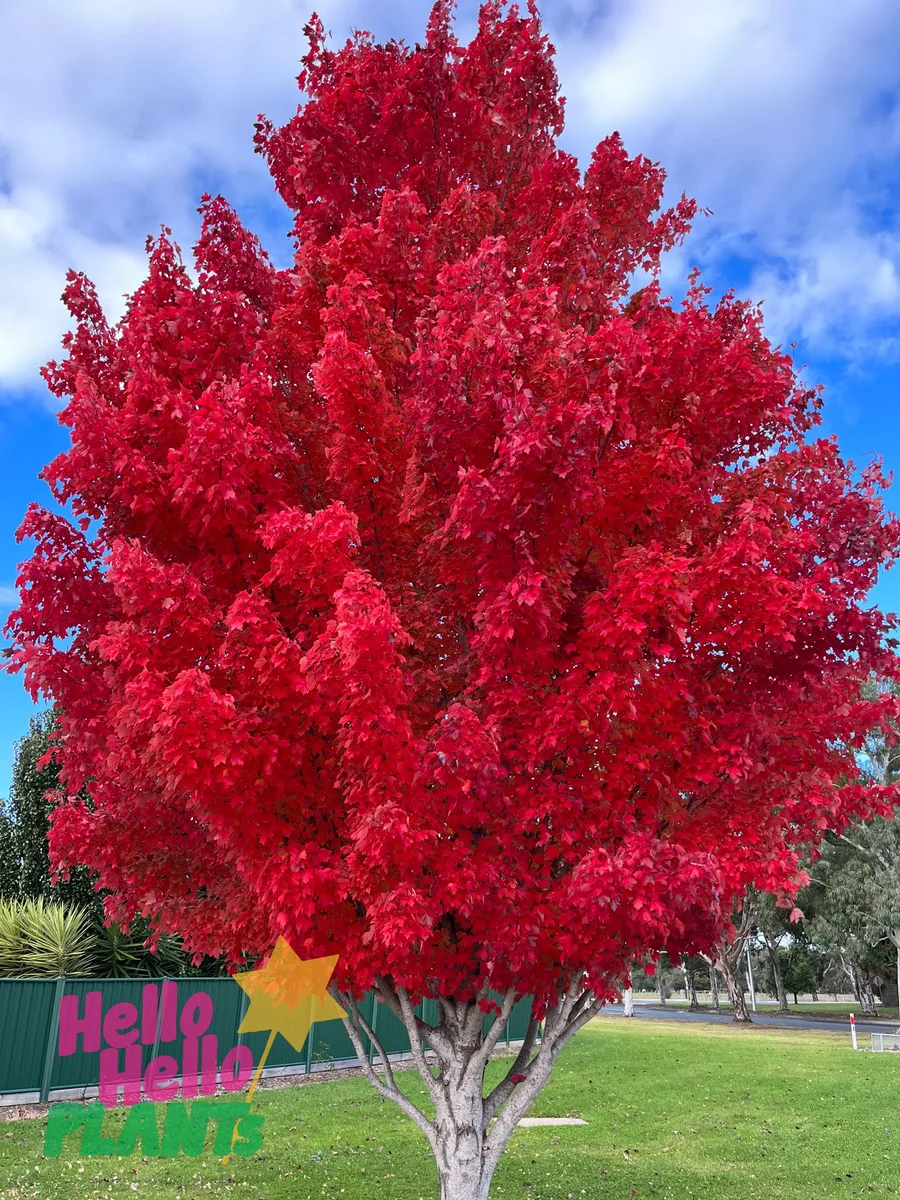
October Glory' is a large deciduous tree with erect main branches. Leaves 3-lobed, dark green above, whitish beneath, brilliant crimson in autumn. Flowers crimson on bare branches. Excellent selection of the red maple
Scientific classification
- Species
- red maple 'October Glory' (Acer rubrum 'October Glory')
- Genus
- Acer
- Family
- Sapindaceae
- Order
- Sapindales
- Class
- Magnoliopsida
- Phylum
- Magnoliophyta
- Information to be completed
- Toxicity
- Trees
- Plant type
- Higher than 12 metres
- Height
- wider than 8 metres
- Spread
- Deciduous
- Foliage
- Columnar upright
- Habit
- Autumn · Spring · Summer
- Season of interest
- Full sun · Partial shade
- Sunlight
- Information to be completed
- Ideal temperature









red maple 'October Glory' pictures
Distribution of red maple 'October Glory'
Distribution map
- Native
- Introduced
- Cultivated
Source:WCVP v16 · Royal Botanic Gardens, Kew · CC BY 3.0 · Boundaries:WGSRPD / TDWG
red maple 'October Glory' care guide
- Water deeply during dry periods; established trees are moderately drought-tolerant.
- Watering
- Full sun · Partial shade
- Sunlight

Watering
Water deeply during dry periods; established trees are moderately drought-tolerant.
Fertilizing
 Fertilizing
Apply a balanced fertilizer in early spring before new growth appears.
Pruning
 Pruning
Little pruning is needed. Remove diseased, damaged, crowded or crossing shoots and unwanted growth. Timing depends on the plant: generally late winter or early spring; plants prone to bleeding and deciduous magnolias need different timing, and deciduous azaleas and lilacs are pruned after flowering.
Propagation
 Propagation
Propagate by grafting
Growing
 Growing
Grow in a moist but well-drained soil
Common pests and diseases
Diseases
May be susceptible to Verticillium wilt, Acer leaf scorch and honey fungus
Pests
May be susceptible to Acer gall mite, aphids, caterpillars and horse chestnut scale
Explore the plant health library →




