
cranesbill 'Nimbus'
Also known as: Information to be completed
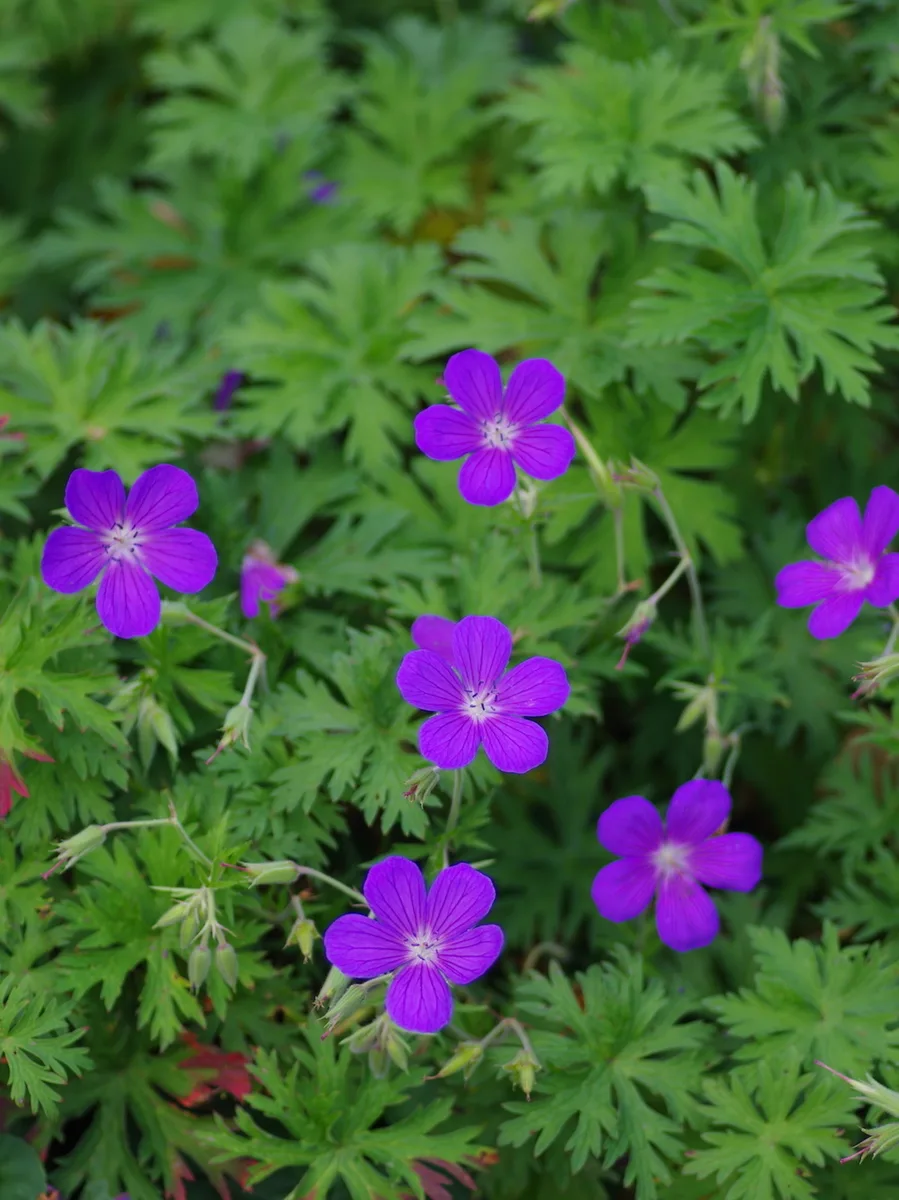
Nimbus' is a vigorous, floriferous, mound-forming plant, to 100cm high, and spreading to 180cm. Foliage is very dissected, attractive, sometimes yellowish-green in spring, then mid green. Flowers are 3.5cm across, wide open, lavender-blue to violet with fine dark red veins and a small white centre borne from early to late summer
Scientific classification
- Species
- cranesbill 'Nimbus' (Geranium 'Nimbus')
- Genus
- Geranium
- Family
- Geraniaceae
- Information to be completed
- Toxicity
- Herbaceous Perennial
- Plant type
- 0.5-1 metres
- Height
- 0.1-0.5 metres
- Spread
- Deciduous
- Foliage
- Matforming
- Habit
- Autumn · Spring · Summer
- Season of interest
- Full sun · Partial shade
- Sunlight
- Information to be completed
- Ideal temperature









cranesbill 'Nimbus' pictures
Distribution of cranesbill 'Nimbus'
Distribution map
Information to be completed
Information to be completed
Culture
Information to be completed
Toxicity
Information to be completed
Quick identification of cranesbill 'Nimbus'
Information to be completed
cranesbill 'Nimbus' care guide
- Moderate watering, allow slight drying between soakings
- Watering
- Full sun · Partial shade
- Sunlight
- Information to be completed
- Ideal temperature

Watering
Moderate watering, allow slight drying between soakings
Fertilizing
 Fertilizing
Light balanced feed in spring and midsummer
Pruning
 Pruning
Remove flowered stems and old leaves to encourage the production of fresh leaves and flowers
Propagation
 Propagation
Propagate by division in spring or propagate by basal softwood cuttings in early to mid spring and root with bottom heat
Growing
 Growing
Grow in any moderately fertile well-drained soil in full sun or partial shade but full shade is tolerated
People also ask
Information to be completed
Common pests and diseases
Diseases
May be affected by a downy mildew and powdery mildews
Pests
May be prone to vine weevil attack, capsid bug and geranium sawfly
Explore the plant health library →




