
dwarf Formosa lily
Also known as: Information to be completed
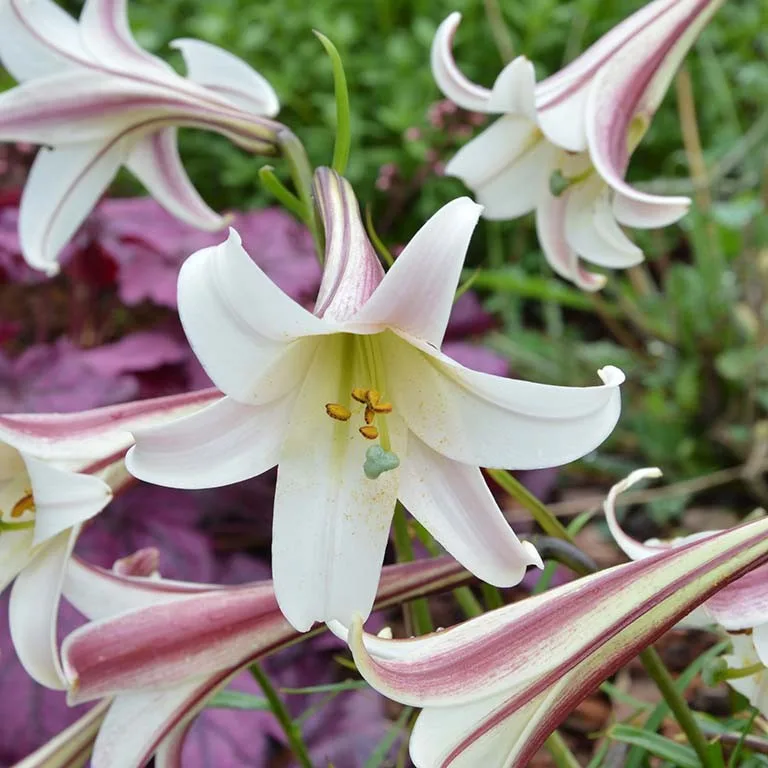
L. formosanum var. pricei is a bulbous perennial,10-30 cm high, with narrow, dark green leaves on upright stems. These are topped in mid-summer with one to three very fragrant, trumpet-shaped flowers, up to 20cm long, in white flushed with dark red on the outside
Scientific classification
- Species
- dwarf Formosa lily (Lilium formosanum var. pricei)
- Genus
- Lilium
- Family
- Liliaceae
- Order
- Liliales
- Class
- Liliopsida
- Phylum
- Magnoliophyta
- Ornamental bulbs - not to be eaten. Wear gloves and other protective equipment when handling
- Toxicity
- Bulbs · Conservatory Greenhouse
- Plant type
- 0.1-0.5 metres
- Height
- 0.1-0.5 metres
- Spread
- Deciduous
- Foliage
- Columnar upright
- Habit
- Summer
- Season of interest
- Full sun
- Sunlight
- Information to be completed
- Ideal temperature









dwarf Formosa lily pictures
Distribution of dwarf Formosa lily
Distribution map
- Native
- Introduced
- Cultivated
Source:WCVP v16 · Royal Botanic Gardens, Kew · CC BY 3.0 · Boundaries:WGSRPD / TDWG
Toxicity
Ornamental bulbs - not to be eaten. Wear gloves and other protective equipment when handling
dwarf Formosa lily care guide
- Keep soil lightly and evenly moist during active stem and bud growth
- Watering
- Full sun
- Sunlight

Watering
Keep soil lightly and evenly moist during active stem and bud growth
Fertilizing
 Fertilizing
Lily bulb feed every three weeks during spring and summer growth
Pruning
 Pruning
Deadhead after flowering and allow foliage to die down naturally
Propagation
 Propagation
Propagate by seed, sown, when ripe, in containers in a cold frame or separate offsets after the foliage dies down
Growing
 Growing
Grow in moist, acid soil, planting bulbs to at least three times their own depth as they are stem rooting. Needs a sunny, sheltered position in a mild area. Otherwise grow in containers and take undercover in winter
Common pests and diseases
Diseases
May be susceptible to grey moulds and a virus; see lily diseases
Pests
May be susceptible to lily beetle, aphids, slugs, snails, Thrips, leatherjackets, and wireworms, and to damage by rabbits and voles; plants in containers may be affected by vine weevil
Explore the plant health library →




