
trailing abutilon 'Variegatum'
Also known as: Information to be completed
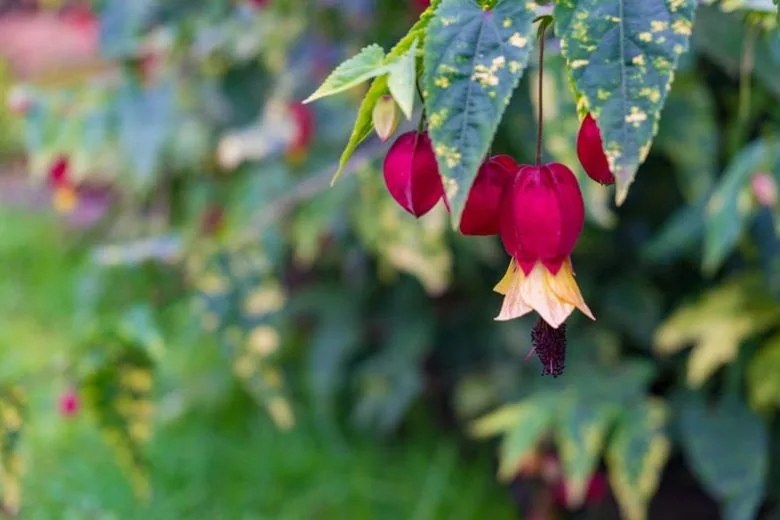
An semi-evergreen, half-hardy shrub with arching branches and ovate green and golden yellow variegated leaves, lobed and heart-shaped at the base. Pendant, bell-shaped flowers, 5cm (2'') across, with a crimson-red calyx and yellow petals appear from summer until the first frosts. Good for beds and borders and also pots and containers with its trailing habit
Scientific classification
- Species
- trailing abutilon 'Variegatum' (Abutilon megapotamicum 'Variegatum')
- Genus
- Abutilon
- Family
- Malvaceae
- Information to be completed
- Toxicity
- Conservatory Greenhouse · Bedding · Shrubs
- Plant type
- 1.5-2.5 metres
- Height
- 1-1.5 metres
- Spread
- Semi evergreen
- Foliage
- Bushy · Trailing
- Habit
- Spring · Summer · Autumn · Winter
- Season of interest
- Full sun
- Sunlight
- Information to be completed
- Ideal temperature









trailing abutilon 'Variegatum' pictures
Distribution of trailing abutilon 'Variegatum'
Distribution map
Information to be completed
Information to be completed
Culture
Information to be completed
Toxicity
Information to be completed
Quick identification of trailing abutilon 'Variegatum'
Information to be completed
trailing abutilon 'Variegatum' care guide
- Keep soil evenly moist with warmth and humidity
- Watering
- Full sun
- Sunlight
- Information to be completed
- Ideal temperature

Watering
Keep soil evenly moist with warmth and humidity
Fertilizing
 Fertilizing
Balanced feed every few weeks in active growth
Pruning
 Pruning
Prune lightly as needed to remove unwanted shoots and keep the shrub in shape. Prune in mid- to late spring.
Propagation
 Propagation
Propagate by seed in spring at 15ºC to 18ºC, or by softwood cuttings
Growing
 Growing
Grow as an indoor or conservatory plant or outside as summer bedding in a sheltered position
People also ask
Information to be completed
Common pests and diseases
Diseases
May be susceptible to honey fungus (rarely) or a virus
Pests
May be susceptible to glasshouse whitefly, glasshouse red spider mite, aphids, mealybugs and scale insects
Explore the plant health library →




