
European red elder 'Plumosa Aurea'
Also known as: Information to be completed
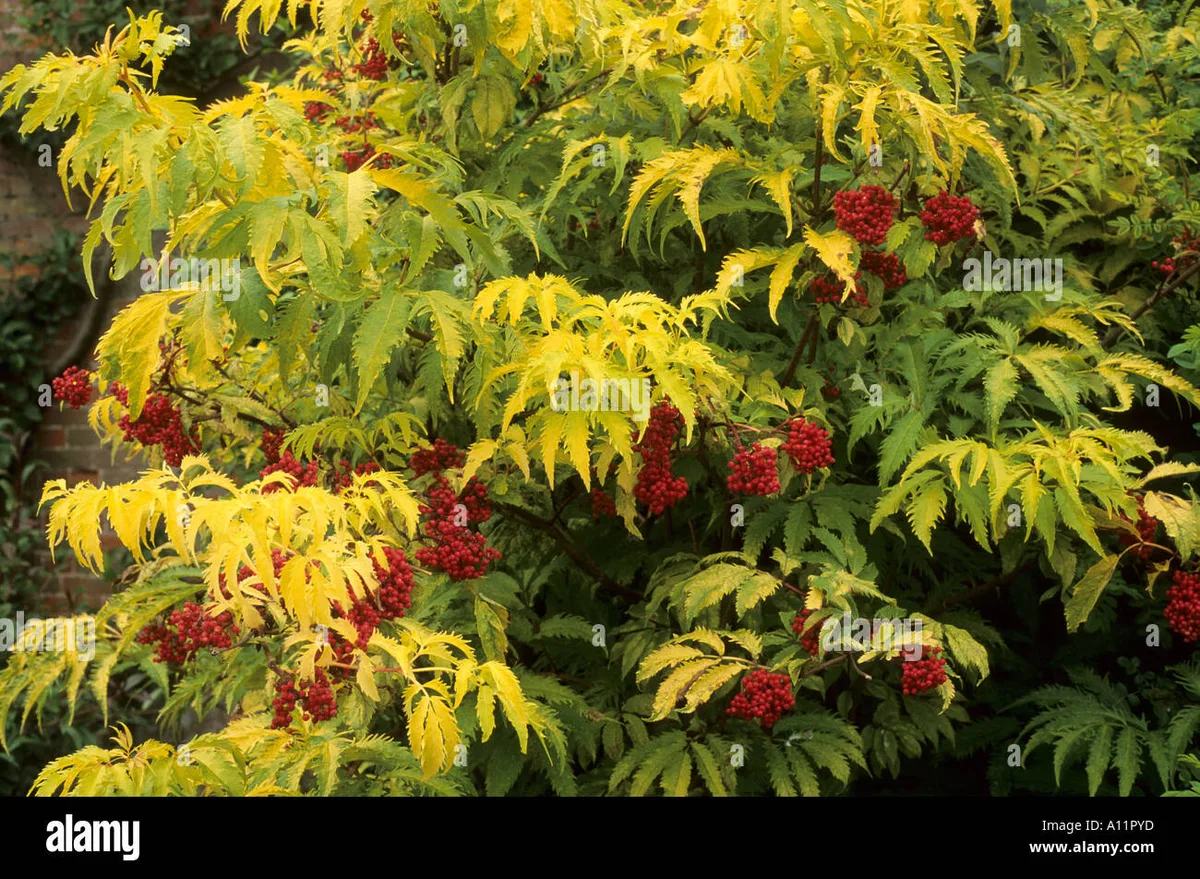
Plumosa Aurea' is a bushy deciduous shrub with golden-yellow, pinnate leaves composed of five attractively dissected leaflets, bronze-tinted when young; conical sprays of small cream flowers sometimes followed by scarlet berries ripening in summer
Scientific classification
- Species
- European red elder 'Plumosa Aurea' (Sambucus racemosa 'Plumosa Aurea')
- Genus
- Sambucus
- Family
- Adoxaceae
- Order
- Dipsacales
- Class
- Magnoliopsida
- Phylum
- Tracheophyta
- Harmful if eaten. Wear gloves and other protective equipment when handling
- Toxicity
- Shrubs
- Plant type
- 2.5-4 metres
- Height
- 2.5-4 metres
- Spread
- Deciduous
- Foliage
- Bushy
- Habit
- Spring · Summer · Autumn
- Season of interest
- Full sun · Partial shade
- Sunlight
- Information to be completed
- Ideal temperature









European red elder 'Plumosa Aurea' pictures
Distribution of European red elder 'Plumosa Aurea'
Distribution map
- Native
- Introduced
- Cultivated
Source:WCVP v16 · Royal Botanic Gardens, Kew · CC BY 3.0 · Boundaries:WGSRPD / TDWG
Toxicity
Harmful if eaten. Wear gloves and other protective equipment when handling
European red elder 'Plumosa Aurea' care guide
- Moderate regular watering, avoid prolonged drought or waterlogging
- Watering
- Full sun · Partial shade
- Sunlight

Watering
Moderate regular watering, avoid prolonged drought or waterlogging
Fertilizing
 Fertilizing
Balanced feed in spring and light repeat in growth season
Pruning
 Pruning
For colourful stems or large foliage, prune hard to a low framework. Let young plants establish for one to two years first. Prune in late winter or spring, before or as new growth starts.
Propagation
 Propagation
Propagate by hardwood cuttings in winter or semi-ripe greenwood cuttings in early summer
Growing
 Growing
Grow in moderately fertile, humus-rich, moist but well-drained soil and best in part shade, leaves may scorch in hot sun and colour is retained best in dappled shade
Common pests and diseases
Diseases
May be susceptible to verticillium wilt and honey fungus
Pests
May be susceptible to aphids (blackfly) which may infest the young shoots and foliage
Explore the plant health library →




