
Hypericum × dummeri 'Peter Dummer'
Also known as: Information to be completed
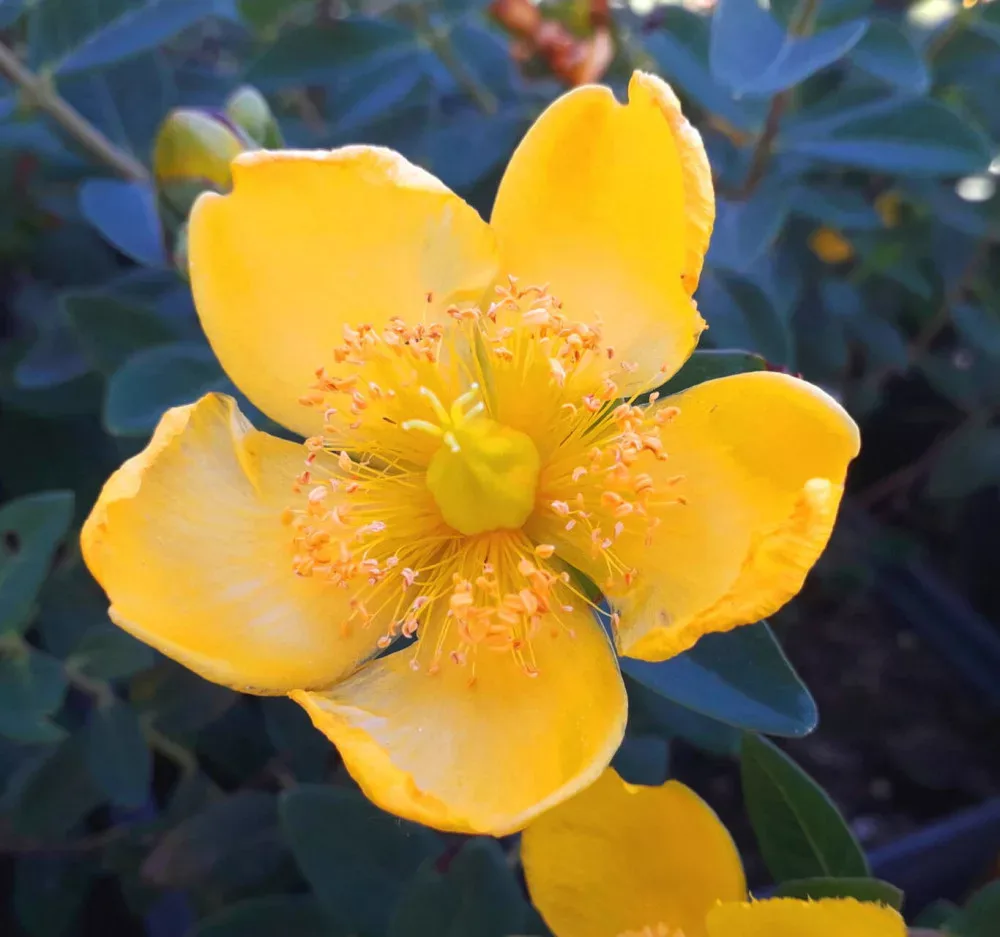
A loose, spreading, low-growing but bushy shrub, with oval, blue-green, semi-evergreen leaves to 60cm (23in). In summer it produces large saucer-shaped, bright yellow flowers with a distinct circle of stamens. Foliage takes on reddish tints in autumn, when conical, red-brown fruit may also be seen.
Scientific classification
- Species
- Hypericum × dummeri 'Peter Dummer' (Hypericum × dummeri 'Peter Dummer')
- Genus
- Hypericum
- Family
- Hypericaceae
- Fruit are ornamental - not to be eaten. Wear gloves and other protective equipment when handling
- Toxicity
- Shrubs
- Plant type
- 0.5-1 metres
- Height
- 1-1.5 metres
- Spread
- Semi evergreen
- Foliage
- Bushy · Matforming
- Habit
- Autumn · Winter · Spring · Summer
- Season of interest
- Full sun · Partial shade
- Sunlight
- Information to be completed
- Ideal temperature









Hypericum × dummeri 'Peter Dummer' pictures
Distribution of Hypericum × dummeri 'Peter Dummer'
Distribution map
Information to be completed
Information to be completed
Culture
Information to be completed
Toxicity
Fruit are ornamental - not to be eaten. Wear gloves and other protective equipment when handling
Quick identification of Hypericum × dummeri 'Peter Dummer'
Information to be completed
Hypericum × dummeri 'Peter Dummer' care guide
- Water moderately, allowing the top few inches of soil to dry between waterings.
- Watering
- Full sun · Partial shade
- Sunlight
- Information to be completed
- Ideal temperature

Watering
Water moderately, allowing the top few inches of soil to dry between waterings.
Fertilizing
 Fertilizing
Apply a balanced slow-release fertilizer in early spring.
Pruning
 Pruning
Usually little pruning is needed. Lightly shape if necessary, removing dead, damaged or diseased shoots. Prune after flowering.
Propagation
 Propagation
Propagate from semi-ripe cuttings in summer.
Growing
 Growing
Grow in moderately fertile to poor, moist but well-drained soil in sun or partial shade.
People also ask
Information to be completed
Common pests and diseases
Diseases
May be susceptible to a rust and honey fungus (rarely)
Pests
Generally pest-free
Explore the plant health library →




