
purple hybrid catalpa
Also known as: hybrid catalpa 'Purpurea'
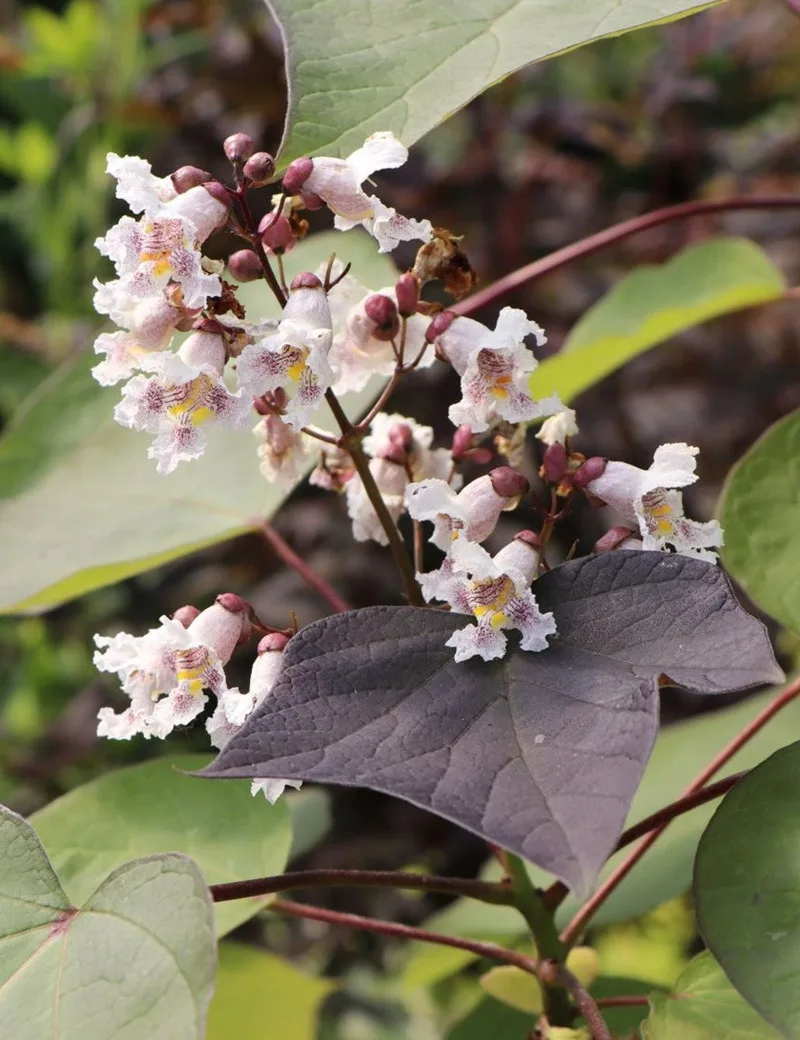
A medium-sized deciduous tree. Young shoots and opening leaves blackish-purple, the leaves later dark green. Flowers 3cm, white with orange and purple markings, in large open panicle
Scientific classification
- Species
- purple hybrid catalpa (Catalpa × erubescens 'Purpurea')
- Genus
- Catalpa
- Family
- Bignoniaceae
- Order
- Lamiales
- Class
- Magnoliopsida
- Phylum
- Magnoliophyta
- Information to be completed
- Toxicity
- Trees
- Plant type
- Higher than 12 metres
- Height
- wider than 8 metres
- Spread
- Deciduous
- Foliage
- Information to be completed
- Habit
- Spring · Summer
- Season of interest
- Full sun
- Sunlight
- Information to be completed
- Ideal temperature









purple hybrid catalpa pictures
purple hybrid catalpa care guide
- Deep root watering during hot dry spells, catalpa resists mild drought stress
- Watering
- Full sun
- Sunlight

Watering
Deep root watering during hot dry spells, catalpa resists mild drought stress
Fertilizing
 Fertilizing
Deciduous tree slow-release feed single application every early springtime
Pruning
 Pruning
Little pruning is needed. Remove diseased, damaged, crowded or crossing shoots and unwanted growth. Timing depends on the plant: generally late winter or early spring; plants prone to bleeding and deciduous magnolias need different timing, and deciduous azaleas and lilacs are pruned after flowering.
Propagation
 Propagation
Propagate by softwood cuttings or grafting
Growing
 Growing
Grow in a moist but well-drained, fertile soil in a sunny position. Shelter from strong winds as these may shred the large leaves. Protect from late spring frosts when young
Common pests and diseases
Diseases
May be susceptible to verticillium wilt
Pests
Generally pest-free
Explore the plant health library →




